Get all your news in one place.
100’s of premium titles.
One app.
Start reading
Fit & Well
Fit & Well
Health
Katie Sims

I’ve been trying this 15-minute anti-desk Pilates routine for a month—it’s seriously helped counter the effects of sitting

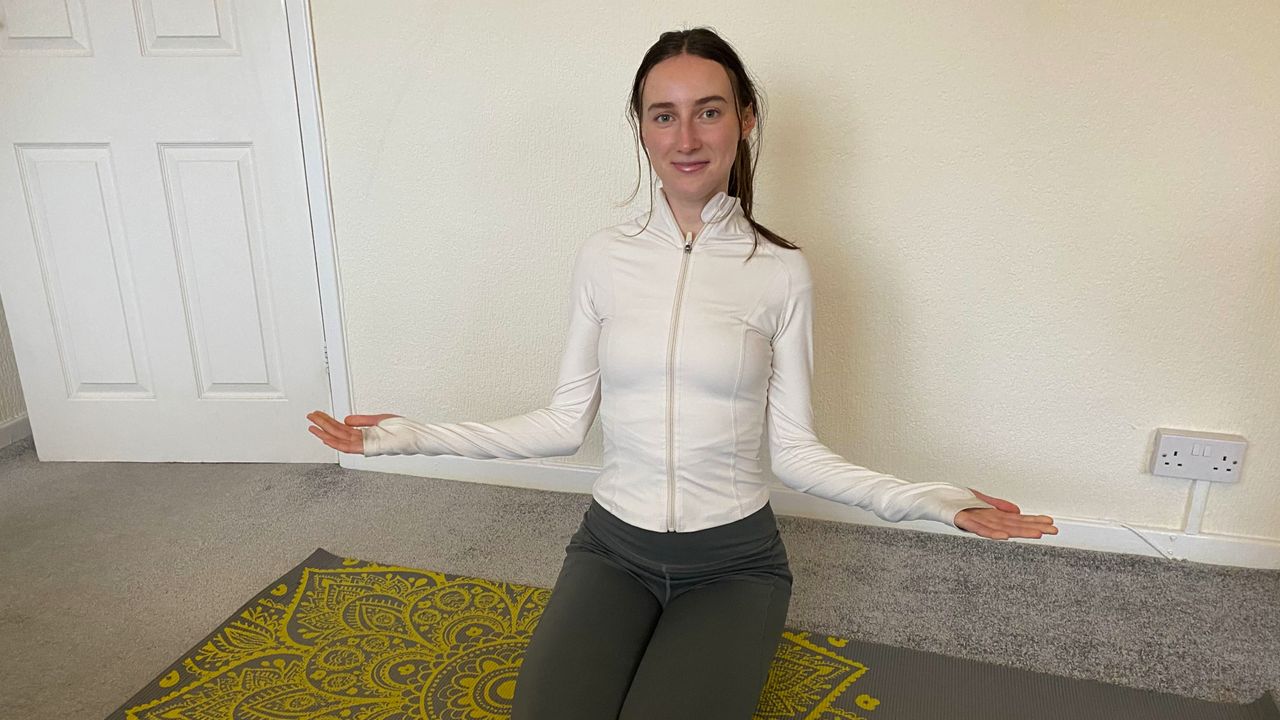
Woman exercising in domestic setting.

Whether you have a desk job or not, you’ve probably become aware of the stiffness and damage caused by too much sitting.

Over time, hours seated or hunched over screens can lead to muscular imbalances, poor posture and decreased mobility.


With this long-term risk in mind, I found Pilates instructor Lottie Murphy’s 15-minute routine for desk posture to use as a regular practice.

It was short enough to slot into busy work days, yet impactful enough to address imbalances and support my posture.

I committed to this routine for 30 days—here’s what I found.

The 15-minute Pilates for desk posture routine

What I discovered

(Image credit: Future / Katie Sims)

My shoulders finally relaxed

I didn’t expect such a gentle routine to make a noticeable difference to my shoulders, but it did.

The windows move—lying on my back with my arms reaching upward, opening my elbows wide, rotating my palms upward, then sweeping my arms overhead—was the most effective.

At first, my shoulders felt stiff and awkward, but after a couple of weeks, I noticed a better range of motion. Thread the needle and cat-cow stretches contributed to this improvement as well, helping me move more easily through my spine.

By the end of the month, I realized I’d stopped rolling my shoulders to relieve tension—they felt looser naturally.

It woke up my lower body

(Image credit: Future / Katie Sims)

Even though the routine isn’t intense, it switched on my hips and legs.

The glute bridge is not something I would usually think of doing to combat desk stiffness, but it was another standout move. Holding the lift and then lowering slowly made me realize how little I engage my glutes during the day while seated.

My hamstrings felt tight at the start of the month, but that gradually eased as I repeated the routine. Instead of leaving me feeling exhausted, the session energized me, and my lower body felt mobile and ready to move.

I became more aware of my posture

An unexpected benefit was how much more aware I became of how I sit and stand.

Exercises like the plank rock and cat-cow made me focus on spinal positioning—keeping my core lightly engaged and my shoulders stacked over my hips instead of collapsing forward.

Even the simple arm movement at the end of the routine made me notice how often I round through my chest.

That awareness carried over into my workday. I caught myself adjusting my ribcage when I was typing or softening my lower back when standing. These small alterations felt natural rather than forced.

By the end of the month, I was checking in with my posture more often and correcting it sooner.

Of everything I learned, this felt the most significant. After all, awareness of your body and posture is the first step to changing it.

Sign up to read this article
Read news from 100’s of titles, curated specifically for you.
Already a member? Sign in here
Related Stories
Top stories on inkl right now
One subscription that gives you access to news from hundreds of sites
Already a member? Sign in here
Our Picks
Fourteen days free
Download the app
One app. One membership.
100+ trusted global sources.