
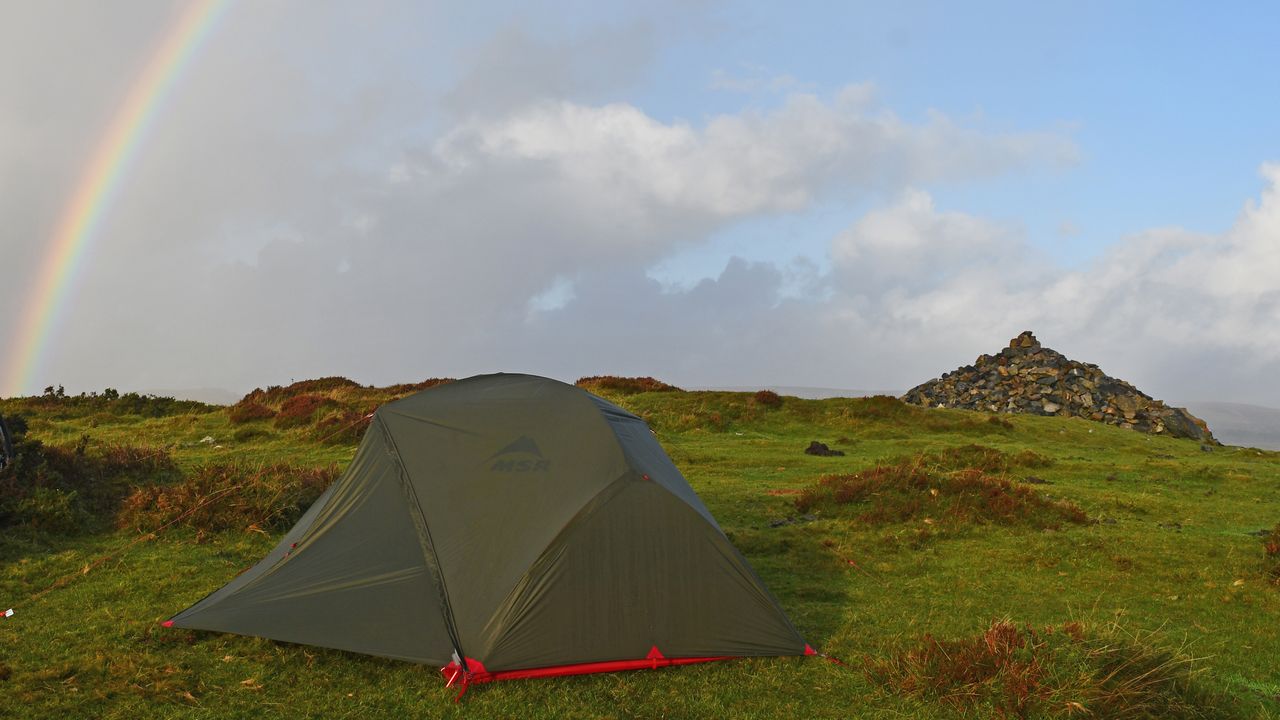
The success of any camping adventure is entirely reliant on having the best tent you can get your hands on. You might have the most cosy and comfortable sleeping bag ever created and the plushest camping mat in the world, but if the tent you take on the trail fails to keep the elements out, or if it’s cramped or weighs too much, then your trip will be miserable.
I get to test tents for a living, which sounds awesome (and usually is), but when you get a dud design, it results in some seriously uncomfortable nights. Thankfully, I’ve discovered some exceptional shelters, and these are the tents I will be taking out on the trails this year.

The Dagger Osmo has been on the market for a few years, but last year Nemo released a new version, which is both super pimped and also impressively planet friendly. Made with recycled materials, this isn’t just the best designed and most technically capable tent I tested in 2025, it’s also the world’s first ever fully bluesign-approved backpacking shelter.

The Solo Peak might be Lifesystem’s first stab at producing a tent, but the British brand know plenty about making high-performing outdoor survival gear and this new one-person shelter is impressively lightweight, packable and waterproof – perfect for moving fast in the mountains.

Mountain Safety Research (MSR) is a brand synonymous with quality, and the Hubba Hubba is a much-loved tent across all its many iterations, for all the right reasons, but I especially love the attention to detail on this excellent tent, specifically designed to be carried on the handlebars of a bicycle without the need for an expensive bikepacking bag.
Best overall

Nemo Dagger Osmo
Available in both 2- and 3-person models, the latest iteration of the Nemo Dagger Osmo is as close to the perfect tent for backpacking as I’ve ever had the privilege of using. Lightweight, easy to pack and pitch, it’s a superbly designed shelter from the bucket floor upwards.

There’s plenty of room on the inside, with various pockets and features to make organisation and space optimisation easy, and the twin doors and double vestibule design means you can keep backpacks and hiking boots dry while not crowding the sleeping area, and you don’t have to disturb your camping buddy when getting out in the early hours to answer a call of nature.

The materials are recycled, and the whole shelter is made in an eco-friendly way. The pole system is smart, and the materials and components are all top-quality, so the shelter can withstand high winds and serious downpours. There are myriad small design details that improve the camping experience without adding to the carry weight, from the axial corner anchors and strut vents to the ‘Landing Zone’, a triangular storage tub in the vestibules.
Best for solo campers

Lifesystems Solo Peak
If you’re someone who enjoys heading off on adventures by yourself, or if you prefer to sleep solo during overnight escapades with friends, the Lifesystems Solo Peak 1-person tent is a clever little cocoon that weighs very little (1kg) and packs down to the size of a water bottle, but provides excellent shelter in a range of conditions.

With a tiny footprint, you can pitch it in all kinds of tight spots, and yet – considering its diminutive size – it offers enough headroom for you to sit up, and even has a vestibule (albeit a small one) for stashing packs and boots.

The materials are impressively robust and protective, with the fly and groundsheet both boasting a high hydrostatic head rating of 3,000mm. Because it’s small, the interior warms up very quickly and stays cosy, so – if you have a decent sleeping bag and pad – you can use it for most of the year in the UK (I tested it during November and December). It’s also very reasonably priced.
Best for bikepacking

MSR Hubba Hubba Bikepack 2
The European release of the much-anticipated new Hubba Hubba LT2 only recently happened, and the significantly updated shelter is impressively spacious and light. But for me, MSR were always going to struggle to truly improve on the original design, which forms the basis of the brilliant Hubba Hubba Bikepack 2.

Space is everything when you’re bikepacking, and the concessions to packability that make all the difference here are the trimmed pole lengths and the waterproof carry bag, which is designed to be attached directly to the handlebars of your bike (an ingenious innovation that means you don’t need to invest in an expensive bar bag, which would only end up full of tent.

Regardless of whether you’re on wheels or walking, this is an excellent tent for use beside the trail. Designed around a hub-style pole system, the shelter has an excellent nylon fly sheet and a strong geodesic-dome shape, which can withstand strong winds.
The pole lengths have been trimmed to make packing even easier. It also offers two doors, each with a spacious vestibule for storing stuff. Additional features include the ‘StayDry’ rain gutters, a gear loft and a clothesline on the inside.
Buying advice
Choosing the perfect tent is tricky, especially if you enjoy a range of camping experiences, from fast-paced, lightweight overnight adventures to more comfortable car camping outings. The tents listed here are specifically for backpacking and bikepacking escapades – they are all quite different in design, but the common denominator is a low carry weight.
While cost is inevitably a consideration, it’s really important to get a shelter made from robust and genuinely weatherproof materials. Look for details such as sealed seams, which make all the difference in keeping the rain out, and good-quality zips, which will improve the lifespan of your tent.
Ease of pitch and low bulk are two other crucial considerations. Some tents (like the Lifesystems Solo Peak) can be pitched outer first, which means you can escape the weather quickly, while others, such as the Nemo Dagger Osmo and the Hubba Hubba, feature stand-alone inners, which can offer sensational star-gazing opportunities on clear, dry nights.
For me, access to a spacious vestibule is a high-value feature, since it allows you to stash your backpack and hiking boots or walking shoes somewhere dry without taking up room in the main sleeping compartment.
If you're getting a 2-person tent, go for one with two doors so you don't have to climb over your camping buddy in the middle of the night (and they don't have to climb over you).
Lastly, good ventilation is essential for comfort and to allow condensation to escape (otherwise you will wake up damp, no matter how waterproof the fly is).







