
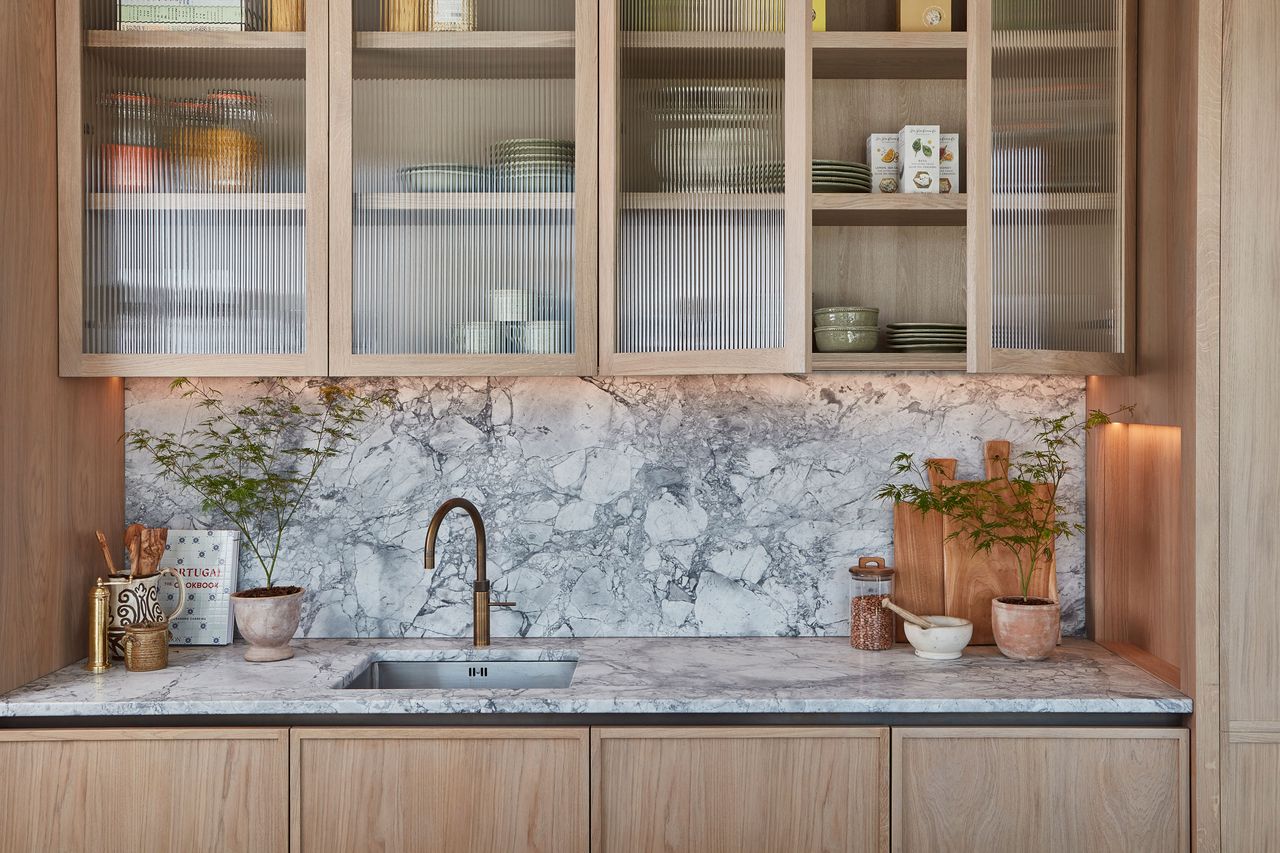
I’ve always described my style as "organized chaos." My desk isn’t pristine, but I know exactly where everything is. My living room may not pass for minimalist, but everything has its place. And yet, when it comes to food storage, I repeatedly let the clutter win.
On the rare occasion I steel myself to clear out my kitchen cabinets, I’m met with the same familiar shame: tins of tomatoes years past their expiry date, half-used packets lurking at the back of shelves, and panic-bought duplicates taking up valuable space. Determined to break the cycle, I turned to the Japanese art of the 5Ss — a ruthlessly efficient organizational method rooted in order and intention, and it might just be the best decision I ever made for my kitchen organization.

If you’ve already embraced Japanese design principles for their calm, considered aesthetic, it’s time to look beyond the visuals. Their approach to organization is just as transformative — and, in my case, entirely worth the hype.
What Is the Japanese Art of 5S?

In Japanese, the 5S's stand for seiri, seiton, seiso, seiketsu, and shitsuke. This translates to:
- Seiri (整理) - Sort
- Seiton (整頓) - Set in order
- Seiso (清掃) - Shine (clean)
- Seiketsu (清潔) - Standardize
- Shitsuke (躾) - Sustain
Designed by Toyota executives to eliminate waste, improve safety, and enhance productivity in the workplace, the framework holds a person accountable to a set of structured maxims.
In recent years, people have been applying the framework to their organizational methods, too. It's easy to see how the 5S can be transformed into a useful Japanese decluttering method. The idea is that by following the 5S framework, we are encouraged to live with less and are able to make more confident decisions about what to declutter, ultimately reducing decision fatigue.
How Can the 5S Technique Help With Kitchen Cabinet Organization?

Applying the 5S method to a decluttering task is simple. You start by sorting items into categories, discarding and decluttering where you can. Then you return everything to order, placing each item back where it belongs. Next, you "clean" or polish off the area, before finally standardizing: making up rules which will help you to sustain your new practice of decluttering and maintaining your home.
This framework proved so useful in helping me to declutter my kitchen cabinets. I started with the first S — Seiri (or sort). I started by removing what I no longer needed, asking myself, "Do I really use this item?"
"For example, toss or donate utensils, dishes with cracks, anything that you do not use or no longer serves a purpose," instructs Cathy Orr, a Konmari consultant and founder of The Uncluttered Life. "This can also include duplicates." For me, this allowed me to let go of outdated tins of food, broken Tupperware containers, and worn pans that I never used.
Once I'd successfully edited the contents of my cabinets, I moved on to the next S —Seiton (Set in Order). This simply means putting everything in its place, or giving everything a home. "Group like items to make storage practical for everyday living," says Cathy. "For a kitchen, put like items together. This may include the pantry and refrigerator, too." I decided a complete reshuffle was in order for my kitchen storage, designating one whole cabinet to long-life food items like tins and baking goods.

Next, I moved onto Seiso (Shine). "Take a good look at everything that needs to be cleaned, scrubbing and fixing small problems," Cathy instructs. "In terms of kitchens, wipe out drawers and cabinets."
Now, I did find that this step would have actually been more useful as the second in the method, since I had already returned everything to its place. Instead, I committed to wiping down the inside of cabinets (and washing up kitchenware as needed) as I tacked the "set in order" step, so you might want to combine steps two and three.
It was then time to move on to Seiketsu (Standardize). "To keep clutter from returning, create routines, label, and use the same system every time," says Cathy. "Purchase drawer dividers for your kitchen, perhaps canisters, anything that can help keep things in order." For me, this meant adding shelf risers like these ones, from Amazon, to prevent tins of food from ever getting lost at the back of my cabinets again.
Finally, I turned to Shitsuke (Sustain). This step is all about creating habits. "This step has the most lasting impact, as it stops you from inviting clutter back into your home or kitchen," Cathy explains.
To organize kitchen cabinets once and for all, I decided to implement weekly audits of my cabinets before my big food shop, helping me stay on top of the contents. The upside-down decluttering method may also be a good trick to adopt. The idea is that you turn items upside down and, as you use each item, return it to its normal position. It works well for the likes of jars, condiments, and tinned goods to reveal duplicates and forgotten ingredients.
Written by Matt Paxton, this book explores releasing and letting go of things that no longer serve you, as well as identifying the items that might just be worth keeping.
Francine Jay gives readers an insight into having less stuff and finding joy in such. She guides readers into simplifying their lives and managing the overwhelm of clutter.
Based on the BBC One show: Sort Your Life Out, this book explores what you need to do to successfully declutter in your home through three transformative methods.
Wondering how to make kitchen cabinets more functional? This five-step Japanese method is a simple yet transformative way to declutter and reorganize your storage with intention. By refining what you keep, reassessing how you use it, and assigning everything a purposeful place, you’ll create a kitchen that feels effortlessly streamlined and beautifully functional. Don’t be surprised if you find yourself applying the same formula to every room in the house.