
Get all your news in one place.
100’s of premium titles.
One app.
Start reading
Livingetc
Livingetc
Lilith Hudson

I Used the Japanese Art of "Danshari" to Declutter My Living Room — Here's Why It Works So Well, and How You Can Use It to Transform Your Space, too

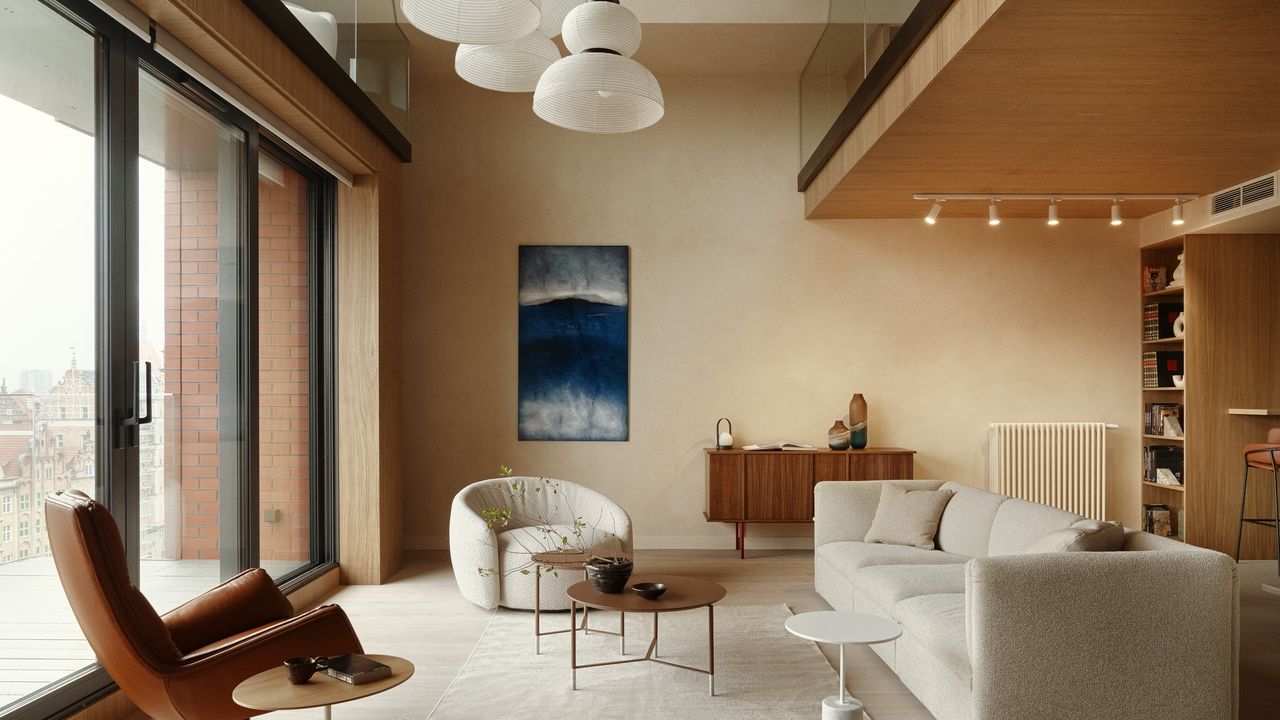
A tan colored living room.

For me, the hardest part of decluttering is letting go of stuff. I'll find any excuse in the book to hold on to something if the scarcity mindset creeps in — a simple "what if" is enough to earn an object a permanent place on my shelves, even if it goes unnoticed for another five years. To feel confident in my decisions, I need a decluttering framework to keep me focused, which is how I discovered the Japanese art of Danshari.

Built around three core principles, this Japanese decluttering technique doesn't just focus on letting go of unnecessary possessions; it also reframes your desire to acquire them in the first place. The focus is on detaching from the material in favor of more mindful consumption. The idea is that you only keep hold of stuff that's necessary for your present life, rather than for your past or future self.

If, like me, you justify your clutter with "what if" scenarios, then Danshari might offer the clarity you've been missing. Curious to see whether it could quiet my own scarcity mindset, I put the method to the test to declutter my living room. Here’s what happened, and what I learned along the way.

What Is Danshari?

You don't have to be a minimalist to follow the principles of Danshari, but you will have to change your relationship with your stuff. (Image credit: Ferm LIVING, courtesy of Laila Rietbergen)

Danshari isn't just about decluttering — it's a Japanese design principle centered around letting go of the material. If a possession is not necessary, it should be tossed or donated, and the desire to acquire other unnecessary things should be curbed. Of all the decluttering methods, it's one of the most ruthless.

"The Japanese Art of Danshari asks the question, 'Is this item necessary for my life right now?'," explains Cathy Orr, a Konmari consultant and founder of The Uncluttered Life. "It helps us to make decisions about what to keep and what to let go." She explains that the word comes from three components:

Dan — refuse what you don’t need

Sha — throw away what you don’t use

Ri — detach from attachment to things

Now, until last week, my small living room had become overrun with stuff. Shelves were crammed, boxes lay on the floor, and random stuff always littered the coffee table at any given moment. Intrigued to know how I could utilize the maxims of Danshari in my own space, I decided to tackle my living room clutter once and for all, and these were my main takeaways.

1. Start Small

When decluttering, don't try to tackle your whole room at once. (Image credit: Tom Kurek. Design: SIKORA > INTERIORS)

When it comes to decluttering, it always pays to start small. Instead of tackling the entire space, separate it by categories or like-items, as instructed by the Konmari method. In a living room, this could mean starting by decluttering books and media, followed by decor, then blankets and larger furnishings.

Since Danshari encourages intentional decluttering, separating by category will help you to move more slowly while also revealing the true volume of your belongings. It will also help you avoid decision fatigue, preventing overwhelm by focusing on one category at a time instead of the bigger picture.

2. Stop Letting Things Enter the Room

Don't let unnecessary items into the space from the very beginning. (Image credit: Elicyon)

At its core, Danshari begins before you even think about what to throw away. The first principle — Dan — is about refusal: stopping unnecessary items from entering your space in the first place. After all, the easiest thing to declutter is the thing you never brought home.

For me, this meant pausing at the point of purchase. Not just asking, “Do I like this?” but, “Does this serve my life right now?” and, crucially, “Is there space for it?” Danshari reframes shopping as a responsibility rather than a reflex. Every object you allow into a room shifts its balance — visually, spatially, and emotionally.

In practice, this translated to fewer impulse buys and a new scepticism towards “just in case” pieces. The decorative tray I almost purchased because it was trending, the extra lamp I didn’t strictly need, and the throw pillow that was on sale. By resisting new stuff, my living room already began to feel lighter without me removing a single thing.

3. Question Everything You Already Own

Most of us hoard belongings long after we have any use for them. (Image credit: Aaron Leitz. Design: Lisa Staton Design)

Next, you can move on to the decluttering itself. The second principle of Danshari — Sha — is where the real editing begins. If Dan is about refusing what doesn't serve you, Sha is about releasing what's already there.

"Look at decor, furniture, and linens such as throw pillows and ask if the items support your current life, not your past, and not what you imagine for your future," says Cathy. "Ask whether the items serve you today. By letting go of things, you also let go of stress, guilt, and old ways of thinking."

Unlike 5-minute decluttering tasks, Danshari is about moving slowly, considering each item on a case-by-case basis. Practising Sha in my living room meant confronting the in-between objects: the decorative pieces I felt indifferent towards, the extra throws folded neatly but never reached for, the furniture that filled space without enhancing it. None of these were "bad" items in and of themselves, but they weren’t essential.

4. Let Go Without Guilt

Declutter with no regrets. (Image credit: Felix Speller & Child Studio)

The final part of Danshari, Ri, is about detaching from the emotional pull of possessions. This is the part that lingers long after the decluttering is done. Are you keeping an object out of obligation? Sentimentality? Fear? This part of the method encourages you to separate your identity from your belongings, and to recognize that your sense of self isn't contained within the physical items themselves.

In my living room, Ri meant letting go of pieces that reflected who I used to be rather than who I am now, like the decor bought for my previous flat or the trend-led lamp that once felt essential. Instead of curating a space that archived my past, my living room suddenly felt more rooted in the present. With this new mindset, I was also finally able to declutter without regretting it.

Although I used the concept of Danshari in my living room, you can apply the practice in any space that demands it. If you want to kick clutter for good and change your entire relationship with your material belongings, let it start with this three-fold philosophy.

Looking for more slow decluttering techniques? Start by resisting the urge to do everything at once. Work by category, not by room, and set boundaries on what enters your home before obsessing over what leaves it. Finally, and most importantly, be kind to yourself and take things in your own stride.

For more ideas and inspiration, sign up to Livingetc's newsletter, and you'll never miss a thing.

Sign up to read this article
Read news from 100’s of titles, curated specifically for you.
Already a member? Sign in here
Related Stories
Top stories on inkl right now
One subscription that gives you access to news from hundreds of sites
Already a member? Sign in here
Our Picks
Fourteen days free
Download the app
One app. One membership.
100+ trusted global sources.