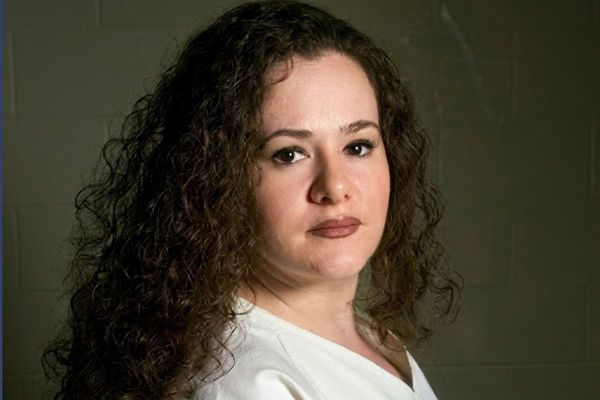

As a mainstay of the New York City jazz scene, Ava Mendoza has been around the block a time or three. But that doesn’t mean she lacks passion. “Music is my religion,” she says, “It’s important to me to be around people who are devoted to it.”
But Mendoza isn’t only a disciple of jazz. Hell, she doesn’t even consider herself a true “jazz musician.” Growing up in Southern California, she was exposed to everything from Latin American to classical music before latching onto off-kilter alternative sounds, including Black Flag and Sonic Youth.
With influences taken from so many genres, it’s fair to wonder what’s kept Mendoza interested enough in jazz to release her latest creation, Echolocation, with the help of bassist Devin Hoff under the moniker Mendoza Hoff Revels.
“Devin and I met in Oakland,” she says. “We’ve had one foot in punk and one in jazz. So we talked about this imaginary four-piece, formed it, and started writing music. It progressed from there.”
The duo’s punk-meets-jazz roots are smeared all over Echolocation’s eight tracks, but Mendoza’s fretwork carries the load.
The truth is that guitar-less jazz – with horns – inspires me more these days
“I love alternative tunings,” she says. “I love interesting chord voicings and finding ways to use open strings for resonance. I like to use an intuitive approach that’s modern, unique and adventurous.
“The truth is that guitar-less jazz – with horns – inspires me more these days. That affects how I use pedals for timbral changes on guitar; it’s like a horn where your breath affects the tone. But ultimately, melody has to be present.”
Tracks like Interwhining and Echolocation show an approach that finds Mendoza’s guitar carrying the melody while sharing harmony lines with funky free-jazz sax.
It’s an example of Mendoza’s intentional deviation from all things considered “normal’ in jazz, a realm she feels funny taking up space in. “I call my music ‘jazz’ for lack of a better word,” she says. “It has always been tricky for me to define myself.
“What I do is different,” she adds. “I don’t play standards. I respect traditional jazz, but it’s not my path. I’ve always wanted to use all my guitar’s sonic possibilities. So I’ll continue to write music my way rather than focus on whatever is considered ‘traditional.’”
- Echolocation is out now via Aum Fidelity.