
I've tried many decluttering and organising methods in my time, but I've never tried to organise my home using an automotive manufacturing concept.
Bear with me – the Japanese 5S method for organising the home is an adaptation of a popular workplace organisation system that seeks to improve efficiency. The 5Ss (sort, set, shine, standardise, and sustain) have been adopted by professional home organisers and enthusiastic declutterers alike as a way to – you guessed it – organise the home.

Like the Japanese organising principle of inyo-onyo, the 5S method has become increasingly popular lately. But is it genuinely helpful, or simply a fad? I put it to the test to find out.
What is the Japanese 5S method for organising the home?
In Japanese, the 5S's stand for seiri, seiton, seiso, seiketsu, and shitsuke. Roughly translated, this equates to: sort, set, shine, standardise, and sustain.
Professional home organiser Rebecca Crayford provided a helpful guide to what each 'S' means in practice:
- Sort – grouping similar things together and letting go of anything that’s no longer needed.
- Set – setting things in order so that every item has a logical, accessible home.
- Shine – cleaning and refreshing your space as you go.
- Standardise – putting simple routines in place so tidiness becomes easier to maintain.
- Sustain – keeping these habits going so you don’t slip back into chaos.
'I like this method because it’s more than just a one-off tidy-up,' Rebecca adds. 'It’s a structure that helps you stay on top of your home day to day.'
There are so many helpful decluttering methods around now, and I've tried many of them myself (the dissolving caterpillar method was a personal highlight), but this is one of the first techniques I've come across that has longevity at its core. So, it's not just about a one-off declutter; it's about creating a system that works for you and sticking to it.
Trying the Japanese 5S method

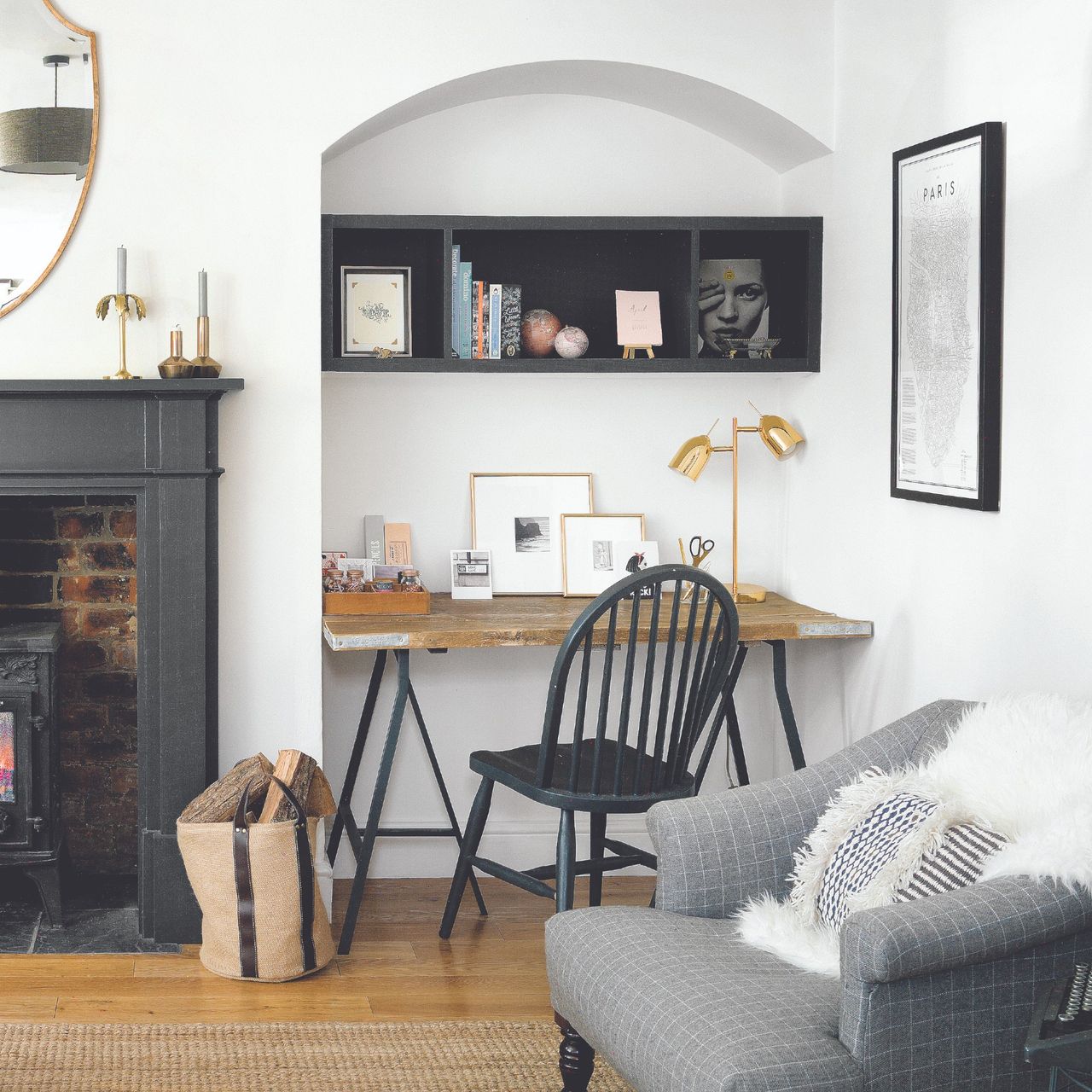
I decided to use the Japanese 5S method to organise my home office, which also doubles up as a spare room and (for lack of a better term) dumping ground.
I'm grateful to have this space, not only because it's where I work, but also because it's spacious enough for me to store random items, both temporarily while I figure out where to put them, and permanently, for lack of a better place. Our heated clothes airer and my partner's sports equipment both live in here for that exact reason.
The caveat to this is that this room often feels messy and cluttered, which I'm hoping the 5S method will help with.

Firstly, I sort through the room's contents by gathering everything that doesn't have an official home and dumping it in the middle of the room. This feels counter-productive at first, but it works; seeing everything in a pile on the floor is hard to ignore, and I'm basically forced to sort through it all.
The next step, 'setting', is a little trickier: I actually have to find a place for each item, something I'd usually procrastinate on. But, with the vision of creating a calm and orderly space in mind, I persevere, and eventually, everything gets put into a suitable place.
The third 's' (shine) turns out to be my favourite. I usually tackle decluttering, tidying, and cleaning separately, which is why I'm a big fan of the micro-reset cleaning method. Basically, I prefer to clean little and often, and the same goes with tidying and organising.
But the 5S method challenged me to clean the space as I was sorting through and organising everything. This felt surprisingly satisfying, and has helped me realise how much time I can save when merging cleaning and decluttering together.

The last two steps – standardise and sustain – were probably the hardest. It's all well and good sorting and setting items in the moment, but my spare room is notoriously difficult to keep tidy in the long term. The good thing about the 5S method is that I didn't feel like I'd completed it until I had a long-term system in place, which is a step I'd usually neglect.
I decided to set a new rule that whenever anything ended up in the home office, I'd have 24 hours to find a place for it before it had to be moved to a different room. And for the 'sustain' step, I decided to commit to weekly once-overs, where I would tidy the room and give it a quick clean.
I'm determined to stick to this system going forward, and I have complete faith that I will. It's both realistic and impactful, and I know it will help me keep the spare room/ home office in a good place going forward.
Safe to say that I'm a fan of the Japanese 5S method for organising the home – will you be giving it a try?
Home organising essentials
If you're working with a small home office space, storage boxes are your best friend. I really like this ribbed design from Dunelm. It's affordable but still looks sleek, and comes in different sizes and colours.