Get all your news in one place.
100's of premium titles.
One app.
Start reading
Tom’s Guide
Tom’s Guide
Technology
Amanda Caswell

I tried the ‘Goldfish Prompt’ with ChatGPT — and it instantly stopped my overthinking

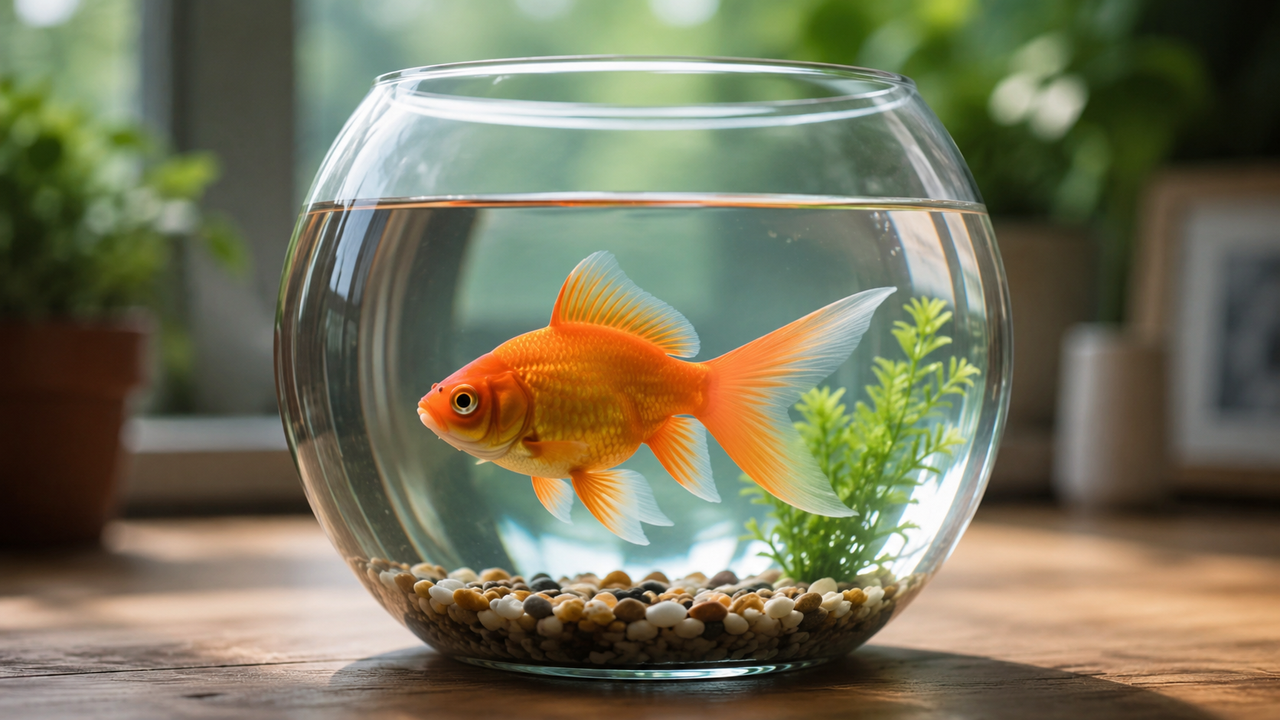
Goldfish.

I don't know about you, but somewhere between ChatGPT-4o and ChatGPT-5.5 AI productivity culture has become incredibly intense. There's an AI for everything these days to the point that it can now run your computer without you.

For most of us, that means AI can create better schedules, better systems, better routines and better workflows with a simple prompt.

In fact, every prompt seems to ensure that we become a slightly more efficient human. But in many ways, it's making my brain louder.

As much as I appreciate an "external brain" and a "10x workflow' week day, I also feel like maybe every minute of every hour doesn't need to be squeezed dry.

As a working parent juggling deadlines, constant interruptions and approximately 14,000 open mental tabs at all times, I realized something uncomfortable:

I didn’t need more optimization, I need less noise. So instead of asking ChatGPT to help me become a productivity machine, I tried something completely different.

A prompt to reduce excess noise

(Image credit: Future)

One of my favorite things to do when I'm overwhelmed is gaze at the koi pond in my backyard. For me, this tiny glimpse of simplicity truly helps me reset.

After one particularly rough week recently, I thought of this prompt as I watched the fish happily swim in the spring sunshine.

The ChatGPT prompt is a strange instruction: “Think like a goldfish.” Alright, let me explain.

I wasn't asking for fish facts, but I did want the AI to approach problems without spiraling, overcomplicating or dragging every past mistake into the conversation.

I wanted short-memory thinking, present-moment thinking and simple next-step thinking.

And weirdly enough, it worked almost immediately. Here's the exact "Goldfish Prompt" I used: “Think like a goldfish. Don’t carry unnecessary context, past mistakes or emotional baggage into this task. Focus only on what matters right now, keep the response simple and avoid overcomplicating the problem.”

That single prompt completely changed the tone of the responses I got back.

Instead of giant productivity systems, overwhelming checklists or a 10-step improvement plan, I got back answers that felt simpler, calmer and far more realistic.

The surprising psychological trick behind the 'Goldfish Prompt'

(Image credit: Future/Amanda Caswell)

The funny thing is that Goldfish don’t even have terrible memories. That’s mostly a myth. But culturally, we associate goldfish with simplicity and living in the moment.

But that's exactly why the prompt works. Most of us are mentally carrying a variety of different weights from unfinished tasks, guilt, doomscrolling residue, old conversations or regret.

By telling AI to “think like a goldfish,” I was accidentally giving myself permission to stop mentally dragging everything forward. The responses became more action-oriented and less emotionally cluttered.

Where the 'Goldfish Prompt' helped most

(Image credit: Zoom)

One afternoon, after a particularly chaotic hour involving sibling fighting, a lost water bottle and a child yelling "mom" from another room every 12 seconds, I typed: “Help me approach this situation with a goldfish mindset.”

The response wasn’t: “Create a comprehensive household behavioral framework.”

Instead, it said something closer to: “Focus on solving the next five minutes, not the next five hours or five years."

That hit me harder than I expected. Because parents often catastrophize in real time and struggle with questions such as “If my kid struggles socially now, what happens later?” or “Am I messing everything up?”

The goldfish framing interrupted that spiral.

I also tested the prompt during a stressful workday when I had too many tabs open, too many ideas and too little focus.

I asked: “Think like a goldfish. What’s the next meaningful thing I should do instead of trying to optimize everything?”

The answer was simply to close unnecessary tabs, finish one paragraph stop researching and ship the draft. Astonishingly, sometimes simplicity is what we need most in a over-stimulated world.

A lot of modern productivity advice assumes people have uninterrupted focus, unlimited energy and perfectly controlled environments. But we all have distractions.

Brainstorming and creativity uses

(Image credit: Shutterstock)

Beyond immediately using the Goldfish Prompt when I was stressed or spiraling, I started using it while brainstorming ideas because goldfish don’t really sit around worrying about embarrassment.

So I tried this: “Pretend you have the confidence of a goldfish that instantly forgets bad ideas. Help me brainstorm freely without judging the ideas too early.”

The results were noticeably more playful and creative. Instead of polished-but-safe responses, the AI became more experimental. More willing to throw out odd ideas without overexplaining them. Ironically, some of the best ideas came from removing the pressure to sound brilliant immediately.

The takeaway

There’s a bigger reason I think prompts like this resonate. We are cognitively tired from consuming information constantly and for searching endlessly for new wasys to optimize our routines.

As someone who tests and reviews AI, I can honestly attest to the fact that even AI usage has become performance-driven. Yet, the "Goldfish Prompt" flips that energy entirely. It's genuinely changed how I approach stressful moments. Give it a try and let me know what you think in the comments.

More from Tom’s Guide

Sign up to read this article
Read news from 100's of titles, curated specifically for you.
Already a member? Sign in here
Related Stories
Top stories on inkl right now
One subscription that gives you access to news from hundreds of sites
Already a member? Sign in here
Our Picks
Fourteen days free
Download the app
One app. One membership.
100+ trusted global sources.