
Get all your news in one place.
100's of premium titles.
One app.
Start reading
Tom’s Guide
Tom’s Guide
Technology
Amanda Caswell

I tried HyperTexting for a week to escape social media algorithms — and realized I don't actually want them gone

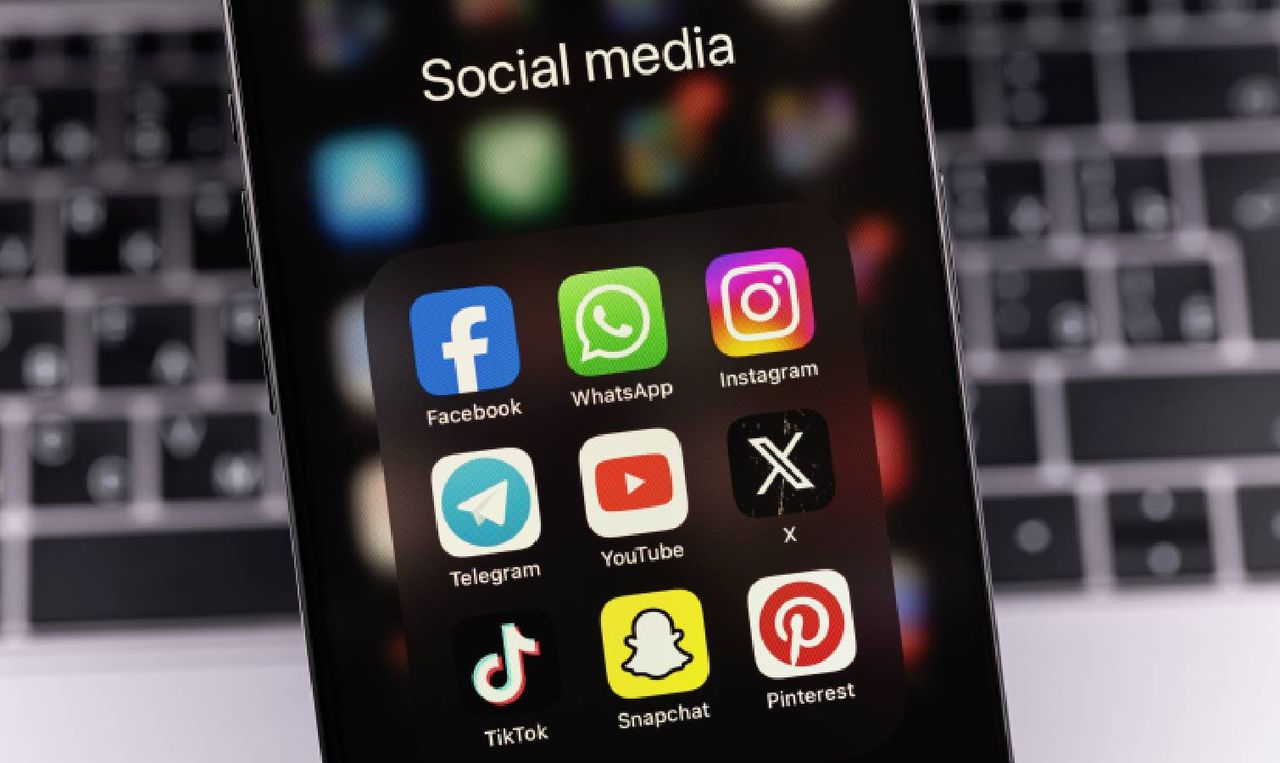
IPhone showing social media apps.

Algorithms are everywhere, analyzing your habits and shaping what you read, watch and hear on every platform, from Instagram to YouTube to TikTok. And it's not just the stuff you want to see — it's also the ads and pitches and sales and stuff that just clutters everything.

I had seen an add on Instagram for HyperTexting, an app that promises to be "your timeline minus the ads, algorithms, and AI slop." I decided it was worth a try because, like a lot of people, I'd grown tired of opening social media only to find my feed dominated by sponsored posts, recommended accounts and content designed to keep me scrolling for as long as possible. I wanted to see what would happen if I stripped all of that away.

HyperTexting does exactly that

(Image credit: Future)

Instead of deciding what you should see, the app only shows content from the publications, newsletters, RSS feeds, blogs and creators you deliberately choose to follow. There are no ads and no "For You" page suggestions. Nothing is nudging you toward another hour of scrolling. That part was pure bliss.

But, after reading my favorite publications and posts, I did start to miss the opportunities that social media offers. In other words, when I reached the end of my timeline, I had to close the app and go on with my day. I don't have a problem with doomscrolling and actually like seeing news and creators that I don't follow. The more I type this, the more ridiculous it sounds, but reaching the end of a feed feels strangely foreign. We've become so accustomed to infinite scroll that an app with a stopping point almost feels unfinished.

So while it will certainly feel peaceful for some, it didn't do it for me. Maybe it's because as a journalist I'm so hungry for the latest news. My "FOMO" (fear of missing out) keeps my eager to accept posts from people and publications that I haven't manually added to my feed.

Notably, within a couple of days, my screen time dropped noticeably. I stopped opening the app out of habit because there was no reward waiting for me at the bottom of another refresh. The endless loop that keeps so many of us glued to our phones simply wasn't there.

I stopped discovering new things

Around day four with HyperTexting, I honestly couldn't take it anymore. I realized I hadn't discovered anything new all week.

That's not a criticism of HyperTexting. In fact, it's doing exactly what it promises. The app gives me complete control over my feed, and that's incredibly refreshing after years of algorithms making those decisions for me.

But complete control comes with an unexpected trade-off. As much as we criticize platforms like TikTok, Instagram and X, their recommendation systems occasionally get something right. Buried beneath the sponsored posts and engagement bait is the article you never would have searched for, the writer you've somehow never encountered or the niche community you didn't know existed until an algorithm placed it in front of you.

Those moments are easy to dismiss because they're surrounded by so much noise. But after a week without them, I realized they matter.

HyperTexting will undoubtedly solve a person's doomscrolling problem almost overnight, but for me, it made me realize how much I've come to rely on unexpected discovery. Left entirely to my own choices, my feed became informative, predictable and, eventually, a little static. In a lot of ways, it's like what AI has done to the web. By simply dishing out answers rather than showing a variety of links for me to click on and discover for myself, users are stuck in a vacuum.

The takeaway

Using HyperTexting made me realize the problem isn't that algorithms exist, but rather what they are optimized to do. Today's social platforms aren't designed to help us discover the best ideas on the internet. They're designed to maximize engagement, time on site and advertising revenue. Discovery is often just a byproduct of those goals.

After a week without that system, I don't think the future is an algorithm-free internet. I also don't think it's one where invisible recommendation engines decide everything we read. What I want is something in between.

More from Tom's Guide

Sign up to read this article
Read news from 100's of titles, curated specifically for you.
Already a member? Sign in here
Related Stories
Top stories on inkl right now
One subscription that gives you access to news from hundreds of sites
Already a member? Sign in here
Our Picks
Fourteen days free
Download the app
One app. One membership.
100+ trusted global sources.