
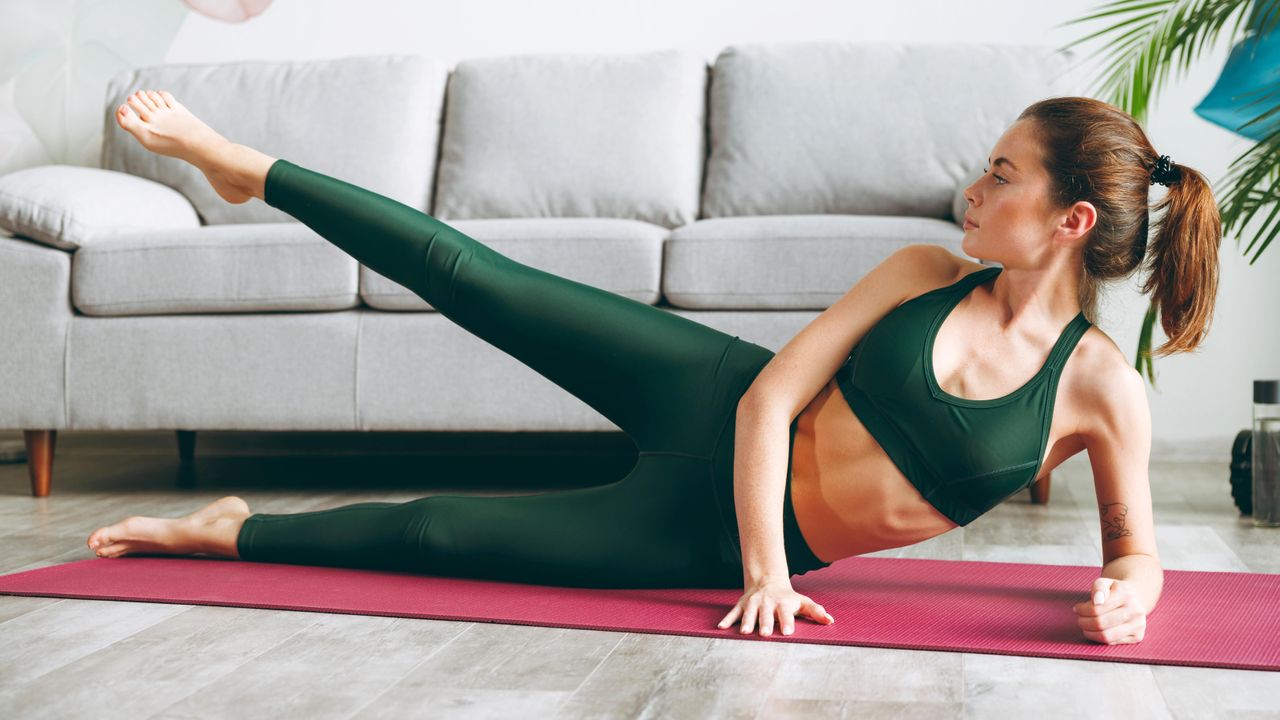
Hip stiffness has become a key problem for me in the last few years. Long hours at my desk don’t help, and neither do years of sitting with one leg crossed over the other, which has left my right hip noticeably stiffer than my left. Sometimes, the tightness makes itself known when I’m squatting, lunging, or running — other times, I’m simply resting on the couch when I notice my hip has suddenly locked up. I’ve tried moves for hip mobility before, but this time I wanted to focus on strengthening my hip flexors rather than just lengthening them. Strong hip flexors play a key role in stabilizing the pelvis, supporting the lower back, and protecting you during higher-impact movements like running, jumping, or fast-paced workouts. If they’re weak or underactive, other muscles often compensate. I found a 10-minute hip flexor-strengthening routine on YouTube from Studio Jibby. Short enough to fit in on busy days, equipment-free, and promising functional hip work rather than passive stretching, I was keen to give it a go. Alongside the best stretches for hip flexors, this routine has now earned a permanent spot in my weekly movement regimen. My hips are (thankfully) feeling stronger than ever.

What is the routine?
This routine is a 10-minute workout designed to strengthen the hip flexors and side hips. There are 10 exercises in total, and it’s 30 seconds of work followed by five seconds for transitioning. So, there’s little rest involved — but it is only 10 minutes long and therefore still feels pretty accessible. Exercises in the routine include: clamshells, side lying hip abductions, inner leg raises, reverse nordics, supine straight leg raises, and front lying leg extensions. Aside from targeting the hip flexors, you also get a workout in the abductors (outer hips) and adductors (inner hips), and there’s some glute work thrown in there as well. If you struggle with hip stiffness, I couldn’t recommend this routine more. The variety of exercises involved will leave your hips feeling both looser and stronger, especially when practiced consistently. Below are the three main benefits I’ve noticed after doing this routine for two weeks.
1. My hips felt stronger (and noticeably less stiff)
The biggest change I noticed was a genuine reduction in that stubborn, one-sided stiffness in my right hip. Movements that previously felt restricted — like stepping into a lunge or taking a big stride uphill — started to feel smoother in just a few days. Exercises like clamshells, side-lying hip abductions, and inner leg raises really targeted the smaller stabilizing muscles around the hip joint, which I’d clearly been neglecting.Reverse nordics and supine straight leg raises added a deeper strength component through the hip flexors themselves, rather than just stretching them. By the end of the two weeks, the routine didn’t feel quite as shaky or effortful, which told me my hips were adapting. They felt looser for sure, but also more capable.
2. My posture started to improve
I wasn’t expecting this one, but after about a week, I realized I was sitting differently at my desk. Stronger hip flexors and glutes (thanks to the glute bridges and front-lying leg extensions) meant my pelvis felt more stable, which made it easier to sit upright rather than slumping or tucking under. Awareness of how we’re sitting is a key part of this, but actively stabilizing the pelvis makes it easier to notice when I’m starting to slouch. When your hips are stiff or weak, your lower back often picks up the slack. As the routine strengthened the muscles around my pelvis, I felt less of that subtle lower-back tightness that creeps in after hours of typing. It didn’t magically fix my desk habits — and I still found the routine harder at the end of the day, when everything felt clicky and more reluctant to move — but it definitely helped me reset.

3. The moves became easier — and that felt like real progress
In the first few sessions, some of the exercises were pretty challenging. The inner leg raises in particular felt stiff and awkward, and I realize now that this is because I was working with such a limited range of motion. But by the end of the two weeks, I could move through the routine more fluidly, simply because my hips had gotten a little looser and stronger. This proved that even in just 10 minutes a day, my muscles were responding. The routine still felt tougher in the evenings, especially after long periods of sitting, when my joints needed more time to wake up. But instead of the stiffness lingering like it usually does, it eased more quickly. And that shift — from tight and reactive to stronger and more responsive — felt like the biggest win.
Verdict: Is this hip flexor strengthening routine worth trying?
If you spend long hours sitting or notice stiffness when you move, this routine is absolutely worth trying. It focuses on building strength in the muscles that actually support your hips, rather than just stretching them for temporary relief. After two weeks, my hips felt more stable, less stiff, and better able to cope with everyday movement — which is exactly what I was hoping for.
- Not sit-ups, planks, or crunches: I do this simple Pilates exercise every single day to build a strong and stable core and work on my hip flexor mobility
- I’m a registered dietitian and here are the 9 healthy foods I actually eat to keep my heart strong
- 'I’m a Pilates instructor, and I recommend these 5 core exercises to help older clients build strength and improve posture'
More from Tom's Guide







