
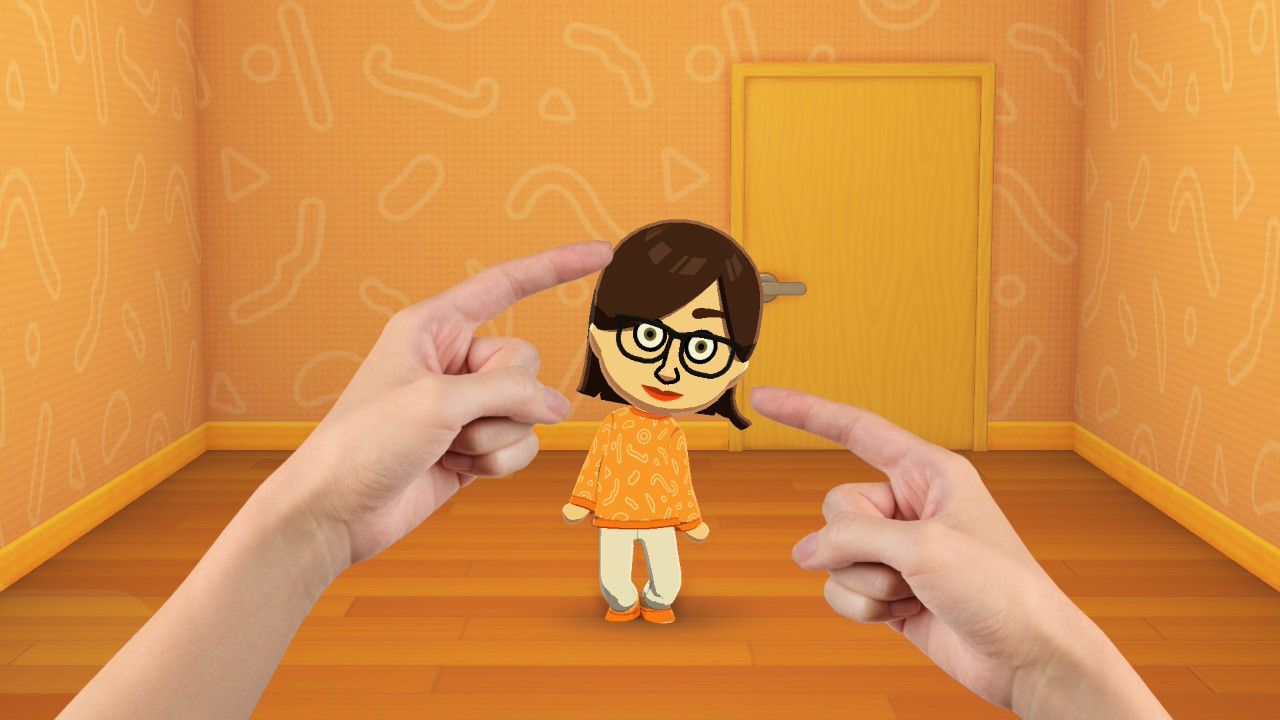
What do you get if you cross The Sims 4 with a reality TV show like Big Brother?
The answer is Tomodachi Life, a life simulator series that’s more about sitting back as virtual versions of your friends and family get into increasingly silly situations than earnestly trying to recreate the real world. It’s never been the most popular franchise out there, but it has become a bit of a cult classic since the first entry to release outside of Japan dropped on the Nintendo 3DS back in 2013.

Even if you never owned that handheld console, you have inevitably seen clips from the game circulating on social media, with fans sharing bonkers conversations between their favorite celebrities, video game characters, comic book heroes, and more.
It’s the kind of game that seems perfect for the current TikTok age, and after going hands-on with the upcoming Nintendo Switch (and by extension Nintendo Switch 2) revival Tomodachi Life: Living the Dream, I simply can’t wait to see just what kind of hijinks players get up to once it’s in their hands.
Mini Mii

Underpinning everything in Tomodachi Life: Living the Dream is a robust character creator that’s filled to the brim with powerful tools. The experience of making a new Mii (those are the cute little person-looking avatars) to live in your game can be as hands-on or hands-off as you like, with the ability to craft new characters entirely from scratch or by answering a series of quick questions.
These start basic (prompting you to select the most appropriate age, face shape, feature layout, and so on) but soon begin to build on each other to venture into a surprising level of granular detail with great results.
Obviously, my first instinct was to create a mini version of my boss, TechRadar Gaming and Streaming Managing Editor Rob Dwiar, which was easily accomplished after just a minute or so of filling in questions while glancing at a photo of him on my phone screen.
The results weren’t completely perfect (for some reason, the game insisted on giving him ginger hair even though I don’t remember ever picking that option), but you can freely edit whatever it comes out with afterwards if needed to get things just right.

Once the visuals are nailed down, you tweak sliders to choose a custom voice for the charming text-to-speech lines that characters come out with and fill in a little personality chart, which informs the assignment of a distinct personality type.
Rob was labelled as a reserved perfectionist, with an imaginative and inspired outlook that means he “finds beauty in even the smallest details.” Not the result I was expecting going in, but honestly, not too far off from the real thing now that I think about it.
You don’t have to stick to creating actual people, either. In fact, I would argue that systems like the incredible make-up menu that lets you draw pretty much whatever you want on an on-screen canvas using either the controller or the touch screen are there specifically to encourage you to go really wild.
A tale of two Lances

Mini Rob was then unceremoniously dumped into TechRadar Island (my highly imaginative custom name for the tropical town where everyone lives in-game) and began to set about his daily life.
What exactly does he do all day? Just wander around, apparently, occasionally glancing up to the sky to ask for help from his omniscient creator god (that’s me, by the way). Within the first few minutes, he demanded some food (obtained from a nearby convenience store that also happens to be staffed by Rob) and, bizarrely, insisted that I pat his head using the touch screen. I don’t think HR would be too impressed by that one…
The next order of business was obviously to make him some friends so he would leave me alone, so I jumped back into the character creation menu to craft a version of me and Editor at Large Lance Ulanoff (mainly chosen because I thought he would be pretty easy to make as a Mii).
If you’re struggling to come up with ideas, there’s even the option to copy an existing character on your island as a starting point. This enabled me to quickly generate a conniving Lance clone, aptly dubbed ‘Evil Lance’, to terrorize everyone - though despite my best efforts he doesn’t really seem that malicious beyond looking generally angry all the time.
The novelty of the new systems is a huge part of the enjoyment
Seeing how every character talks to one another is the big draw here, and you do have some control over how things play out in this regard. You can pick characters up and bring them to each other to prompt interactions, but the specific scene that follows is down to chance. Throw in a relationship system that measures how everyone gets on, plus a seemingly endless assortment of unique scenarios that can occur, and you’ve got a recipe for prime-time entertainment.
Almost everything you do contributes towards both a Mii’s own happiness level and an overall island level, which unlocks new buildings and rewards as it rises, giving you even more features to mess about with.
This included the ability to make Rob start every conversation with his iconic catchphrase: “It’s Rob time” — something he’s literally never said in real life but seemed mildly amusing to me. I’m not going to spoil every surprise in store, as the novelty of the new systems is a huge part of the enjoyment, but everything introduced so far has left me eager to experience more.
Like the previous games, Tomodachi Life: Living the Dream is going to be a niche experience, but lovers of the series’ particular brand of absurdist humor have plenty to look forward to when it launches on April 16, 2026 on Nintendo Switch.