Get all your news in one place.
100’s of premium titles.
One app.
Start reading
Marie Claire
Marie Claire
Lifestyle
Ashleigh Spiliopoulou

I Took The Longevity Test Everyone Will Soon Be Talking About - and Discovered the Secret to Wellbeing

UNBOUND.

Today, most of us are at least vaguely interested in longevity, in the sense that we’d quite like to live well for as long as possible. The pandemic brought our own mortality into sharp focus, while the growing field of preventative health has opened our eyes to the many ways we can support body and mind through diet, movement and lifestyle tweaks.

But far fewer of us would describe ourselves as biohackers. Until recently, the term has strayed uncomfortably close to extremism: the domain of ultra-wealthy, hyper-optimised early tech adopters who run their lives by algorithms and biomarkers. Bryan Johnson is perhaps the most visible example. His dating criteria, which he openly shares in his Netflix documentary Don’t Die, reportedly includes an 11 am dinner, an 8.30 pm bedtime, no small talk and only scheduled sex. In his world, anything that interferes with self-optimisation is expendable.

As we head into 2026, though, the do-it-yourself approach to lifespan is undergoing something of a rebrand. A new wave of community-led spaces, from contrast therapy clubs to private members’ wellness clinics, is taking a more accessible, less dogmatic approach to biohacking. Crucially, they’re beginning to acknowledge a pillar of longevity that hyper-individualism has largely overlooked: social connection.

It’s a significant shift. Loneliness, now at epidemic levels globally, is linked to an estimated 100 deaths per hour, according to the World Health Organisation. By contrast, strong social ties are associated with lower inflammation and a reduced risk of heart disease, stroke, diabetes and cognitive decline. In short, our health doesn’t exist in isolation.

Which is why UNBOUND caught my attention. Opening in Shoreditch in February 2026, the preventative health studio is built on the belief that physical, mental and social health are inseparable. And unlike other longevity tests I’ve taken in the name of journalism, UNBOUND doesn’t just deliver a deluge of data. Instead, it promises a practical, crucially social roadmap to help us make positive, realistic changes, supported by a calendar of events and community touchpoints.

Intrigued, I stepped inside ahead of its official opening to find out whether this buzzy new studio could live up to its promise to redefine longevity. If you’re interested in further ways to age well, take a scroll through our guides to the best longevity exercises, blue zone living and how to improve your musclespan.

I Took A Preventive Health Test, With A Difference - Here's What I Discovered About The Secret To Social Wellbeing

What does UNBOUND’s preventative health testing actually involve?

At first glance, UNBOUND’s preventative health testing looks familiar. Like many modern clinics, the focus is on spotting potential issues early and supporting long-term health, rather than waiting to treat illness once it appears. But the experience begins well before you step inside the studio.

Ahead of your appointment, you’re asked to complete a detailed questionnaire covering everything from sleep quality and anxiety levels to lifestyle habits. Notably, it also asks about your social connections - your sense of community, support and belonging - setting the tone for UNBOUND’s more holistic approach from the outset.

“We test ‘connectedness’ because we know that long-term outcomes are driven by community, not just chemistry,” explains Dr Elliott Roy-Highley, medical director at UNBOUND. “Our health is not merely the result of internal cellular mechanics, but an emergent property of social integration, purpose, and communal regulation.”

There’s solid evidence to back this up. The Harvard Study of Adult Development, for instance, found that relationship satisfaction at age 50 was a better predictor of physical health at age 80 than cholesterol levels.

That’s not to say the physiological metrics don’t matter. You’ll still undergo blood pressure, height and weight measurements, alongside blood tests that allow UNBOUND’s doctors to build a picture of your internal health. These assess markers, including heart and kidney function, as well as nutrient levels such as vitamin D and B12.

From there, the focus shifts to physical capability. A series of short, explosive movements on force plates, combined with grip strength testing and a light treadmill jog, are designed to assess strength, power, stability and cardiovascular health, offering insight into how your body performs day to day, not just on paper.

Before the session wraps, there’s a guided meditation inviting you to reflect on your current challenges, limiting beliefs and health goals. This more introspective element is one of the clearest points of difference from other longevity tests I’ve tried, helping to ground UNBOUND’s insights in lived experience rather than data alone.

Still, this is only the starting point. The real work begins with the personalised report you receive around a week later, where numbers are translated into context and clear next steps, including recommendations for exercise, nutrition and community events, many of which can be accessed via the UNBOUND app.

What are the benefits of a community-first approach to preventative health?

The importance of social connection to human survival is well-established, which makes its omission from much of the longevity conversation all the more striking. But as health psychologist Dr Ravi Gill explains, there’s a reason it’s been sidelined.

“Social wellbeing doesn’t ‘fit’ the culture or economics of optimisation,” she says. “It’s relational, slow-paced and emotionally demanding, which doesn’t fit biohacking’s prioritisation of the individual, measurable and controllable.”

Leslie Kenny, longevity expert and co-founder of The Oxford Longevity Project, agrees. “Social health is harder to measure, commodify or “hack” the way you would a computer system,” she explains. And yet “the most robust evidence from centenarian communities shows that longevity emerges not from isolation or perfection, but from participation in family, neighbourhoods, and shared purpose.”

Both experts point to a landmark 2015 meta-analysis by Professor Julianne Holt-Lunstad, which found that strong social connections increase survival by up to 50%, while social isolation and loneliness raise the risk of premature mortality by around 26 to 32%.

“Social integration is crucial for survival,” says Dr Gill, who points to further research showing that interaction with others is necessary for healthy reasoning, memory and resilience to physical and mental illness.

Cognitive psychology expert Natalie Mackenzie echoes this. “Being around others, particularly those who make us feel good, keeps confidence high and communication skills sharp. Conversations, debates, shared laughter, quizzes and everyday social problem solving all help to keep our brain cells firing.”Importantly, she adds that the quality of our social environment matters. “Supportive, uplifting communities help regulate stress and support healthy brain chemistry, while chronically negative environments can do the opposite, increasing stress hormones and impairing cognitive function,” she says.

Ultimately, “a strong sense of community supports almost every pillar of healthy ageing,” concludes Kenny. “In the world’s longevity hotspots, healthspan isn’t driven by self-optimisation, but by a sense of belonging, along with the pillars of good food, sleep and movement and low stress. Health isn’t something we engineer alone, but that we co-create with others.”

Who would UNBOUND’s preventative health testing work best for?

UNBOUND is clear that its preventative health testing isn’t designed solely for die-hard wellness devotees. With a coffee shop in place of a traditional waiting room, and a back space that will regularly transform into an event venue for DJ sets, breathwork sessions, art exhibitions and panel talks, the studio positions itself as much as a cultural hub as a clinic.

Crucially, the recommendations are tailored to the individual who walks through the door. Whether that’s a parent running on little sleep or a touring musician juggling irregular schedules, the aim is to offer guidance that feels realistic and achievable, rather than prescriptive, making meaningful progress towards long-term health accessible to a broad range of people.

That said, UNBOUND won’t be for everyone. The value of the insights ultimately depends on how willing someone is to engage with the recommendations, regardless of how strong the community offering may be. The testing is best suited to those looking to make tangible improvements to their overall health and who are open to doing so alongside others.

It’s also not currently suitable for those who are pregnant, breastfeeding or less than six months postpartum, those with unstable chronic health conditions or with acute, undiagnosed symptoms.

For now, geography is also a factor. With events largely centred around London, living in or near the capital makes it easier to fully engage with what UNBOUND offers. However, with plans to expand into other major UK and international cities, wider accessibility may not be far off.

I stepped inside UNBOUND to discover how community could improve my health - what I discovered surprised me

Arrival and check in

On the day of my appointment, I’m surprised by how nervous I feel. I’ve never been great with blood tests (a couple of fainting incidents will do that), but there’s also something inherently confronting about medical testing. Despite wanting answers, I can’t quite shake that small, unhelpful voice wondering what they might uncover.

Thankfully, I’m soon set at ease. On the train to Old Street (UNBOUND is around a ten-minute walk from the tube station), I complete the pre-test questionnaire. It takes around 15 minutes and is far more thoughtful than a tick-box exercise, covering everything from sleep and stress to movement, relationships and mindset. My advice? Do it somewhere quiet and give yourself time to reflect - your honesty directly shapes the accuracy of your final report. I also wish I’d paid closer attention to my sleep and stress levels in the fortnight beforehand. Without that awareness, I find myself second-guessing whether I’m exaggerating my restless nights.

UNBOUND itself sits on a quiet side street, moments from the buzz of the Shoreditch Triangle. Step inside, though, and you’d never guess it’s a health clinic. Instead of a sterile waiting room, I’m greeted by an achingly cool East London coffee space: warm wood panelling, typographic prints and punctuations of greenery, coming together in a modernist blend of warmth and functionality. There are even plug sockets handily placed by most tables, which, while not the most glamorous detail, are an underrated luxury, especially for anyone in the London freelance community.

UNBOUND replaces the traditional waiting room with a coffee shop, open to the public (Image credit: Ashleigh Spiliopoulou)

Of course, none of this is an accident. UNBOUND’s ethos centres on physical, mental and social health, and the space is designed to make you want to linger. Everything behind the counter, from matcha to cacao, has been reviewed and approved by the in-house doctors, while just beyond the café sits a spa-like bathroom with a sauna and ice bath, bookable by members when they need a moment of R&R.

The tests

When it’s time for my tests, I’m met by Dr Elliott Roy-Highley, UNBOUND’s Medical Director, who’ll be analysing my results, alongside wellness specialist Katie Zolcinski, a former nurse who’ll be taking me through the testing itself.

What stands out immediately is their energy: it’s warm, relaxed and relatable. I have endless respect for the NHS, but I’ve lost count of the times I’ve left medical appointments feeling rushed or dismissed. Here, that couldn’t be further from the case. They’re already aware of my tendency to faint, so Katie quickly reclines the chair and reassures me we can take everything at my pace, while Elliott is on standby with jelly babies for a post-test sugar boost (proof that no task is beneath him). The blood tests themselves are swift and, thanks to Katie’s steady hand, over almost before I register them.

Next comes the physical testing: counter-movement jumps, single-leg balance, grip strength and a gentle treadmill jog to assess my pVO₂ max. None of it feels intimidating or overly technical, which makes the whole experience feel accessible, even if you don’t consider yourself particularly into fitness.

Katie and Ashleigh comparing the results of force plate testing on Ashleigh's right and left legs (Image credit: Ashleigh Spiliopoulou)

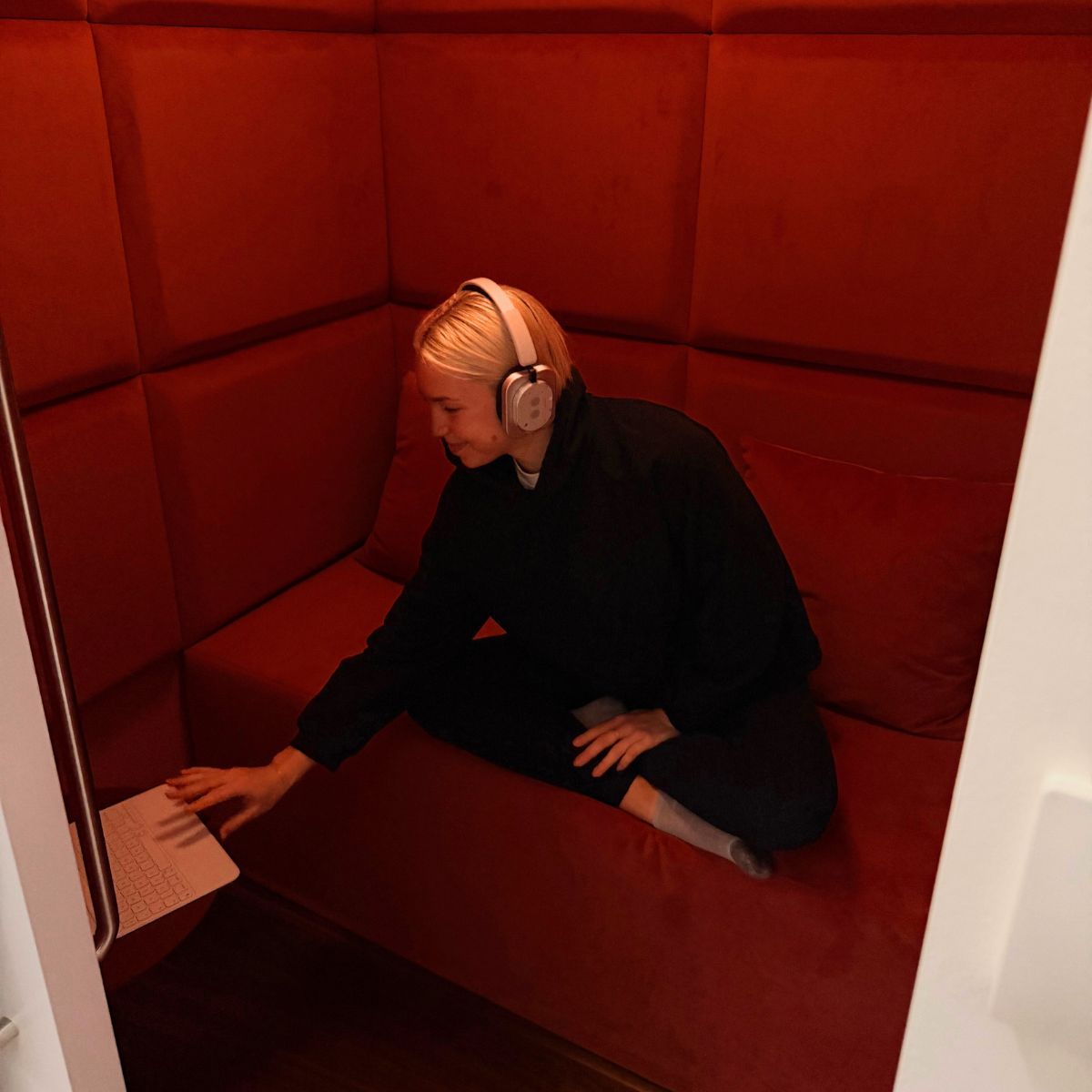
The final stage is the most unexpected, and honestly, the hardest. It involves a short mindfulness session followed by a written exercise addressed to my future self, completed alone in a private cushioned booth. It’s designed to surface limiting beliefs and clarify goals for the year ahead. Speaking to myself with compassion doesn’t come naturally (a very British trait), but as Elliott later explains, consciously articulating who we want to become, and what’s holding us back, taps into neuroplasticity, the brain’s ability to rewire itself. In other words, how can we fundamentally change our approach to life?

The results

Just over a week later, my results landed in my inbox. Logging into my secure online dashboard, I’m met with a detailed breakdown of my health across three pillars: Vitals (how well my organs and systems are functioning), Resilience (my physical capacity for movement), and Repair (how effectively I’m balancing energy output and recovery, particularly under stress).

What sets UNBOUND apart is how clearly the data is explained. Each section is accompanied by notes from Dr Elliott that translate the numbers into plain English, with genuinely actionable advice that’s refreshingly free from jargon or alarmist language.

At the end, there’s a concise summary of the three most impactful changes I can make, all tailored to my circumstances and medical history. The recommendations feel genuinely achievable, rather than the kind that get mentally filed under sounds good, probably won’t happen.

Loneliness and social connection don’t flag as major concerns for me, so my plan focuses more on addressing nutritional gaps (hello, Vitamin D) and improving my sleep, which often takes a hit thanks to a very busy mind. Dr Elliott suggests a digital sunset routine, which involves setting my phone in another room and taking my brain on a “mental walk”, rather than adding yet another supplement to the mix.

For those who do score higher on loneliness metrics, UNBOUND offers personalised community interventions, alongside the science explaining why they matter. Anyone, regardless of their report, can access the wider programme of events, from Pilates and run clubs to vision-boarding workshops, as well as Circles, a member chat feature connecting people with similar goals.

And then there’s the café. Because yes, UNBOUND is also about to become my new favourite place to work. I’d return for the coconut maple matcha alone - and as a matcha sceptic, that’s saying something.

Shop MC UK approved longevity essentials now:

Can loneliness shorten your lifespan?

The short answer is yes, says cognitive psychology expert Natalie Mackenzie. “Humans are social animals and group socialisation is essential for emotional and cognitive wellbeing.”

She explains that social interaction activates multiple areas of the brain involved in attention, memory, language and emotional regulation. Loneliness, by contrast, does the opposite. “Over time,” she says, “loneliness acts as a chronic stressor, altering brain chemistry through sustained stress-hormone release, which can increase anxiety, impair immune function and reduce cognitive resilience.”

Leslie Kenny, longevity expert and co-founder of The Oxford Longevity Project, confirms Mackenzie’s argument. “Loneliness has been consistently shown to shorten lifespan, with an impact comparable to well-established risk factors like smoking or obesity,” she says. “Humans are biologically social, so when that need isn’t met, the body behaves as though it’s under constant threat. Over time, this increases chronic inflammation and erodes resilience and health.”

Sign up to read this article
Read news from 100’s of titles, curated specifically for you.
Already a member? Sign in here
Related Stories
Top stories on inkl right now
Our Picks
Fourteen days free
Download the app
One app. One membership.
100+ trusted global sources.