
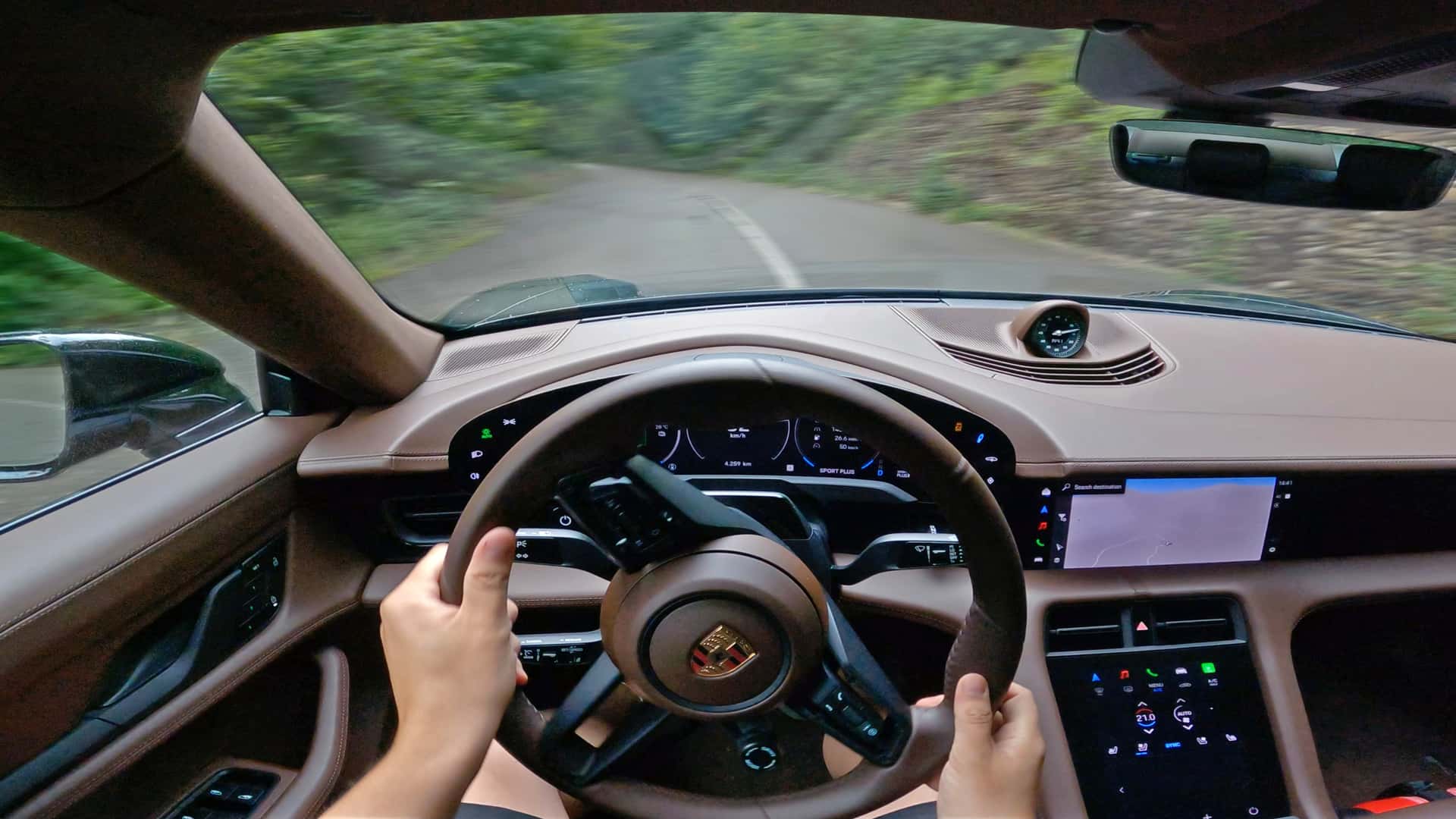
I was pretty surprised when Porsche reversed course on its previous position and added fake gears to its EVs. It seemed to contradict the brand’s ethos of letting real engineering and its cars' handling shine. Porsche was just adopting a trend.
Trying its simulated engine and gears, it’s obvious a lot of work went into making the system as good as you would expect from a Porsche. But it also didn’t define the driving experience as it does in other cars like the Hyundai Ioniq 5 N or the Mercedes-AMG GT 4-Door EV.
AMG went out of its way to make its fake V-8 believable, and it’s probably the most realistic such system currently available in any EV at any price. Porsche's solution is in some ways similar to what Hyundai is doing, with an approach that makes it clear what you’re listening to is a simulated video game-esque engine, not the real thing.
Gallery: 2026 Porsche Taycan 4
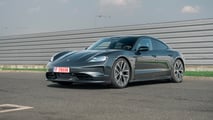
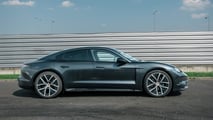
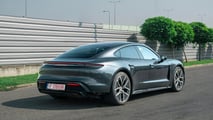
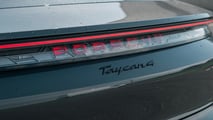


This brings me to my recent drive of the refreshed 2026 Porsche Taycan a few weeks ago. You can optionally add the simulated engine and cog swapping if you want, but my tester didn’t have it. Sure, I would have liked to experience it on a Taycan to see what it feels like in a sedan, but I frankly didn’t miss it.
The Taycan is such an accomplished driving experience that it rewards the keen driver even while completely silent. I’ve never driven another car quite like it, regardless of what powered it. Put another way, the Taycan is a corner-carving weapon, and it’s better than most other performance cars I’ve tried. I didn't need anything fake to have fun.
Its chassis is so neutral, poised, and predictable that I quickly fell into a rhythm and gained huge confidence on a bendy road. It flowed from corner to corner in a way I hadn't experienced before, and while threading corners together in it, the last thing on my mind was that it didn't have an engine or gear shifts.
My Taycan 4 tester had the more basic spaceship-like acceleration sound. You need a sound to help you gauge your speed in an EV; otherwise, you have to keep checking the speedometer more often than you would in a combustion car. Having a sound, whatever it is, gives you a reference for when and how much to brake, which you can do more by feel if you also hear what the vehicle is doing.
This was the point a BMW engineer made when explaining how and why they created the acceleration sound for the upcoming electric M3. He argued that it’s about having an audible reference to gauge your speed, rather than recreating a gas-car-like experience.
That resonated strongly with me. It reminded me of the spirited drives I've taken in the Tesla Model 3 Performance. It’s a fantastic driving car and provides the closest experience to the Taycan you can get at that price. But having no sound at all isn't ideal, and truly dulls the experience.
Sometimes I carried a little more speed than I'd like into corners and was pretty alarmed when I glanced at the speedo, so I had to brake really hard to stay on the road. This has never been an issue when driving combustion cars, regardless of whether they are performance-oriented or not.
The second issue is less intuitive accelerator modulation: judging how much power you’re feeding in as you balance the car through a bend and accelerate out of it. A sound that responds to accelerator input adds another layer of feedback, potentially making those adjustments feel more natural. Research supports sound’s role in perceived power delivery, though that doesn’t establish that silent EVs are inherently harder to control.
The flipside of a completely silent EV is that all other sounds the car makes feel amplified. The most important of these comes from the tires, and you can hear how close you are to the limit of grip in an EV more clearly than in a combustion car. This sound is usually drowned out by the engine, but in an EV you can start to appreciate how it subtly changes depending on where you are in its grip range.
In the Taycan you have no trouble hearing what the tires are doing, and it really helps you correct your line through the accelerator and brakes. If you simulate an engine, lifting off doesn’t make the noise go away, and adding that artificially in an EV makes it harder to hear what the tires are doing.
As much as I think believably faking combustion in an electric car is cool and an impressive technical achievement, I could easily live without it, even in a performance EV.
The new Porsche Cayenne Electric is also available with the fake shifting, but the one I drove last week in the Eurocharge by Schaeffler EV road trip didn’t have it. It had the same kind of gearless acceleration sound as the Taycan I tried, but here it sounded like a futuristic V-8 fueled by something that isn’t yet on the periodic table.
It was perfectly adequate for conveying speed as I briskly descended Austria’s stunning Grossglockner high Alpine pass. It added something without forcing me to shift pretend gears that slow the car down just to make it feel like something it isn’t. That doesn't sit quite right with the purist in me.
What interests me now is what we’ll eventually get nostalgic about. Someone learning to drive today might one day remember an early performance EV as fondly as we remember a naturally aspirated straight-six. They may even complain that the new cars have lost something. I’d quite like manufacturers to give that person something original to miss, rather than a software reenactment of their dad’s gearbox.