Get all your news in one place.
100’s of premium titles.
One app.
Start reading
Digital Camera World
Rod Lawton

I think camera autoexposure is sometimes too clever for its own good

If you want consistent exposures, shoot in manual mode!.

Autoexposure is great when the light is constantly changing, like when you’re moving from sun to shade, from outdoors to indoors – and indoor lighting can vary massively. In these conditions, autoexposure is a modern life-saver, as it will do automatically in a fraction of a second what it would take you precious moments to do manually.

So where’s the harm? Well, autoexposure is great in constantly changing light. But when the light is essentially the same for a whole sequence of shots, your camera is still adjusting the exposure each time.
Some of the time you’ll end up with small exposure variations, which really don’t matter at all. But if you need a constant exposure for panoramas, or just to maintain a consistent visual style for a set of related images, this constant exposure adjustment is definitely not what you need.

Here’s an example. I went out in late-afternoon recently to take some shots at the seaside as the sun went down. I took my Sony A7 II which, like almost all digital cameras, tends to expose quite generously to preserve shadow detail and can sometimes lose highlight detail as a result. 

This has nothing to do with my Sony being a few years old. The best mirrorless cameras and even the best professional cameras all work the same way. They check and adjust the exposure every time.

So instead of leaving the camera on autoexposure, I worked out a good manual exposure based on keeping detail in the highlights and stuck to that throughout.

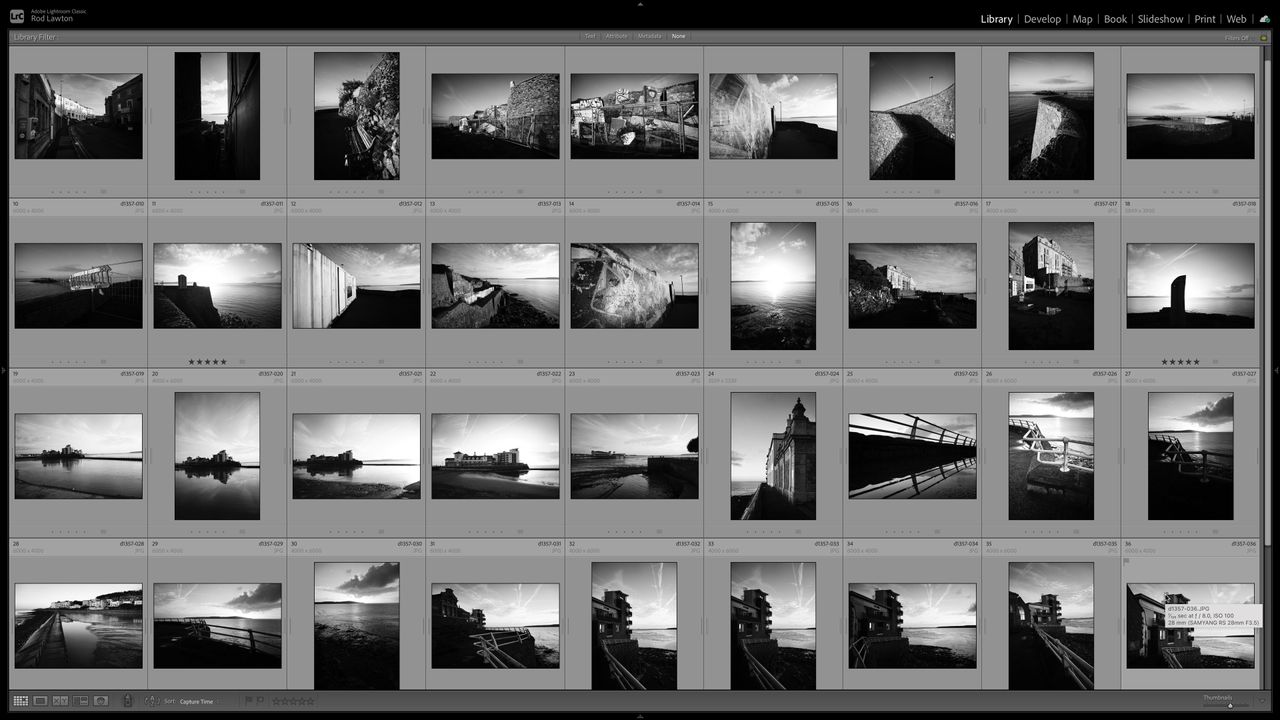
I put my Sony in Manual mode, checked the exposure for the late afternoon light (1/125sec at f/8, ISO 100) and didn't vary it once for the whole shoot, regardless of what my camera's meter said (Image credit: Rod Lawton)

The result? See the main image for this article, which is my Lightroom 'contact sheet' with no adjustments. All the exposures were fine, even those shot into the light, with side-lighting and strong contrast between sun and shade.

Digital camera sensors record heaps of shadow detail that you can bring out if you need to, especially if you shoot RAW, but I didn't need to.

My main takeaway was that all those micro-adjustments my camera makes to the exposure between shots were utterly unnecessary in this scenario (and many others, if it comes to that).

In fact, my fixed manual exposure setting gave me a consistent set of images that really looked as if they belonged together as part of a themed shoot – and they all captured that wonderful late-afternoon light without the meter being distracted by unimportant shadow areas.

So this, I think, is the weakness of autoexposure systems. They check and adjust the exposure for every shot, whether it needs it or not. It’s fine in constantly changing light but, if the light stays the same, don’t you want the exposure to stay the same, too?

You might also like...

Wondering what is exposure in photography? Trying to understand the exposure triangle? Find out more about camera terminology with our photography cheat sheets.

Sign up to read this article
Read news from 100’s of titles, curated specifically for you.
Already a member? Sign in here
Related Stories
Top stories on inkl right now
One subscription that gives you access to news from hundreds of sites
Already a member? Sign in here
Our Picks
Fourteen days free
Download the app
One app. One membership.
100+ trusted global sources.