
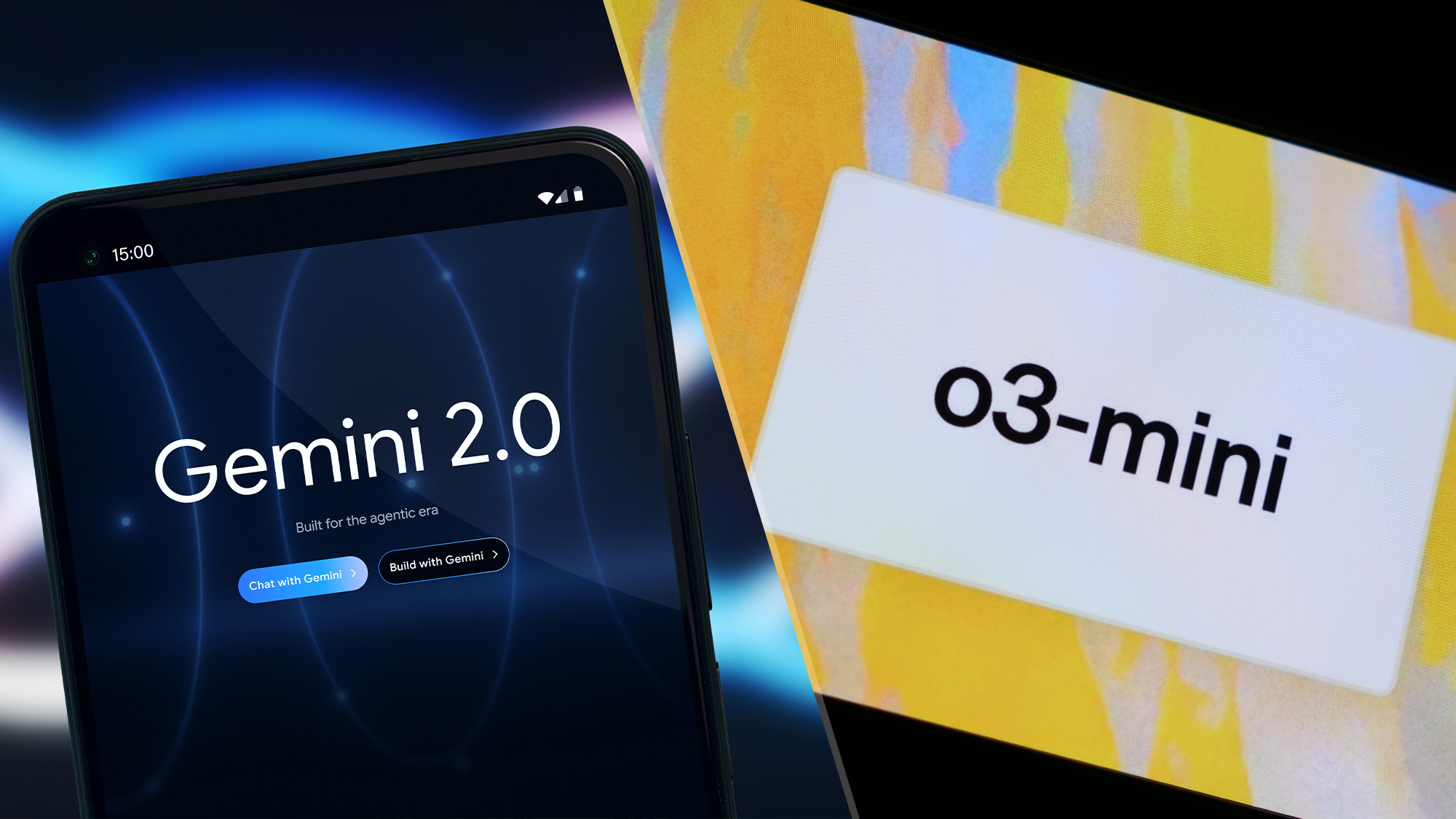
OpenAI's o3-mini and Google Gemini 2.0 are both advanced AI language models that are built for speed while maintaining accuracy. Best of all, they are available for free to users. Gemini just announced it has made Gemini 2.0 accessible for general availability while OpenAI recently made o3-mini available to all ChatGPT users for free.
Both AI models have the ability to “remember,” which makes the chatbots respond with clear, more human-like responses the more they are used. Both models are designed to enhance reasoning capabilities, particularly in complex problem-solving tasks such as advanced mathematics and coding.
Yet, they differ in several areas. For instance, o3-mini supports an input context window of up to 200,000 tokens while Gemini 2.0 Flash offers a significantly larger context window that supports 1 million tokens, making it suitable for high-volume, high-frequency tasks. For instance, Google's model can generate relevant one-line captions for approximately 40,000 unique photos at a cost of less than a dollar in Google AI Studio’s paid tier.
OpenAI’s o3-mini primarily focuses on text-based processing while Gemini 2.0 Flash extends support to voice and video processing, enabling multimodal interactions.
While both o3-mini and Gemini 2.0 are designed to enhance reasoning and problem-solving capabilities, they differ largely enough that I had to compare them to see these distinctions first-hand. Here’s what happened when I put the two free tier chatbots to seven different prompts that test their suitability for specific applications and use cases, ranging from reasoning and coding to mathematics and more.














