
Compression socks for running are far from anything magic – they won’t suddenly turn you into an elite runner, but they can make your legs feel more supported during a run and a bit less battered afterwards. That's especially the case if you’re someone who gets tight calves, sore shins, or that heavy-leg feeling the day after a hard session.
I used to assume they were mostly for marathoners or long-haul flights, but once you start stacking up miles, running more than a couple of times a week, or mixing in speed work and hills, you realise your lower legs take a lot of punishment, and anything that helps you feel a bit fresher is worth a look.
The tricky bit is that not all compression socks feel the same. Some are super supportive, while many others are basically just tight socks with a sporty logo. I’ve tried a load over the years, and these are the three pairs I’d recommend for most runners, depending on what you want from them.
CEP The Run 4.0 are compression socks you can actually run in. Supportive where it matters, breathable, and built to last, they use proper calf-based sizing for a secure fit that steadies tired lower legs without feeling restrictive or sweaty.
2XU Vectr Light Cushion socks prioritise underfoot comfort with structured compression and excellent arch support. They’re slightly bulkier than minimalist options, but ideal for runners with sore feet who want stability, cushioning and a more planted feel inside their shoes.
Danish Endurance’s cotton compression socks are a softer, more relaxed take on compression. Easy to wear, gently supportive and ideal for recovery, travel or everyday use, they’re a comfortable, affordable option for runners who don’t want that super-squeezed racing feel.
Best overall
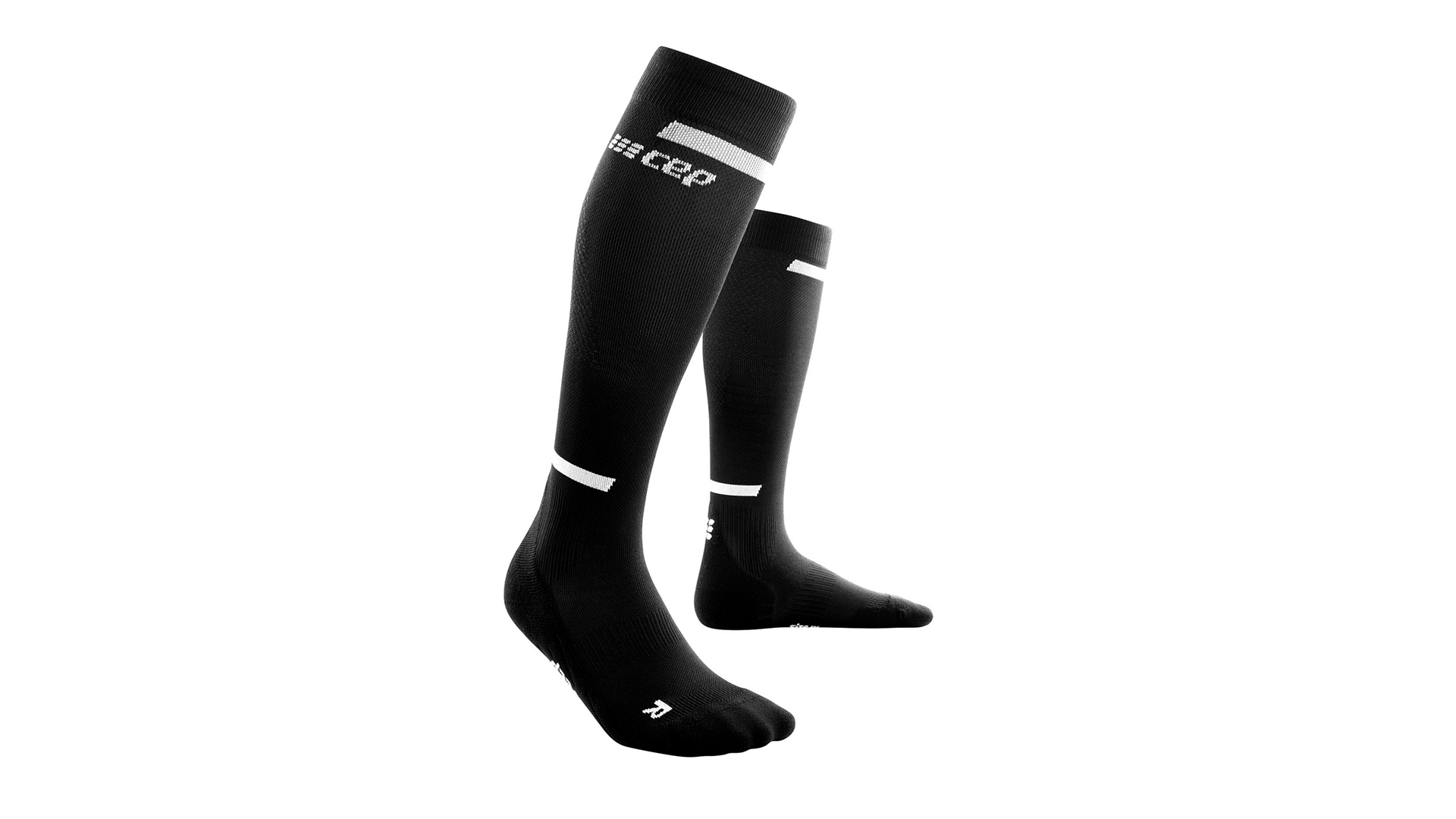
CEP The Run 4.0
If you want one pair of compression socks you can wear for actual running, not just recovery or travel days, CEP The Run 4.0 is probably your best bet.
These are the ones I keep coming back to because they feel like they’ve been designed by people who actually run. They're supportive in the right places, breathable enough that your feet don’t get too sweaty, and tough enough that they don’t feel like they’re going to give up the ghost after a 60-degree wash.
The main thing that I like about CEP's compression socks is the fit. They tend to do proper sizing based on calf measurements, so when you get the right size, the compression feels super secure rather than just a bit tight. You get that secure feeling around the ankle and calf, which is what you want if your lower legs tend to feel a bit wobbly in longer runs.
The CEP Run 4.0 compression socks typically sell for around £45 in the UK, roughly $50-60 in the US, and about AU$80-90 in Australia. They’re not the cheapest socks in the world, but they feel like proper running kit rather than something you’ll throw in a drawer and forget about. Be sure to shop around, too, as prices vary a lot by retailer.
Best for support
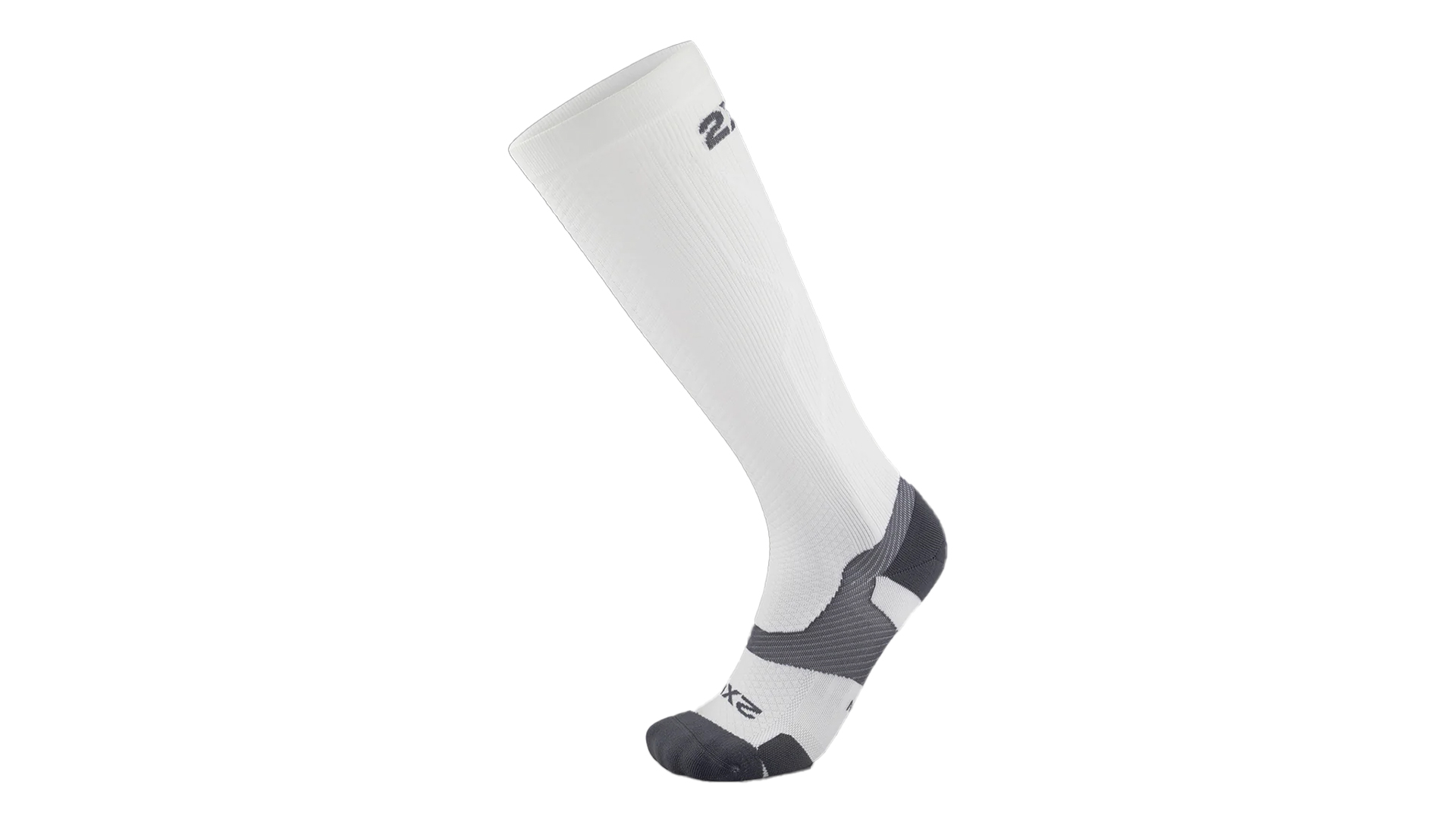
2XU Vectr Light Cushion
If you're a runner who suffers from endless foot problems, such as plantar fasciitis, achy arches, or you just want a bit more underfoot comfort, the 2XU Vectr Light Cushion socks are the ones to go for.
These lower-leg compressors feel way more structured than many of their peers, and they’re especially good if you like the idea of compression for the calves but don’t want your feet to feel bare inside your shoes. The support around the arch is great too, and that’s where these stand out compared to a more minimal sock.
The only downside of these socks is the extra bulk. If your running shoes are already snug, you might notice these take up a bit more room than a thinner compression sock. But for comfort and support, especially if you’re dealing with foot soreness, they’re top-notch.
The 2XU Vectr Light Cushion compression socks are available now, priced at around £30-40 in the UK, $40-55 in the US, and AU$70-90 in Australia, depending on where you get them.
Best for beginners
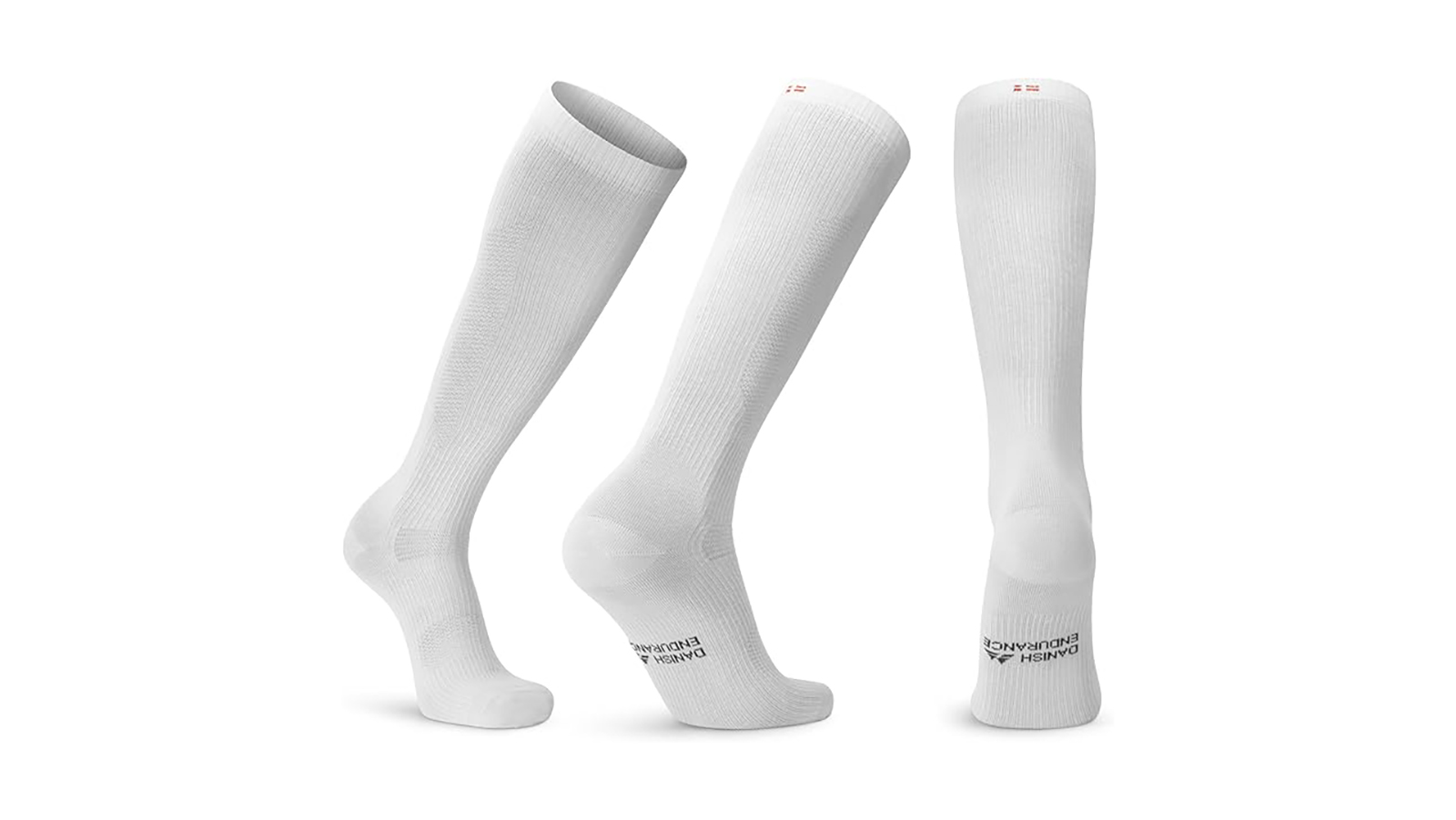
Danish Endurance Cotton Compression Socks
Not everyone wants super-firm compression, especially newbies. So if you’ve never worn compression socks for running before, or you mainly want something you can wear post-run for recovery, Danish Endurance’s cotton options are a pretty good starting point.
What makes these socks different from the other two on my list is that they're softer and have a more “normal sock” feel, which is exactly why they’re so easy to throw on and wear day-to-day. The compression is gentler, so you’re less likely to end up battling with them every time you put them on, and they don’t feel overly intense if you’re not used to that squeezed-calf sensation.
They’re also good if you want something you’ll actually wear outside of running, such as dog walks, air travel, or even just shoving them on after a long run while you’re watching TV and pretending you’re stretching.
If you’re chasing the firmest performance compression for racing, these aren’t that. But if you want an affordable, comfy, low-drama pair that still gives you that supported-leg feeling, they’re a great option.
The Danish Endurance cotton compression socks come in a host of colours and usually cost less than the more hardcore brands, which helps too. In the UK, you should be able to pick them up for £20-30 (cheaper per pair if you get a multipack). That's about $25-40 in the US and AU$40-60 in Australia.
Good to know

If you’re only going to buy one pair of compression socks and you actually want to run in them regularly, I’d go for the CEP The Run 4.0. They’re the most “pure running” sock here and the best all-rounder when it comes to support, breathability and durability, I'd say.
However, if you’re dealing with foot niggles or you want something that feels more cushioned and supportive underfoot, the 2XU Vectr Light Cushion socks are the best bet, especially for comfort. These are also great for longer runs when your feet can start feeling a bit battered.
And if you’re compression-curious but don’t want to commit to super-tight socks straight away, Danish Endurance's cotton option is the easy pick - being comfortable, affordable and versatile enough that you’ll actually use them.