Get all your news in one place.
100’s of premium titles.
One app.
Start reading
The Independent UK
The Independent UK
Niki Cottrell

I swapped my synthetic mattress to one made of wool – here’s how it changed the way I sleep

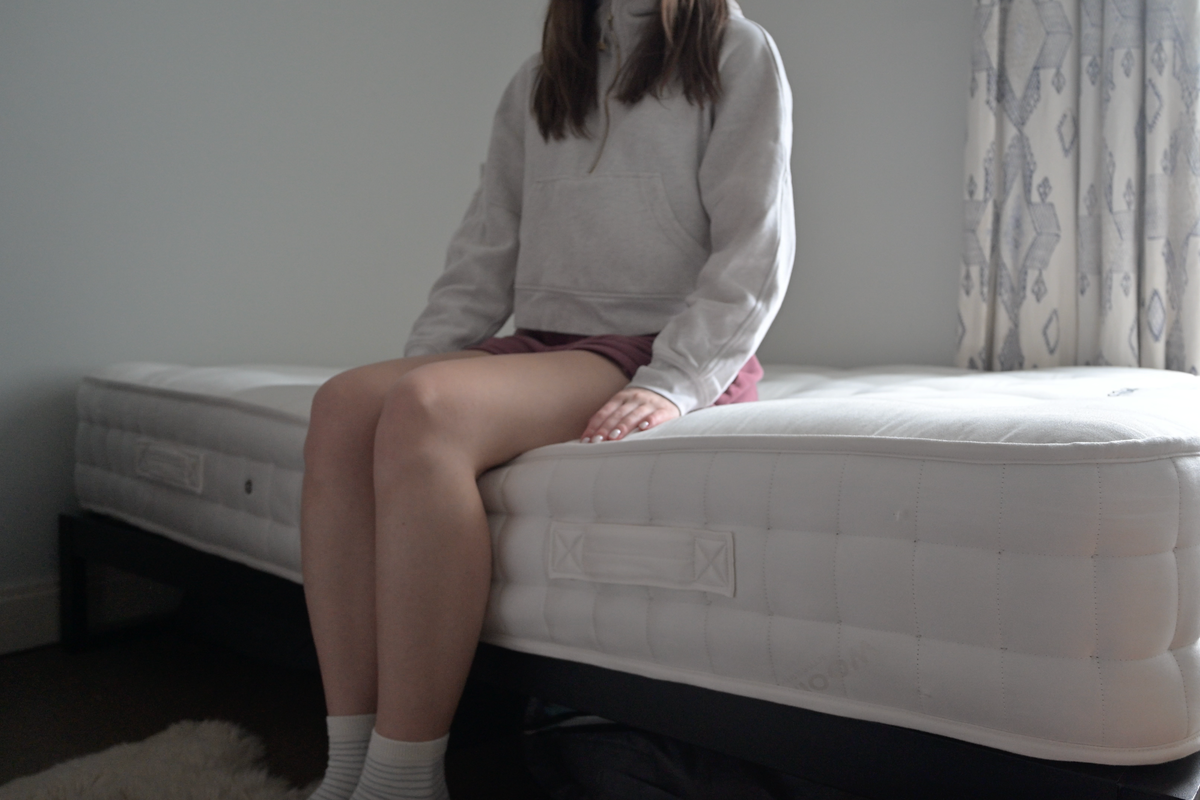
I want to feel comfortable with the materials I’m sleeping on and breathing in every single night - (Niki Cottrell/The Independent)

As someone who was strongly anti-nap time as a child – and who later, in my early-twenties “van life” years, slept on what can only be described as a plank of wood topped with lawn chair cushions – it’s safe to say I’ve experienced everything that a good night’s sleep isn’t. It’s not waking up repeatedly to regulate your temperature. It’s not jolting the person next to you every time you roll over. And for me, it’s also not about buying into layers of unnecessary gimmicks. Sleep should be simple. It should be something you don’t have to overthink – just something that quietly works.

That mindset is exactly why I was drawn to the Woolroom standen wool mattress in the first place. Through the highs and lows of my own sleep journey (yes, even the plank-and-cushion era), I’ve learned what actually matters to me. I want ample support with minimal sinking. I want softness to the touch. And most importantly, I want to feel comfortable with the materials I’m sleeping on and breathing in every single night.

The fact that this mattress is made using natural wool was a big draw. Choosing natural materials has become increasingly important to me, not just from a sustainability perspective but for my wellbeing. I like knowing that what I’m sleeping on isn’t filled with synthetic foams or chemical treatments, and wool’s breathability and temperature-regulating qualities also align with what I’ve learned I need.

I’m not someone who enjoys spending a large amount of money lightly. But I also know the frustration of going down the cheaper route, only to realise I’ve truly “got what I paid for” – and not in a good way. Over time, I’ve come to accept that some things are worth investing in, provided the value genuinely matches the price tag. So, I decided to take one for the team and test the Woolroom standen wool mattress myself, to see whether its natural credentials and premium price actually translate into better sleep. Here’s my honest experience and how it’s changed the way I sleep.

Read more: How to choose a mattress, an expert buying guide

How I tested

I’ve been testing the Woolroom standen wool mattress for more than a month after my old synthetic mattress, the DreamCloud Luxury Hybrid Mattress, caused shoulder and lower-back aches.

For context, I’m a front- and side-sleeper, so I focused on comfort, support, spinal alignment, and how the bed adapts to movement. I also tracked temperature regulation across nights and seasonal changes to see if the wool truly delivers breathability and cooling. This hands-on approach let me assess the following:

  • Delivery and setup: Having previously lugged mattresses to my bed myself, I opted for a professional setup this time for ease. From when the doorbell first rang to my mattress being fully placed, setup took only a matter of minutes.
  • Value for money: Price and value for money were key considerations when testing. I assessed the quality of materials, level of support, and overall presentation to make sure you’re getting your money’s worth. Prices in this piece are for a double, but it’s available in a range of sizes from single to euro king.
  • Comfort: While this is subjective, I paid close attention to any changes in my sleep quality throughout the night and over the span of a month. I considered how the mattress felt in different sleep positions, from side sleeping to front sleeping, as well as sitting up in bed reading a book. I took into account everything from cushioning to overall support.
  • Support: Notoriously one of the trickiest parts of what makes a good mattress, I noted any changes in my shoulder and lower back pain over the duration of a month.
  • Motion transfer: I tested the mattress’s motion isolation by paying attention to any movement when I tossed and turned at night. I also tried a practical test: jumping on one side while placing a glass of water on the other, and the glass didn’t spill, showing it handles motion really well.
  • Temperature regulation: I tested the mattress throughout a full cycle, when my body temperature ranged from normal to warmer at night. I paid attention to whether I woke up uncomfortable or sweating, and how the natural fabrics compared to my previous synthetic mattress in keeping me cool and comfortable.

Read more: Best mattress toppers, tried and tested

Woolroom standen wool mattress

Rating: 4.5/5

Mattress sizes (UK): Single, double, king, super king, emperor, small double, euro double, euro king

Mattress type: Pocket sprung

Guarantee: 15 years

Sleep trial: 100 nights

Rotate or flip: Rotate

Tested by: Front- and side-sleepers

Firmness rating: Available in "regular", "soft" and "firm" | "regular" rated by tester as 7/10

Depth: 29cm

Cover: Not removable

Old mattress recycling: £50

Why we love it

  • Particularly good if you prefer a mattress with structure
  • Made primarily from wool, cotton and cashmere
  • Excellent edge support
  • Great motion isolation

Take note

  • If you prefer a soft mattress, this may feel too firm
  • Natural wool scent at first – I found it cosy, but those sensitive to smells may notice it initially

Initial thoughts

With so much emphasis on layers of foam and springs and sleep tech, it’s easy to overlook the appeal of a simply well-made, natural mattress. After struggling to find something that felt both supportive and free from synthetic materials, I tested Woolroom’s standen wool mattress to see whether traditional craftsmanship could outperform modern gimmicks.

When it first arrived, I was struck by its height. With its 29cm depth, it felt substantial yet not over-the-top, which I’ve found with previous mattresses. Unlike some memory foam mattresses I’ve tested previously, there was no synthetic smell on arrival, just a subtle wool scent that faded quickly.

The couriers helped set it up on my bed frame, but I tested rotating it myself – something the brand recommends doing every three months – and found the double size manageable to shift alone. At 40kg, it’s heavy, so some may prefer a second person to assist.

Simply sitting down on it for the first time, I could already tell it offered more structure and support than my previous mattress.

Overview

I’ve been sleeping on the mattress for more than a month, which feels long enough to move beyond first impressions and into noticing consistent patterns in comfort and support. The brand offers a 100-night sleep trial when purchased with a Woolroom mattress protector, which gives more than enough time to test it properly at home.

Price-wise, it certainly sits in the premium category, though you can often find discounts, which makes the investment feel more accessible. That being said, even at its full price, the mattress is competitive with other premium natural fibre mattresses and the traceable British wool and handcrafted construction place it firmly in that higher-quality category.

The mattress is made with layers of ethically sourced British wool, cotton and cashmere, all encased in a breathable cotton cover. It feels firmly constructed, with very little motion transfer when shifting positions.

Firmness and pressure relief

(Niki Cottrell/The Independent)

As a side and front sleeper, the mattress has noticeably more structure than my previous bed, keeping my hips lifted and spine aligned without feeling rigid. The wool and cashmere layers add gentle cushioning at the shoulders, but I never feel as though I’m sinking.

The first few nights I slept on it, I noticed a shift from my previously bouncier mattress to something firmer. But it began to feel supportive rather than simply firm. The improvements in my sleep were close to immediate, with my shoulder pain significantly reducing within the first week.

What I’ve appreciated most is how I feel in the mornings. I’m prone to tightness in my shoulders and lower back, but the firmer support keeps my hips elevated and my spine aligned. I’ve experienced fewer early-morning aches since making the switch.

There are three firmness options: regular, soft and firm. I tested regular and rated it a 7.5 out of 10 for firmness, placing it on the slightly firmer side of medium. When lying down, I didn’t experience any sinking. Instead, the mattress offers gentle cushioning that keeps my body lifted and aligned.

During testing, I paid close attention to how the mattress responded to weight. I tested this by pressing down in different areas with my hands and sitting and lying in different positions to see how much it compressed. Although there was a fair amount of give, at its deepest, the sink was roughly a few inches. Just enough to let myself feel comfortable without the feeling of falling into my bed.

Edge support

I barely noticed any ripple or bounce across the mattress during the night (Niki Cottrell)

The springs provide even weight distribution support. Even when lying at the edge of the bed, I didn’t feel as though I was going to fall off. I experienced some sink, but in a way that felt intentional, with the mattress adjusting its support to wherever I was lying.

As key parts of my morning and evening routines, I lie in bed with my feet up on the wall (which I tend to do for five to 10 minutes) and sit up to read a book or journal. For each of these activities, I was looking for near-edge support, but this time in positions that may not be as typical for standard testing. With other mattresses I’ve slept on, I’ve found that they dip dramatically when lying with my feet on the wall, so it feels like my back is less supported. With Woolroom’s standen wool mattress, though, my weight is distributed in a way that the mattress almost feels unnoticeable. When sitting up in bed, the mattress gently adjusts to the position I’m in, then firmly holds me there. The bottom line is: the edge support is impressive.

Temperature regulation

As winter shifts into spring, I’ve been able to maintain the same 13.5 duvet tog and cotton sheets without discomfort. Even on warmer nights, I remained comfortable and didn’t overheat in my usual setup.

I’ve experienced less of the groggy, overheated feeling that I used to notice with the synthetic mattress I had before. I’ve also found myself sleeping through the night rather than waking to adjust the covers, which may suggest the breathable natural fibres help regulate temperature more consistently.

Motion transfer

When moving around in bed, motion transfer is impressively minimal, which I assume is thanks to the calico-wrapped pocket springs. The mattress feels stable and well-anchored, giving the surface a grounded, secure quality that makes it easy to shift positions without feeling like you’re rolling off.

Even when sleeping alone, I barely noticed any ripple or bounce across the mattress over the month of testing, which really adds to a sense of calm and undisturbed sleep. Whether turning, sitting on the edge, or getting up in the night, the firmness and stability combine to create a reassuring, reliable feel throughout.

The motion isolation is impressive (Niki Cottrell/The Independent)

Another test I conducted was jumping on the mattress (what better excuse to jump on the bed than in the name of testing?). I wanted to see how far I could push the motion transfer claims. I jumped on one side of the mattress with a glass of water on the other. Although it would be impossible for the water inside not to move, I was happy to see that there was no spillage – instead, just some light rocking. Considering how close I was to the glass, I was thoroughly impressed.

Maintenance

When it arrives, it needs to be unpacked and left to air. The website doesn’t state a timeframe for this, but my mattress was delivered around 9am, and I slept on it that same night.

The mattress may initially appear slightly shorter than the base, but it gradually settles; if it does so unevenly, the brand recommends turning and rotating it to help even it out.

The mattress is double-sided, and the brand recommends turning and rotating it regularly for the first 12 weeks, then every three months. In a double size, I found this manageable on my own, though some may prefer an additional person to help, as it is heavy (40kg).

For cleaning, a soft brush can be used to remove surface fluff, and spills should be blotted dry as quickly as possible. The cover isn’t removable, so a mattress protector is worth considering, particularly as the 100-night trial only applies when purchased with one.

Buy now £2109, Thewoolroom.com

Your questions about the Woolroom standen wool mattress, answered

Is the Woolroom standen wool mattress worth the money?

I’ve genuinely loved sleeping on the Woolroom standen wool mattress – it’s easily the most premium mattress I’ve tested so far. It feels solid and well-built, with hardly any unnecessary movement when I shift positions, which has made a noticeable difference to my sleep.

There’s also something quietly reassuring about knowing I’m spending a third of my life sleeping on natural fibres. I’ve really enjoyed the subtle wool scent and the neutral, cosy finish, too, which feels unfussy but inviting from the moment you lie down.

For anyone who runs hot at night, the wool keeps things comfortably cool. I’ve been sleeping so well on this mattress and would wholeheartedly recommend it to anyone who values high-quality, natural materials and firm support.

What are the disadvantages of the Woolroom standen wool mattress?

For those who favour the depth-of-sink that a memory foam mattress provides, this one won’t quite do the trick. I found the mattress sits comfortably in the medium-firm category. There is still a layer of soft cushioning that sits on top and hugs you in just enough, but it consistently holds its original shape. For me, the firmness turned out to be much preferred, particularly for the support it offers my shoulders and lower back, but if that sinking feeling is a priority, I’d opt for the “soft” option when buying.

The other downside is the cost. The high level of craftsmanship means this is not a cheap mattress. At full price, a double will set you back more than £2,000, and truthfully, there are more affordable mattresses on the market. But you will have to forgo the eco credentials.

Why you can trust IndyBest reviews

Niki Cottrell has been testing products for IndyBest since 2023. In her attention to wellness, both in her personal life and through testing, she has found sleep to be a core part of a person’s journey. For her, this looks like a consistent and full night’s sleep, along with the feeling of being refreshed when waking up the following morning.

Sleep is something that Niki has grown a deep appreciation for as she has seen first-hand the positive impact that prioritising this aspect of her life makes. From lower back and shoulder pain to waking up throughout the night, she has experience with some of the most frustrating results that come from sleeping on a bad mattress, and knows exactly what to look out for to avoid these conditions creeping back into her sleep routine.

Looking for more recommendations? Read the best duvets review

Sign up to read this article
Read news from 100’s of titles, curated specifically for you.
Already a member? Sign in here
Related Stories
Top stories on inkl right now
One subscription that gives you access to news from hundreds of sites
Already a member? Sign in here
Our Picks
Fourteen days free
Download the app
One app. One membership.
100+ trusted global sources.