Heading off-grid on a multi-day hike or cycling trip usually involves some strategic battery management.While a heavy power bank is the usual safety net, a reliable portable solar panel allows you to generate your own free electricity on the move (so long as the weather cooperates).
The market is awash with portable solar chargers, ranging from flimsy dashboard toys to massive, rigid arrays designed to power a motorhome. The Bluetti 60W solar panel aims for the middle ground. It’s a 60W folding panel built with portability in mind, stripping away the bulky kickstands found on heavier camping panels in favour of a design that you can comfortably strap to your back or chuck in a crowded car boot.
It’s competitively priced too, costing around £99. I’ve been carrying Bluetti’s foldable panel out into the wild, propping it up against rucksacks and chasing the sunshine to see if the compact power plant is worth your money.
Read more: Best solar chargers, tried and tested
How I tested
To see how the Bluetti 60W solar panel performs in the real world, I took it on a camping trip to Somerset. Admittedly the site had mains power, but I endeavoured to keep my kit charged using nothing but precious photons. I’ve added more detail about my testing at the end of this review.
Read more: Lidl to sell £400 plug-in solar panels – here’s everything you need to know
Bluetti 60W solar panel
Power: 60W (30W USB)
Weight: 1.4kg
Dimensions (folded): 22.6cm x 21cm x 7cm
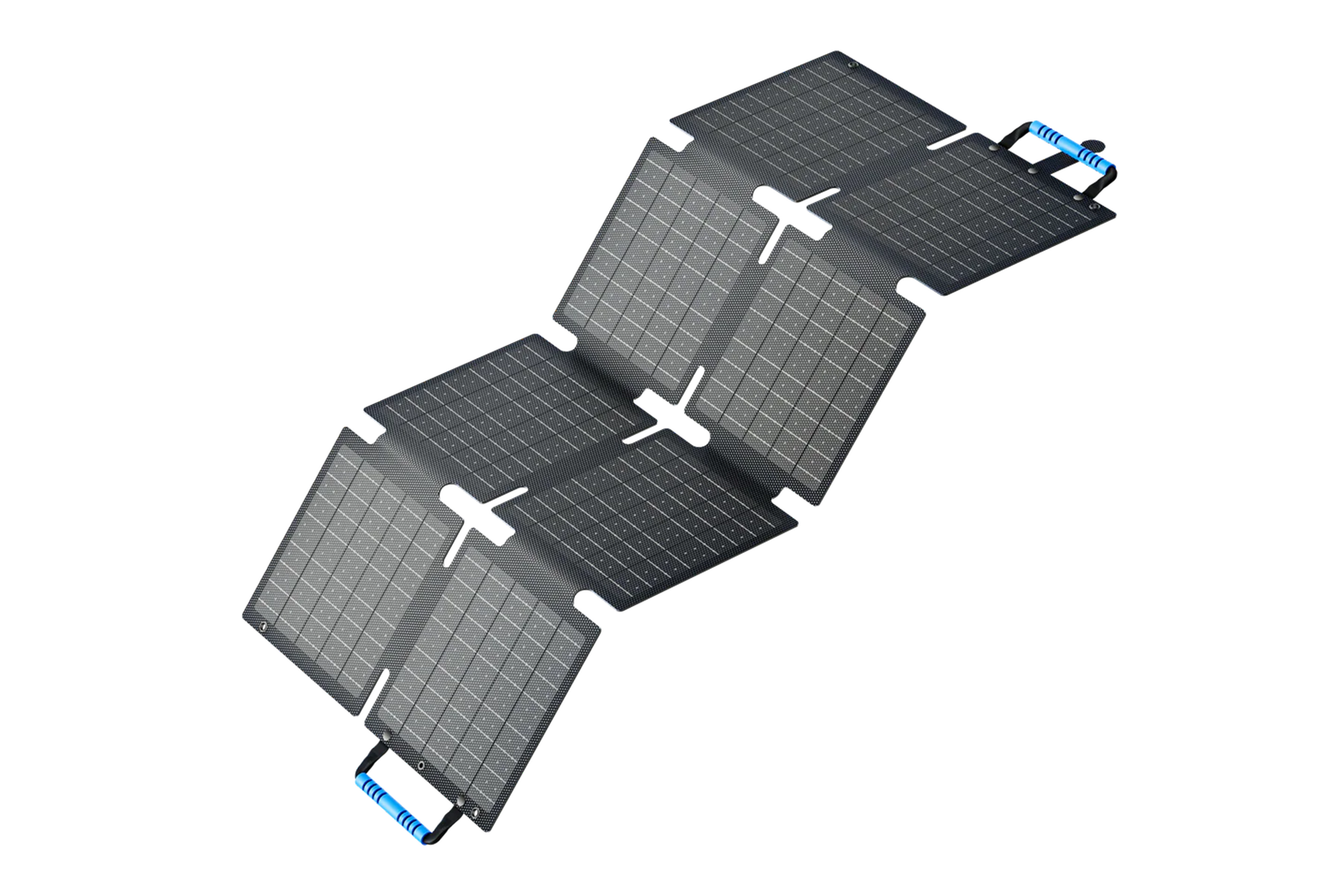
Dimensions (unfolded): 90cm x 42.4cm
Connections: DC5521 (60W), USB-C (PD30W), USB-A (18W)
Why we love it
- Folds into a neat A4-sized square
- Highly durable ETFE coating
- Built-in USB ports for direct charging
Take note
- No built-in kickstand
- Lower overall wattage compared to bulkier camping panels
Design and portability
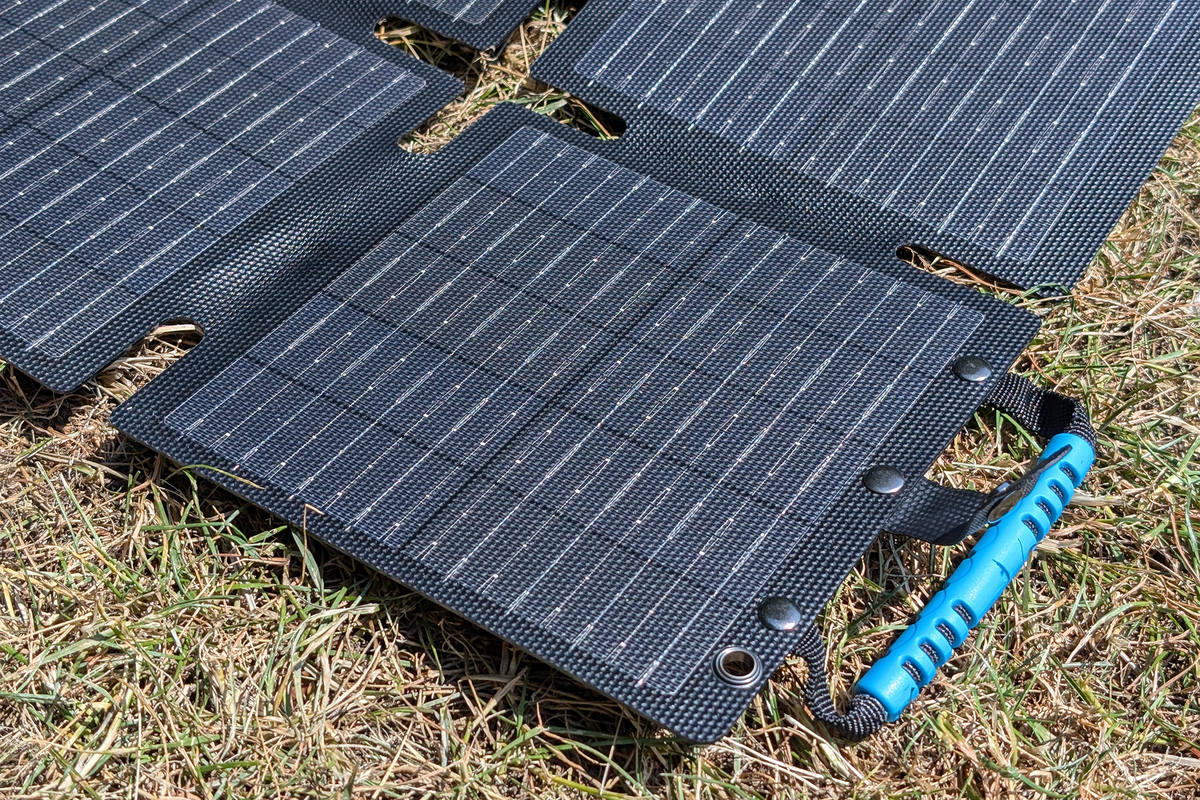
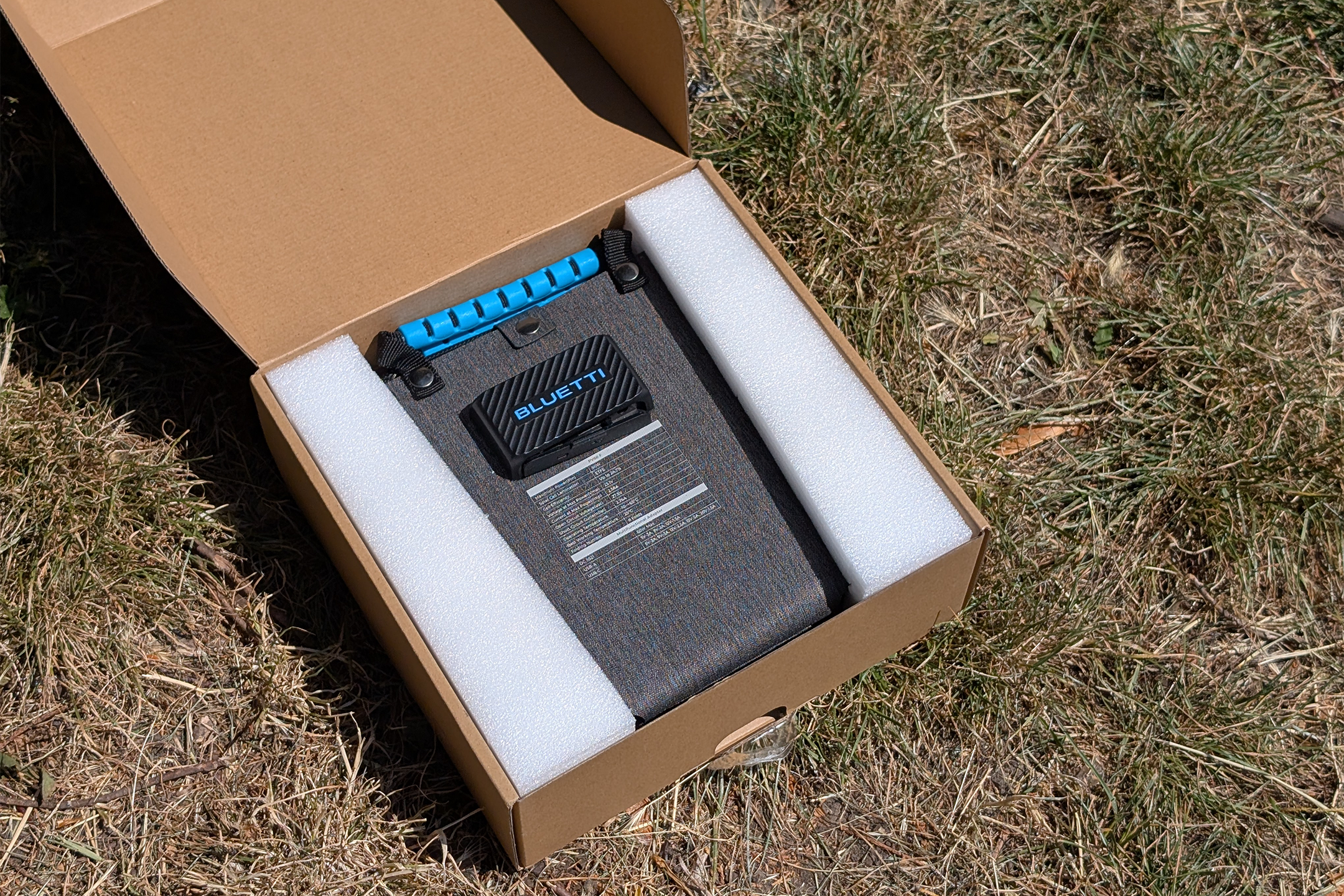
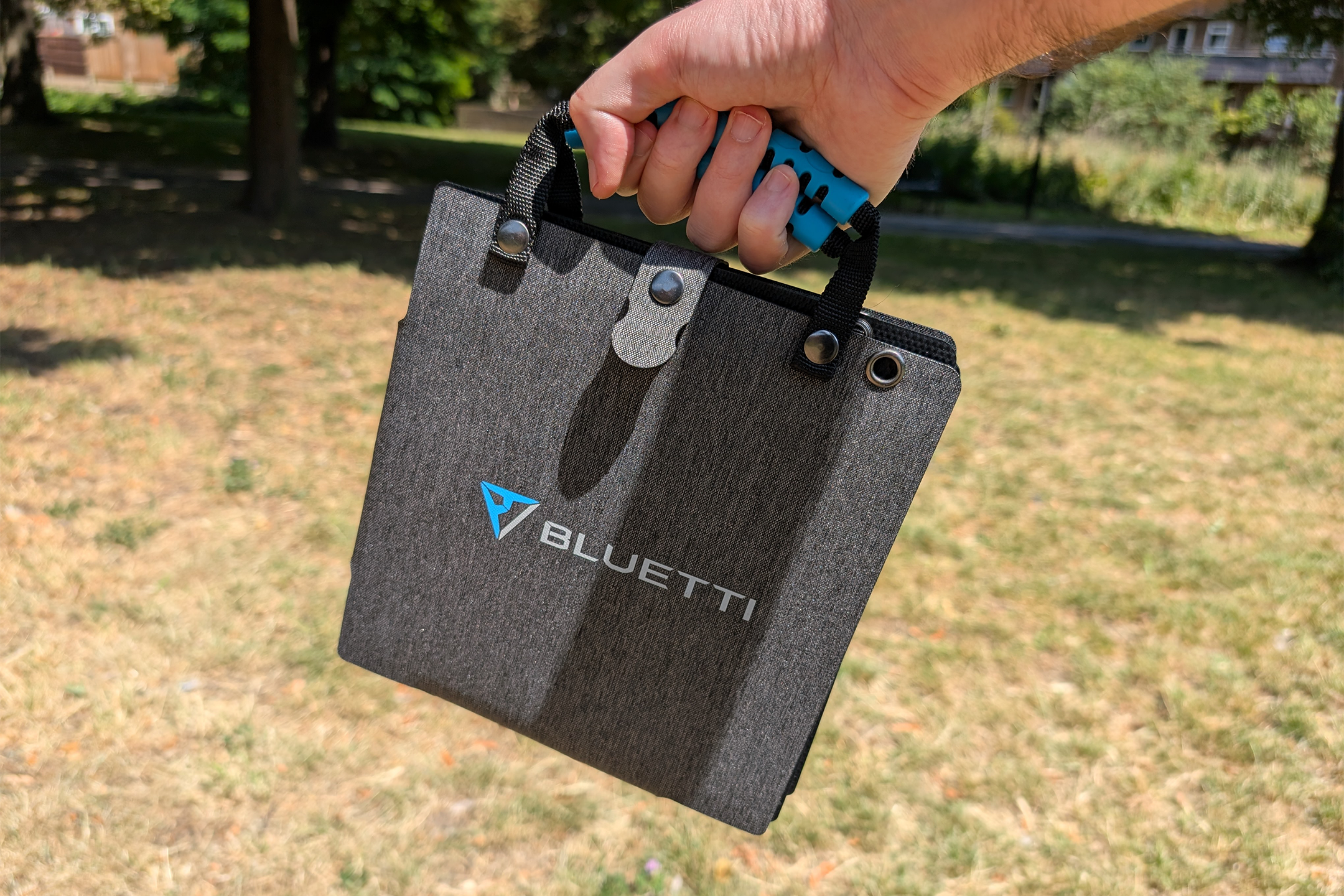
The immediate appeal of the Bluetti 60W solar panel is the form factor. Using a clever eight-fold design, the entire 90cm array collapses down into an impressively neat little square with a handle, roughly the footprint of a sheet of A4 paper. At 1.4kg, it has a reassuring heft to it without feeling like a burden in a backpack.
Bluetti has built this thing to survive the outdoors. The monocrystalline silicon panels are laminated with ETFE (ethylene tetrafluoroethylene), a highly durable, weatherproof polymer that resists scratches and shrugs off water. I happily laid it down in the damp dirt and chucked it into the boot of my car without much thought. It feels more robust than the fabric-heavy panels you often find at this price point.
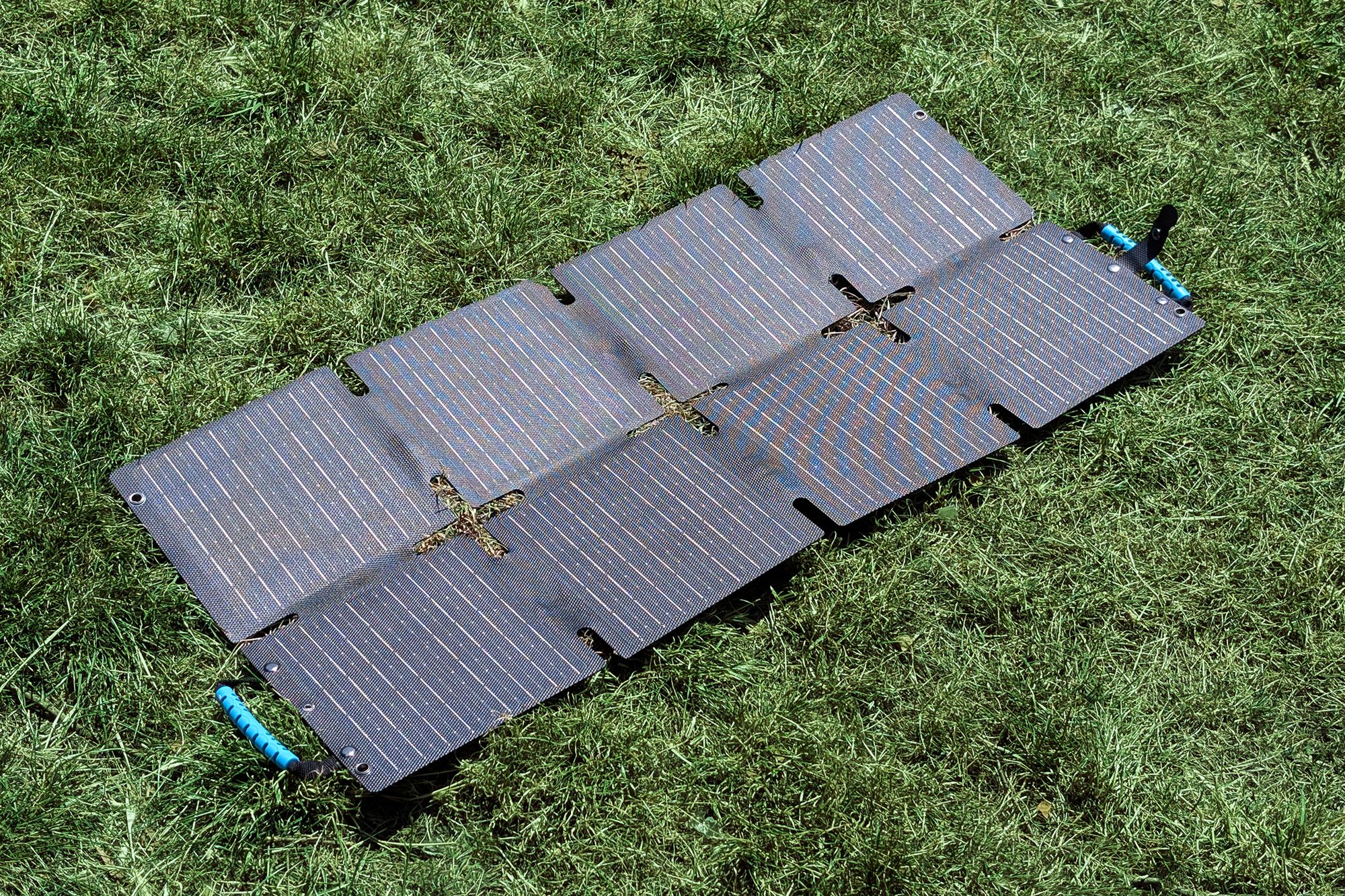
To keep things foldable and slim, Bluetti has left out the kickstand. Solar panels need a direct, perpendicular line of sight to the sun to hit peak efficiency, which is hard to achieve without a set of adjustable legs. But in practice it wasn’t much of an issue. The folding design is flexible enough that you can easily prop it up against a rucksack or a tent to catch the afternoon rays.
It also features reinforced metal eyelets along the edges, a tough carrying handle and a secure button clip, giving you plenty of options to use the included carabiners to drape the panel over your backpack or your bike, soaking up the sun while you walk or ride.
If dialling in the perfect 45-degree angle to maximise every last watt is important, you might be better served by a heavier EcoFlow or Jackery panel (both of which I’ve tested and liked). But for throw-it-in-a-bag portability, the Bluetti 60W solar panel makes the right compromise. The USB-C port maxes out at half the panel’s rated wattage anyway, which still gives you plenty of headroom.
Performance and connectivity
The Bluetti 60W solar panel is rated for 60W of power under perfect lab conditions. In the real world, at the height of summer, I managed to pull a respectable 50-55W of output through the DC5521 port and a consistent 30W fast-charging from the USB-C.
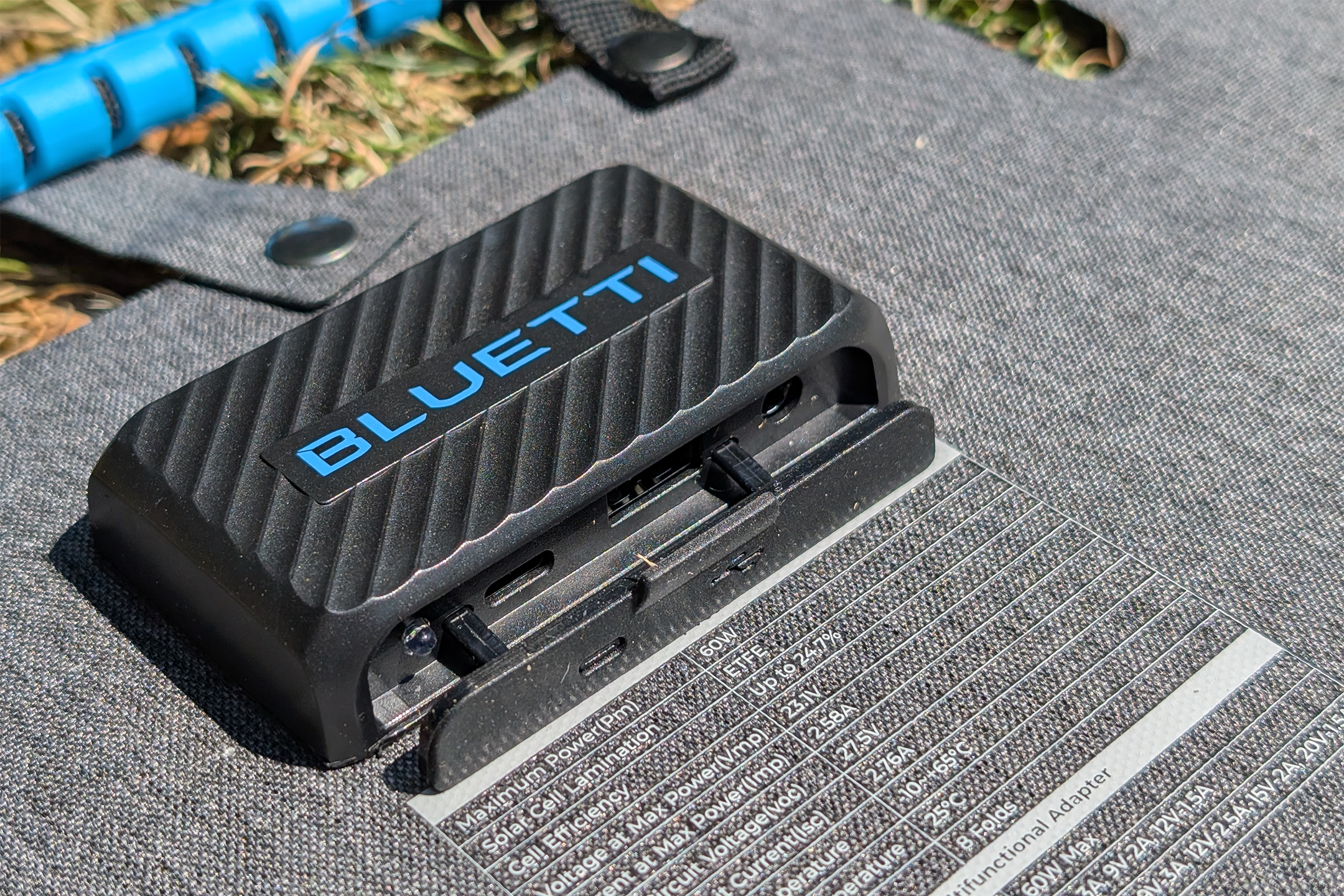
A quick glance at the spec sheet explains why the panel performs so reliably. With an operating voltage of 23.1V, the panel pushes a relatively high electrical pressure for a 60W panel. This means that when a cloud rolls over and the output inevitably drops into the teens, the panel maintains enough voltage to keep your devices sipping power, rather than repeatedly cutting in and out. The higher voltage also means the panel doesn’t cope well with partial shading, so keep an eye out for rogue shadows.
Connectivity is where the Bluetti 60W shows its versatility. Tucked away in a zipped pouch are three DC ports that can be used simultaneously. The first is a standard 12V-24V DC barrel (DC5521), which achieves the 60W output on the box and can be used to charge a power station. There’s also a USB-C port (PD30W, up to 20V-1.5A) for fast charging phones, and a USB-A port (18W, up to 12V-1.5A).
If you’re hiking or biking and want to top up your devices during a lunch stop, you can plug your phone or tablet directly into the USB ports. Under sunny conditions I recorded fast-charging speeds equivalent to a solid 30W wall charger, which is more than enough to resurrect a dead smartphone in a hurry. Alternatively, if you’re car camping, you can use the included DC cable to hook the panel up to a portable power station during the day for running three-pin electronics at night. I tested it alongside Bluetti’s own AC50B battery (£299, Bluettipower.co.uk), which saw its 448Wh capacity replenished by 25 to 35 per cent over the course of a sunny day.
Buy now £119, Amazon.co.uk
Should I buy the Bluetti 60W solar panel?
The Bluetti 60W solar panel is the most versatile portable solar panel I’ve tested, with an eight-fold design that shrinks down to the size of a sheet of paper while remaining rugged and high-performing.
It’s tough enough to withstand being thrown around a campsite, and the ability to charge a DC, USB-C and USB-A device simultaneously means you don’t need to haul around a separate, heavy power station to make use of it. If portability is your main concern for your next off-grid adventure, it’s a superb choice.
How was the solar panel tested?
To see if the Bluetti PV60F could handle life on the trail, I packed it up and took it out into the elements (my balcony, the local park and a camping trip in Somerset), using it as my primary source of backup power for several days.
Why you can trust IndyBest reviews
As IndyBest’s tech critic, Steve Hogarty has spent more than a decade testing and reviewing the latest gadgets, from premium smartphones to off-grid power solutions. By taking devices out of the testing lab and deploying them in the muddy, unpredictable reality of the outdoors, he ensures his recommendations are always honest, unbiased, and grounded in practical experience.
Read more: Best power banks to charge devices on the go, tested on iPhone, Android and more