
Get all your news in one place.
100's of premium titles.
One app.
Start reading
Tom’s Guide
Tom’s Guide
Technology
Scott Younker

I spoke to a hearing expert to find out the best ways to protect your kids' hearing — from headphones to listening limits

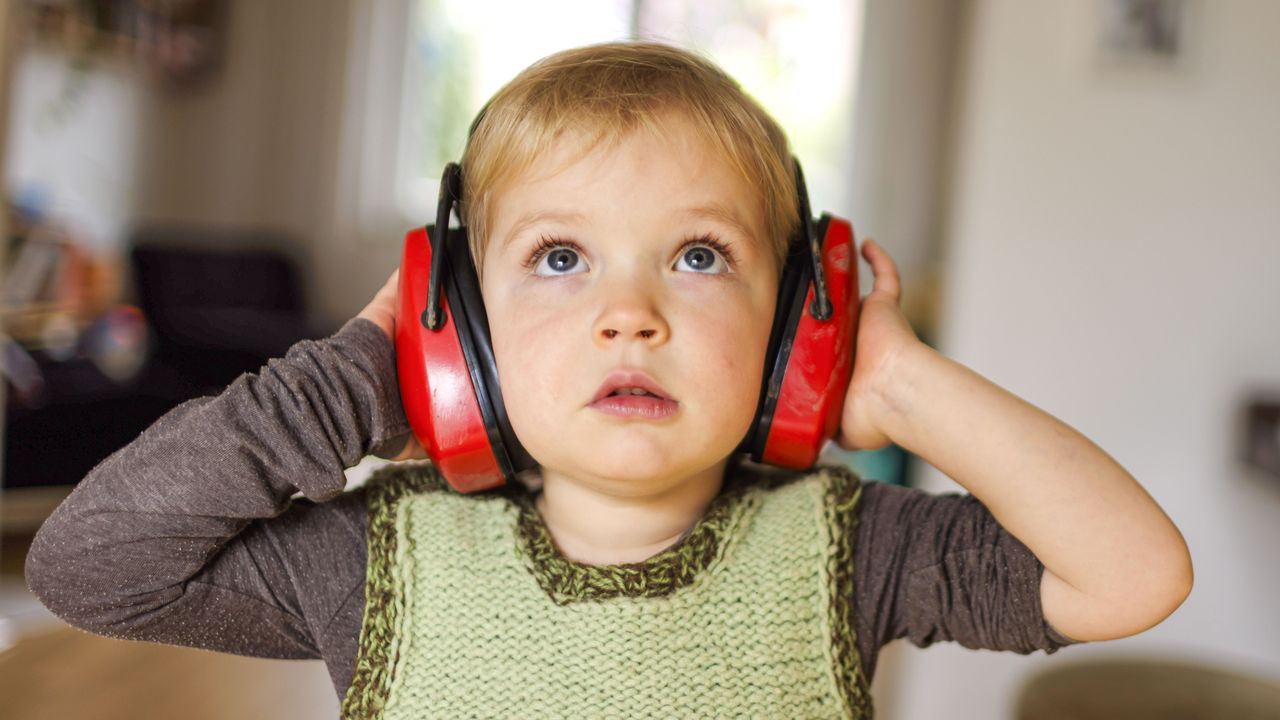
Small child wearing protective headphones.

For some of us, the road trips of summer are starting to wind down and back-to-school needs are beginning to creep up. The luxury of headphones in the car becomes a necessity as kids commute to school or use them to focus on schoolwork.

You may be inclined to hand your kids a set of headphones you no longer use, or you’ve spotted some cheapo ones at your local drugstore. But those cans may be doing more harm than you know, as the lack of volume control can lead to permanent hearing loss.

Fortunately, there are options that can be safer for your kids. With more kids wearing headphones that seem to be glued to their heads, how can you protect their hearing now and in the future?

We spoke to a hearing expert and the makers of kid-friendly headphones to find out how volume-limiting headphones can assist parents in protecting their children’s hearing and tips for doing more beyond buying appropriate headphones.

“We only get one set of ears”

(Image credit: Shutterstock)

The world in general is a loud place with a multitude of sounds that over time can cause noise-induced hearing loss. Both OSHA and the World Health Organization recommend 85 decibels as a safe listening level for people in industrial settings. That rating is over an eight-hour “time-weighted average.”

Per the American Academy of Audiology, anything over that level can cause permanent hearing loss, and hearing protection is recommended: “regardless of how long the sound lasts.” At 80 dB, the sound is equivalent to an alarm clock, while sounds in the 90 to 110 dB range include concerts, power tools and earbuds (at full volume).

Kaitlyin Kennedy, an audiologist and member of the Academy, told Tom’s Guide that the recommendation for children is more conservative, at 75 dB and 80 dB for adults. She noted that headphone use in teens has gotten worse in general in the last few years.

A study by the University of Michigan in 2024 found more than half of kids age 5 -12 have their own personal audio devices and use them at least an hour a day.

“When hearing loss sets in, whether genetic or noise exposure, it grows over time,” Kennedy said. “It’s a snowball; one instance won’t [cause problems], multiple will.”

She added that while tech is improving, including with hearing aids, nothing is the same as natural hearing.

What headphone manufacturers offer

(Image credit: Tom's Guide)

Fortunately, headphones can be capped so that the volume of audio coming through the drivers can’t exceed a set decibel level.

Most of the kids-friendly headphones Tom’s Guide has tested so far do feature volume caps around 85 dB. iClever limits volume at 80 dB for many of its headphones based on the EU EN50332-1 standard and WHO recommendations.

iClever also uses its “SafeSound” technology, which combines active noise canceling with maximum volume to ensure kids aren’t trying to turn the volume all the way up to hear music or media over outside noise.

Puro Sound Labs, based out of Southern California, purposely caps all of its headphones at 85dB. Founder Dave Russell set out to create safer headphones after his own daughter suffered noise-induced hearing loss that an audiologist blamed on constant headphone use.

“One in five teens are at risk of some level of noise-induced hearing loss due to headphones,” VP of sales Davis Camarigg told Tom’s Guide. He noted that even the company’s adult and older-teen-targeted headphones only go up to 95dB, though the company doesn’t just cap the volume or use ANC without also ensuring the audio still sounds good.

“If it's so loud they can't hear you speak, it's too loud”

(Image credit: Future)

Buying the correct headphones and limiting how loud the audio you listen to is an important aspect of protecting your and your children’s hearing. But there are other ways to protect yourself.

Kennedy provided several tips to help protect your ears.

She recommended that everyone reduce the amount of time they spend listening to audio, especially when using headphones. “Keep [settings] on 60% for no more than 60 minutes and then take a listening break,” Kennedy said.

Kennedy said that by the time kids hit teenage years, their ears are much more adult, but damage can be done when they’re younger because the sounds are louder to developing ears.

Your phone can help

(Image credit: Credit: Shutterstock/Tom’s Guide)

With many kids on smartphones, you can set limits or monitoring systems. For example, with headphones connected, you can go to the Control Center on your iPhone and see your headphones’ dB levels. Under Accessibility Shortcuts, you can also limit loud sounds in your headphones under Settings > Sound & Haptics > Headphone Safety, then Reduce Loud Sounds.

Android has a “Volume monitor” that will tell you how long you’ve spent listening to loud volumes in your headphones. You can find it under Digital Wellbeing. There’s also a media volume limit feature which lets you cap the volume between 85dB and 100dB.

In all, protecting your child's hearing takes some proactive approaches on your part, from acquiring safe equipment to actively setting up systems via your phone or the electronic devices you let your kid use.

Fortunately, it's quite doable, and there are plenty of options to help you make the right choice.

More from Tom's Guide

Sign up to read this article
Read news from 100's of titles, curated specifically for you.
Already a member? Sign in here
Related Stories
Top stories on inkl right now
One subscription that gives you access to news from hundreds of sites
Already a member? Sign in here
Our Picks
Fourteen days free
Download the app
One app. One membership.
100+ trusted global sources.







