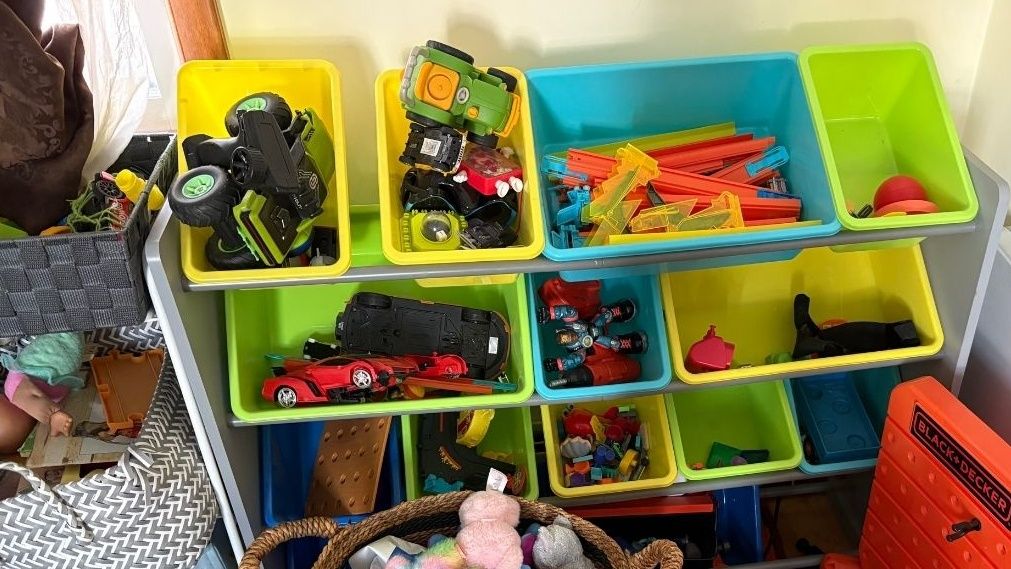
Like most parents, I don’t need more toys in my house — I need my kids to actually play with the ones they already have.
On a recent afternoon, staring at a chaotic corner of magnetic tiles, stuffed animals, toy trucks and mystery plastic parts, I tried something different. Instead of scrolling for parenting hacks or buying another craft kit, I snapped a few photos and asked ChatGPT one simple question:
“What can my kids do with these?”
What it returned wasn’t just a list of activities. It was a creativity engine.
Here’s what happened — and why this might be the easiest parenting win I’ve had all year.
Turning toy chaos into instant play ideas
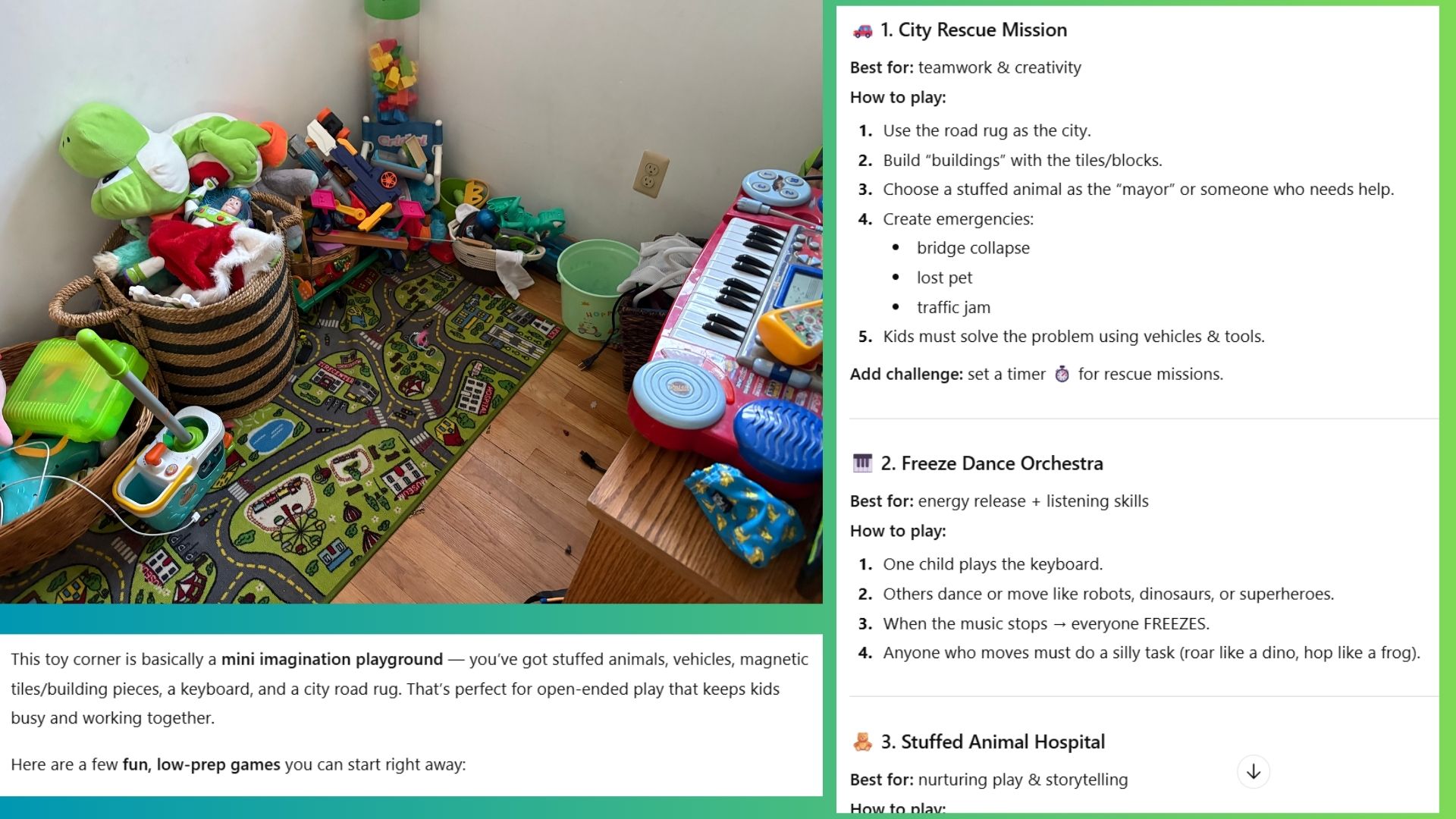
I consider myself a creative person and love playing with my kids. We are always doing fun crafts, unique games and running around in the backyard when the weather permits. But I can't always drop everything to do that, which made this experiment really helpful.
I uploaded photos of different toy piles: magnetic tiles, plush animals, vehicles and a mixed bin of random figures and parts. My high-energy kids are 11, 9 and 5. Despite their age differences, they do play well together, especially when the activity caters to their energy level and is new.
Instead of generic suggestions or recommendations based on what the toys are actually used for, ChatGPT created really fun ideas based on what it could see to generate games tailored to each pile.
Magnetic tiles
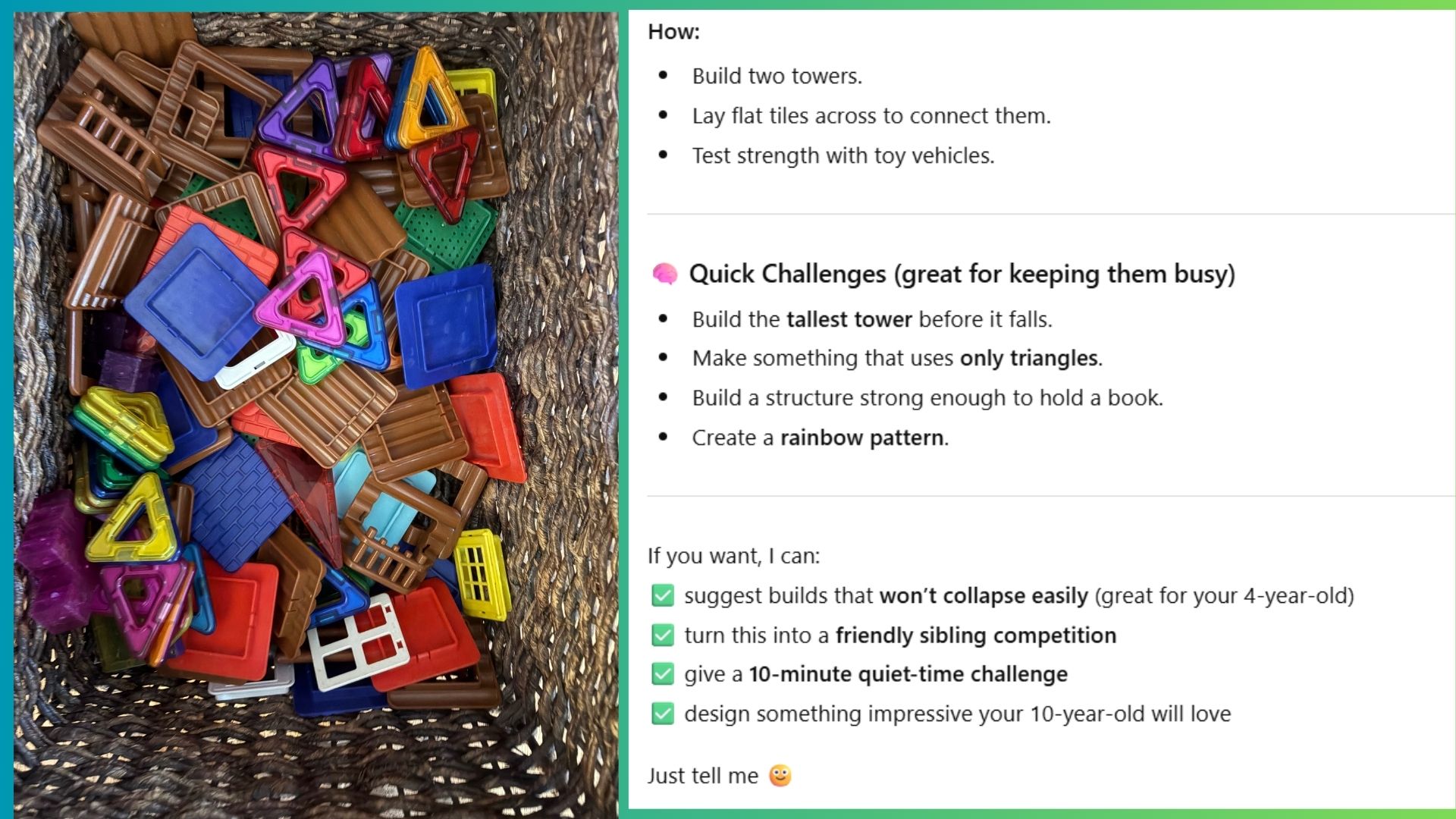
We have a basket of magnetic tiles that my kids love. Since "what to do with these" is pretty obvious, I decided to let ChatGPT give us some new ideas. It suggested building castles with window “royal towers” and designing bridges strong enough for toy cars. Mixing toys and utilizing what we had was a great idea, as was the "silent mystery build challenge."
My kids weren’t just stacking tiles. They were testing structures and storytelling together. ChatGPT helped us turn a very well-loved and regular activity into something new.
Stuffed animals became a full rescue operation
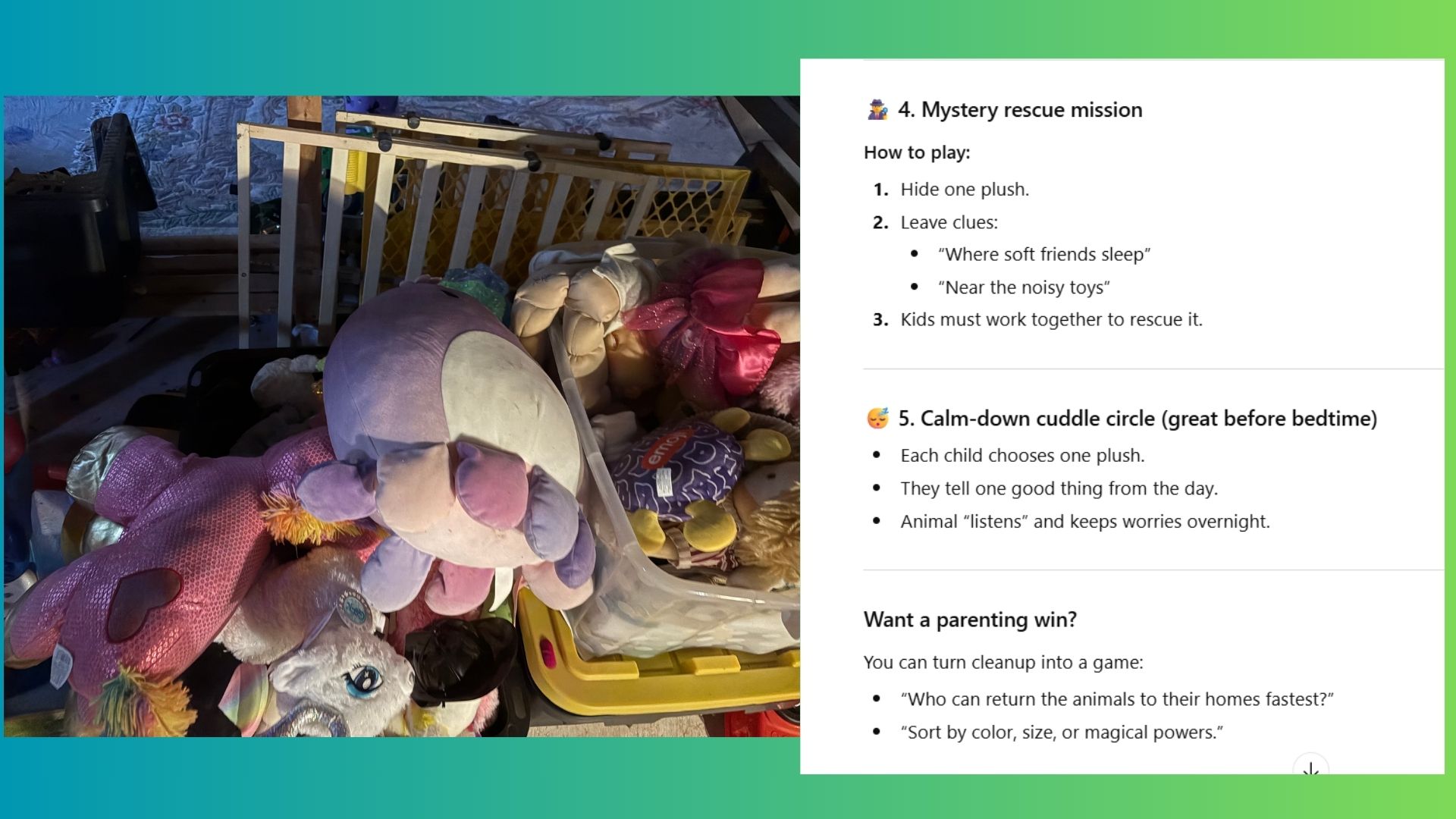
My husband threatens to give away the kids' plushies all the time. But my kids have a hard time parting with them, and the pile only seems to get bigger. But ChatGPT turned a bin of plush toys into:
- an animal adoption center, complete with names and backstories
- a plush hospital treating “lost sparkle syndrome”
- a puppet theater with tickets (snacks were currency)
- a bedtime cuddle circle for sharing one good thing from the day
Toy cars turned into a mini city economy
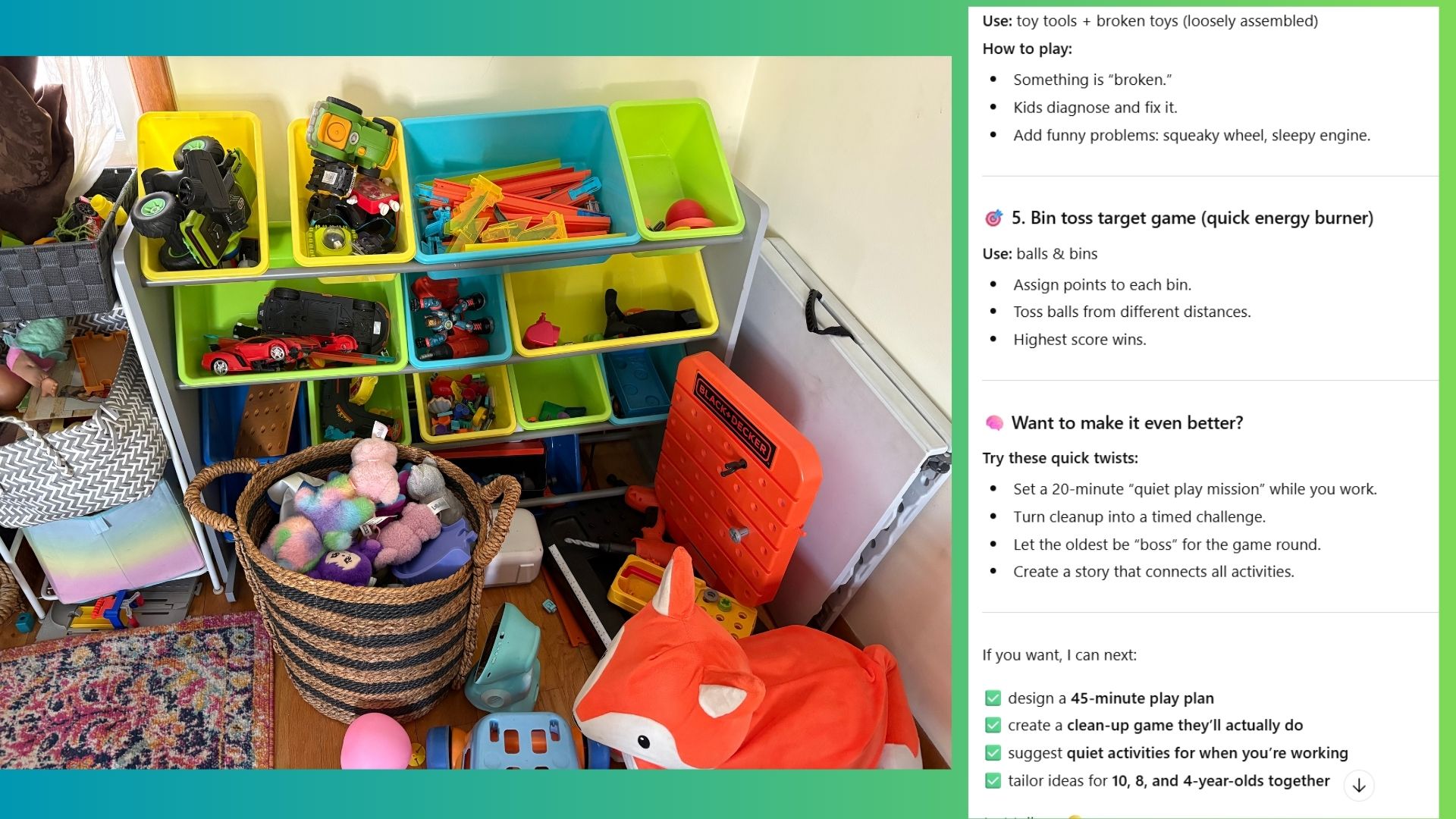
I swear we have enough Hot Wheels to wrap around our neighborhood. We've done a variety of activities with them and have plenty of tracks, too. When ChatGPT saw our vehicles and tools, it suggested:
- a construction site with assigned jobs
- car wash and pit stop stations
- emergency bridge repairs
- delivery missions across the room
The result: cooperative play instead of competitive arguing. Even the random toy bin had a purpose. You know the bin — broken parts, dinosaurs, dolls, mystery plastic objects.
ChatGPT turned it into a toy mash-up challenge (dinosaur + race car + astronaut team), a junkyard rebuild contest, a movie trailer game, and a sorting speed race disguised as cleanup (my five-year-old loved this one).
Best of all, the cleanup happened faster than usual. No nagging required.
How to try this yourself
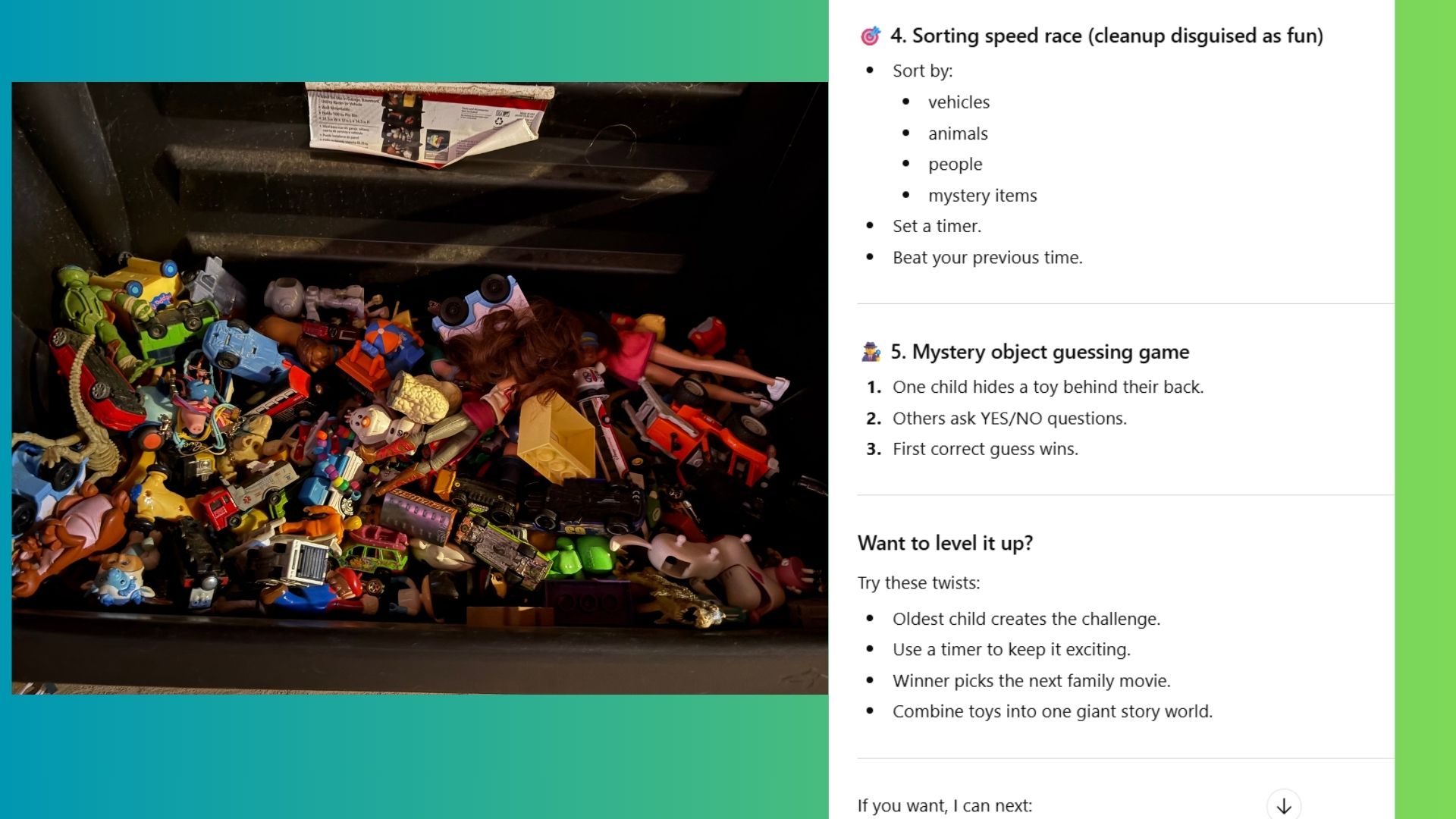
You can replicate this in under a minute. Just take a photo of a toy pile or play area. Upload it to ChatGPT (or another multimodal AI). Ask: “What games or activities can kids play with these?”
What impressed me most wasn’t the creativity — it was the reframing. We didn't really need more creativity; we needed some ideas to make our old toys new again. Just like those apps that take images of mixed LEGOs and suggest what to build, this concept was very similar.
AI didn’t add new toys. It added new ways to see the ones we already own. By treating objects as prompts instead of clutter, it removed the mental load of figuring out what to do next — for both my kids and me.
And because the games were open-ended, my 11-year-old, 9-year-old, and 5-year-old could all participate at their own level.
The takeaway
The unexpected benefit of bringing AI into playtime: calmer afternoons. My kids were still using a ton of energy and having fun, but the boredom was gone. The shift went from “I’m bored” to “Let’s build a rescue bridge before the lava reaches the city.”
And if AI can turn toy clutter into imaginative play — that might be the most practical parenting hack I’ve tested this year.
Before you buy another toy, try asking AI what to do with the ones already covering your floor. You might be surprised how quickly boredom disappears.

Follow Tom's Guide on Google News and add us as a preferred source to get our up-to-date news, analysis, and reviews in your feeds.