
Get all your news in one place.
100's of premium titles.
One app.
Start reading
T3
T3
Technology
Matt Kollat

I read through the specs of DJI’s Lito 1 and Lito X1 and these are the 6 key differences I found

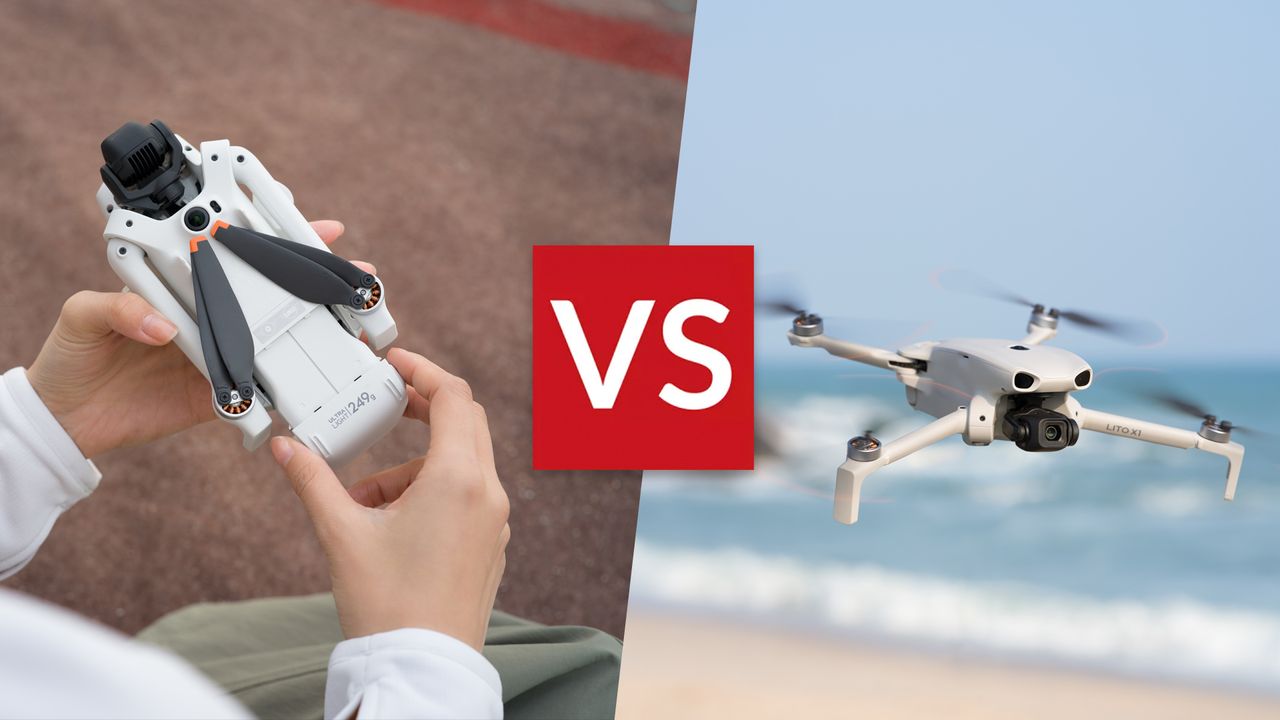
DJI Lito 1 vs Lito X1.

DJI has officially unveiled its new Lito series, a beginner-focused drone lineup that effectively replaces the long-running Mini range. Positioned above the more playful Neo and Flip models, the new drones follow the long tradition of making 'proper' aerial photography and videography more accessible for beginners.

It's an interesting choice from DJI to effectively split the incredibly popular Mini 4K into two separate drones. The Mini 4K was well-known for providing a superb flying experience for beginner pilots, something the Lito Series promises to continue.

With two models to choose from at launch – Lito 1 and Lito X1 – I wondered what the key differences between the two new drones would be, so I read through the official specs and feature lists to find out. I found the six below the most striking.

1. Sensor size and image quality

The biggest gap between the two is sensor size. The Lito X1 uses a larger 1/1.3-inch sensor, compared to the 1/2-inch sensor in the Lito 1. Both offer 48MP resolution, but the X1 should deliver better low-light performance, improved dynamic range, and more flexibility when editing footage.

DJI Lito X1 (Image credit: DJI)

Both sensors are larger than the Mini 4K's 1/2.3" sensor. The Lito 1's 1/2" sensor is the same size as the DJI Neo 2, and the image quality on that is more than good enough. Not many drones, DJI or otherwise, use a 1/1.3-inch sensor, but interestingly, it's the same size as the DJI Osmo Pocket 4 gimbal. Coincidence? I think not.

2. HDR and colour grading options

The Lito X1 punches above its weight, thanks to HDR video support with up to 14 stops of dynamic range and 10-bit D-Log M for colour grading. Quite a few DJI drones, including the Mini 4 Pro and the Air 3, have D-Log M, but these are mid-range and above, not true beginner drones. The Lito 1 sticks to standard video profiles, so what you shoot is more or less what you get.

3. Obstacle sensing and LiDAR

Both drones feature omnidirectional obstacle sensing, a big deal at this level, but the X1 goes a step further by adding forward-facing LiDAR. LiDAR works by firing out tiny laser pulses and measuring how long they take to bounce back. From that, the drone builds a precise 3D map of its surroundings in real time.

DJI Lito 1 (Image credit: DJI)

This improves precision when flying in complex environments or lower light conditions. The Lito 1 relies purely on vision-based sensing, which is still solid but slightly less advanced.

4. Internal storage

DJI started adding internal storage to some of its newer products. The aforementioned Pocket 4 now has over 100 GB of internal storage, and so does the Osmo Action 6 Pro. The Lito X1 doesn't quite have the same internal memory prowess, but it comes with 42GB of built-in storage, meaning you can shoot even without a microSD card. The Lito 1 doesn’t have this, so you’ll need a quick enough memory card for shooting videos.

5. Price and value positioning

I'm sure it's obvious to most people, but the two Litos are sold for different prices. The DJI Lito 1 starts at £299 in the UK, €309 in Europe, and AU$539, while the Lito X1 comes in at £369, €379, and AU$619, with Fly More bundles pushing prices up to £599 and AU$1,069, depending on the model.

DJI Lito X1 (Image credit: DJI)

The Lito 1 is around £50 more expensive than the Mini 4K, which currently sells for £242 at DJI UK, yet offers a larger sensor, better frame rates, omnidirectional obstacle sensing, longer flight times (36 vs 31 minutes), and more advanced automation.

The Lito X1 also offers a lot of bang for your buck compared to D-Log M models such as the Mini 4K, which had an RRP of £589, over £200 more expensive than the new premium Lito. Not to mention the Air 3, selling for close to £1,000.

6. Who each drone is really for

DJI has drawn a pretty clear line between the two Litos. The Lito 1 is aimed at complete beginners who want a straightforward, affordable way into aerial photography. The Lito X1, conversely, is for users who care more about image quality and want features that won’t feel limiting after a few months.

DJI seems to understand that not all pilots are obsessed with chasing more advanced specs and features. For many, the Lito 1 will provide more than enough scope for their aerial photography.

After all, if there is anything we learned from NASA's recent Artemis II mission, it is that old gear is perfectly good for capturing amazing photos – as long as you know how to use it.

Sign up to read this article
Read news from 100's of titles, curated specifically for you.
Already a member? Sign in here
Related Stories
Top stories on inkl right now
One subscription that gives you access to news from hundreds of sites
Already a member? Sign in here
Our Picks
Fourteen days free
Download the app
One app. One membership.
100+ trusted global sources.