Get all your news in one place.
100's of premium titles.
One app.
Start reading
MusicRadar
MusicRadar
Entertainment
Beth Simpson

“I’m curious about this new technology”: Jose González has collaborated with ChatGPT on his new album

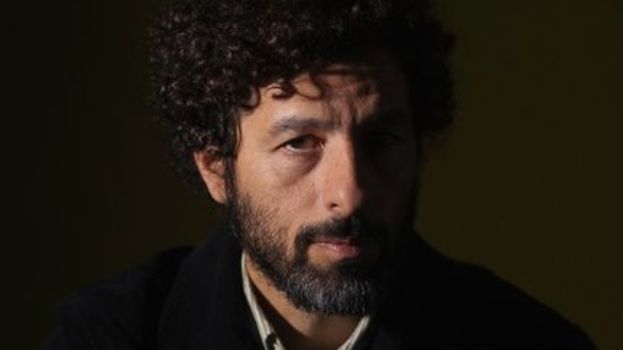
Jose Gonzalez portrait photo.

The debate about the use of AI in music continues and an unlikely figure has come out in the ‘pro’ or at least the ‘maybe’ camp - Swedish singer songwriter Jose González.

The 47-year-old guitarist released his fifth album Against The Dying Of The Light back in late March and has admitted that its closing track, Joy (Can’t Help But Sing) was written with the assistance of ChatGPT. Indeed, he used two different versions of the platform to create the effect he wanted.

In an interview with Far Out, Gonzalez explained why he had chosen to go down this route, saying, “I’m curious about this new technology”. For the track, he told the program: “the first verse should be about this, the second should be about this… So (version) 4.5 was actually way better than 4.0. All of a sudden, it could actually rhyme and had the right amount of syllables.”

https://www.youtube.com/watch?v=PGatarqcFrk&t=190s

“I still had to prompt for a very long time and did a lot of editing,” he added.

Meanwhile, the video for the album’s lead single Perfect Storm has been put up onto Youtube and this too has been created using AI. Well, according to the credits, it is “a product of human creativity, enabled by Artificial Intelligence”, one that features a load of very realistic actors that are all entirely synthetic, apparently.

The song’s lyrics, though, undercut this and appear to criticise the current ‘move fast and break stuff’ approach of the tech giants: ‘It’s a numbers game, ignoring all the combined tail end risks, gambling with our common fate to quench the thirst of a few. No time for the masses to be informed, to have a say.’

This appears to be González’s position on AI technology. “We need to collaborate to figure this out (because) the race isn’t done as a democratic project,” he explained. “All the civilians on Earth, could you say, ‘Hold up, have a little break. We don’t want this right now. We want some of it, but not all. We don’t want to create things that we can’t control.”

He is hopeful, though: “We’re already seeing that people value human interaction and authenticity; they want to go to concerts, to connect with real artists, to know the story behind the music”.

“AI (might be) making music that sounds better than mine… but then I’ll play live, and hopefully the robots won’t replace that human connection”.

Sign up to read this article
Read news from 100's of titles, curated specifically for you.
Already a member? Sign in here
Related Stories
Top stories on inkl right now
One subscription that gives you access to news from hundreds of sites
Already a member? Sign in here
Our Picks
Fourteen days free
Download the app
One app. One membership.
100+ trusted global sources.