One way that exercise helps improve your longevity is by maintaining the strength needed to perform fundamental movement patterns. One of the most essential movements is the squat, which translates into standing up from a sitting position.
As you get older, the movement you take for granted in your youth can become a struggle, to the point that people may need support to get back on their feet.

This is a common challenge for many of the older adults I work with in my yoga therapy work. While performing squats can help strengthen the lower body and improve stability, it may be out of reach for those who find maintaining balance a challenge.
Instead, we work on sit-to-stand exercises from a chair—a modified, easier version of a squat—to build functional strength in a more accessible way. The move can also be made easier and harder, which I’ve detailed in the tips below.
Practicing this move can still help with daily movements like sitting on the toilet, picking items off the floor and, of course, standing up from a chair safely and easily.
It strengthens your quads and hamstrings, the muscles on the front and back of your thighs respectively, and the glutes in your buttocks, activates your core, improves your balance and will support independence in daily life.
Here’s how to do it effectively—and remember, the more you practice it, the easier it will become.
How to do the sit-to-stand exercise
- Sit in a sturdy chair with your feet flat on the floor, hip-width apart.
- Shuffle your butt to the edge of your chair.
- Adjust your feet so they’re directly under your knees.
- Push through your feet, lean your chest over your knees, and extend your knees to stand.
- Lower back down slowly with control.
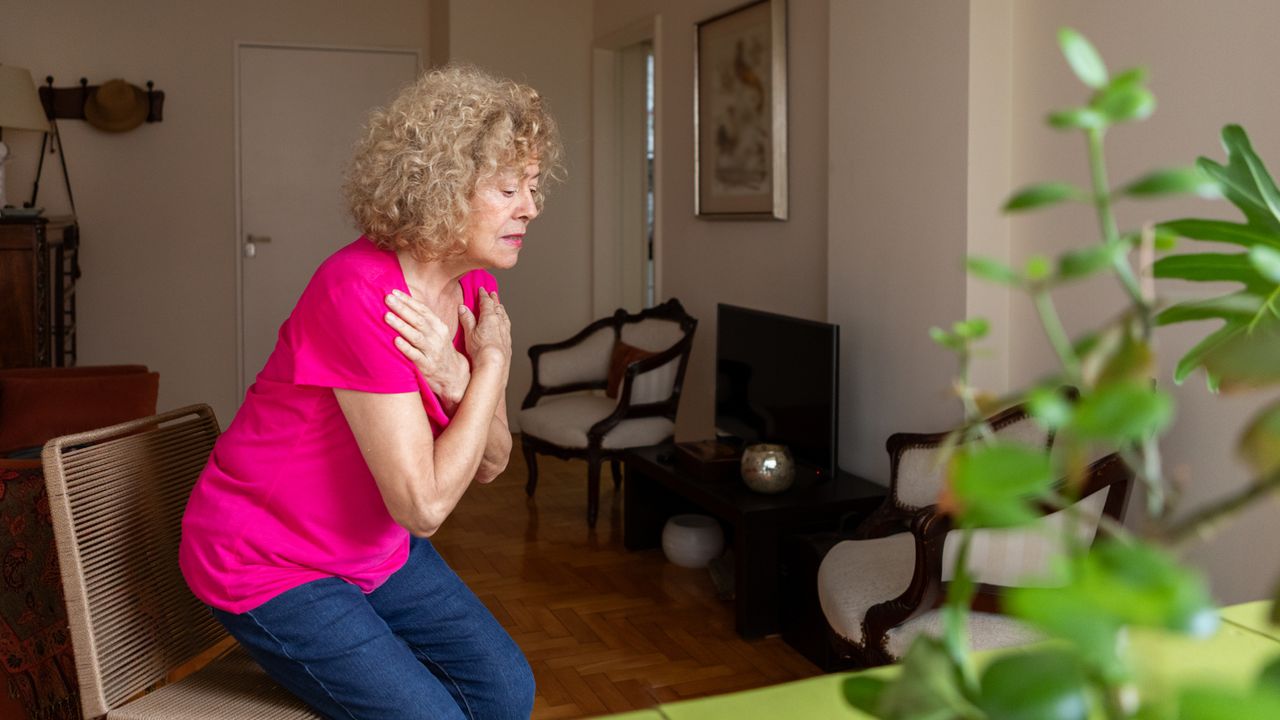
Trainer tips: For the best strength-building results, practice with your arms crossed over your chest. If this feels too challenging, use your chair’s armrests for support as you stand.
Once this feels comfortable, you can hold your arms out in front at shoulder height for balance, and then progress to arms crossed over your chest.