
Get all your news in one place.
100's of premium titles.
One app.
Start reading
Livingetc
Livingetc
Maya Glantz

"I'm a Scandinavian Garden Designer — These Are the 3 Things I Tell Anyone Who Wants a Calm, Minimalist Outdoor Space"

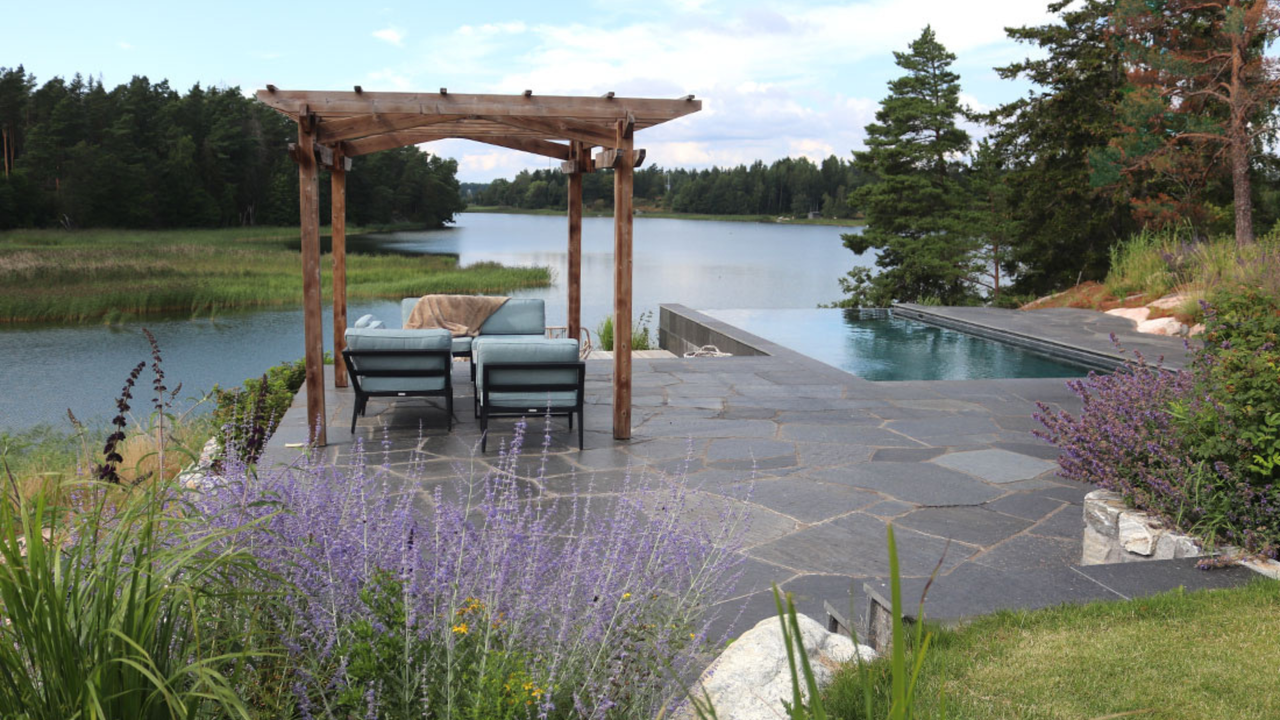
Beautiful patio garden with a pool overlooking a lake.

Our cultural obsession with all things Scandi is nothing new — for several years now, the northern European region has held reign as the arbiter of all things good taste. And, perhaps unsurprisingly, their penchant for laid-back minimalism extends beyond fashion and interiors. In their gardens, too, they've figured out exactly how to create that calming simplicity we all seem to be craving.

While we have previously turned to the Mediterranean or Japan for the most inspiring modern garden ideas, it seems as though we have been missing a trick. As the Norwegian garden designer Annika Zetterman so clearly proves in her gorgeous projects, Scandinavian design is ripe with inspiration for the plucking. And it just so happens that they're far better suited to the British climate than ideas from further afield.

As Annika explains, creating a Nordic garden is all about finding the balance between functionality and aesthetics. Every material and plant you include in your garden design should fulfill both roles. A minimalist-inspired outdoor space is not just about how it looks; it's about how it feels, too, and we've got her top three tips for getting the balance just right.

What Makes a Nordic Garden?

A natural sense of movement, and minimal intrusion are key aspects to this design style. (Image credit: Annika Zetterman)

Annika specializes in 'Nordic gardens', a topic she explains in depth in her book, New Nordic Gardens, Scandinavian Landscape Design. But, by way of an abridged explanation, Annika says, "A Nordic garden is a fine blend of functionality and aesthetics, where gardens are created with purpose."

The inherent 'Nordic-ness' of Annika's designs goes beyond the country's visual culture, though. The landscape and geography of her home are essential to her work, forming an integral, foundational understanding of how gardens should both look and feel. "We live in a world with distinct seasons, where everything has to be made to last," Annika says, "and where plants experience a full circle of life, to come back after a long winter, every spring, year after year."

While some landscapes boast conditions that support a year-round Mediterranean garden, in Norway, the calendar is marked by distinct, intense seasons. This means certain regions experience winters almost devoid of sunlight, along with long, summer days, when the sun doesn't set until past midnight. Seasonality is integral to Nordic culture, and, as such, is reflected in Annika's design approach.

"Ethos, seasons, and a strong design heritage run through every design," she explains. "From how we value and are strongly connected to our landscapes, to how we value materials, such as wood, as a beloved, functional, and beautiful hard landscaping material."

The country's unique geographic conditions and landscape provide plenty of inspiration for Annika to interpret through her designs. "The natural light and seasons, as well as the soil and terrain, with much granite bedrock, give personality and character to each garden," she says.

And while the infamous Norwegian winters may capture much attention, with floors cloaked in thick sheets of snow and a sky lit up with the enchanting glow of the northern lights, for Annika, the summer months are just as magical, with "the wildlife meadows in summer with masses of petite plants, sculptural pine trees, and the soft Nordic summer light."

Annika shares her three top tips for anyone wanting to design their own Scandinavian garden.

1. Quality Always Comes First

Search for materials that look natural alongside the plants and surrounding nature. (Image credit: Annika Zetterman)

Much like with minimalist interior design, in your garden, the focus should be on the quality of your materials. Annika encourages a 'less is more' mindset when designing a garden; it's all about understanding the materials you're working with and creating the space around them, to allow them to reach their full potential.

"Minimalism in a garden is to work with the material itself to bring out the best of it, with careful and exact execution, which lasts, and where the detailing is found in the material itself," explains Annika.

When the materials you select are chosen with true intention and a focus on quality, they should provide more than enough design inspiration for you to work from.

True minimalism is allowing the materials in the space to shine, rather than diluting their beauty with countless distracting features and garden accessories. As Annika says, "Minimalism is to prioritize quality over quantity."

2. One Cohesive Palette

Working within a single color palette is an easy way to ensure your overall scheme feels cohesive. (Image credit: Annika Zetterman )

On a similar note to the former point, when designing a relaxing, minimalist garden, selecting materials solely based on quality isn't enough; you'll also need to consider the cohesiveness of your palette, making sure your choices work as well in unison as they do independently.

Before you begin your renovation, Annika says, "Select a balanced palette of materials, hard and soft landscaping, and work with these throughout the space."

Use the same design philosophy you'd apply to your living room or kitchen in your modern garden — no material should be selected in isolation; think of them all as puzzle pieces, slotting together to create one cohesive whole.

3. Keep It Close To Home

Colorful wildflowers bring a magical vibrancy to even the most simple of gardens. (Image credit: Annika Zetterman)

As we all grow increasingly aware of the impacts our individual actions have on the wider environment, we've seen a growing interest in sustainability-led gardening, with 'messy gardening' and rewilding emerging as some of the most popular garden trends of recent years.

But for Annika, it's not just a trend; it's a crucial aspect to designing a Nordic garden. Her designs revolve around the inclusion of local, native plants, explaining, "they provide invaluable help for wildlife, as well as resonate with our environment, whether it is apple trees, lilacs, or lily of the valley."

As appealing as a Japanese garden may be, your surroundings will always be best suited to planting that naturally occurs there, making upkeep and maintenance far easier, and ultimately resulting in a more beautiful, natural garden.

"Work with a natural look, with respect for wildlife and nature, with materials that connect to your local surroundings," says Annika.


If this has triggered a new fascination with Scandinavian garden design, you're going to love our stylist's edit of Scandinavian outdoor furniture.

And if you're on the lookout for more design inspiration, subscribe to our newsletter.

Sign up to read this article
Read news from 100's of titles, curated specifically for you.
Already a member? Sign in here
Related Stories
Top stories on inkl right now
Our Picks
Fourteen days free
Download the app
One app. One membership.
100+ trusted global sources.