Get all your news in one place.
100’s of premium titles.
One app.
Start reading
Tom’s Guide
Tom’s Guide
Technology
Jane McGuire

‘I’m a personal trainer with clients in their 90s' — here’s a typical workout I use to maintain muscle mass, support joint health and build functional fitness

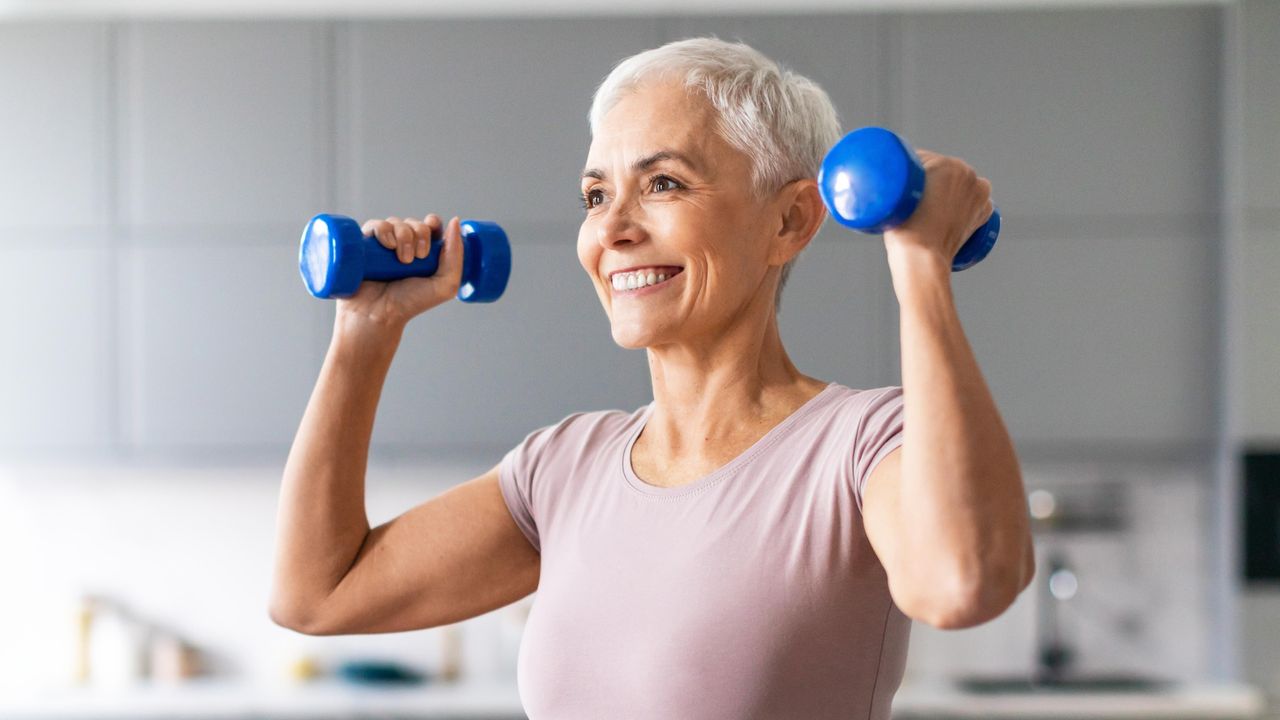
A senior woman holding dumbbells.

We all know that strength training is essential as we get older, but if you're a complete beginner or returning to the gym following an extended break, it can be difficult to know where to start.

To help get you started, we spoke with Coach Suzanne Siedman, an ACSM-Certified Personal Trainer at Retro Fitness. As a reminder, if you're recovering from a specific injury or health condition, it's always best to seek personalized advice from a qualified professional.

"As a personal trainer in my 60s, I’ve always emphasized that staying active as we age is essential for maintaining strength, balance and overall health, and that following a routine designed for this can be truly transformative in later years," Siedman tells Tom's Guide.

"As we get older, we need to concentrate on conditioning our entire body to prevent health issues like osteoporosis, arthritis and other similar conditions." Read on to see Siedman's full workout that she uses with her clients.

Warm-up

"First, a proper warm-up routine is vital, particularly for older adults," says Siedman. "As we age, our joints and muscles need more time to prepare for movement. An effective warm-up routine gradually increases circulation, improves mobility and can significantly reduce the risk of injury, while also helping older individuals feel more comfortable and stable as they move through the rest of the workout."

  • Marching in place (2 to 3 minutes): Stand tall with feet hip-width apart, lifting one knee at a time as if marching, while gently swinging your arms. This movement gradually elevates the heart rate and circulation, which is key in preparing for exercise.
  • Shoulder rolls (10 forward repetitions, 10 backward repetitions): Sit or stand upright, rolling your shoulders in controlled circles forward and backward, relieving tension in the upper body, while improving shoulder mobility.
  • Ankle circles (10 repetitions per direction on each foot): While seated or holding a chair for support if needed, lift one foot and rotate the ankle clockwise and counterclockwise. Ankle circles, in particular, help maintain joint flexibility and support ankle stability.
(Image credit: Getty Images/Ridofranz)

Cardio: 10-20 minutes

"Cardiovascular exercises are another key component of a well-rounded fitness routine for seniors, as they strengthen the heart, improve circulation, support endurance and help maintain energy levels for everyday activities," says Coach Suzanne.

"The key is choosing low-impact activities that feel comfortable and sustainable, and I typically recommend incorporating cardio three to five days per week, depending on your fitness level."

Here's the cardio exercises she recommends:

  • Walking (10 to 20 minutes): Start at a comfortable pace to warm up, then gradually increase to a level where breathing is elevated, but you can still comfortably hold a conversation. Focus on upright posture, controlled steps and even pacing, which will enhance leg strength, endurance and overall confidence in daily mobility.
  • Stationary cycling (10 to 20 minutes): This exercise is particularly beneficial for seniors because it provides cardiovascular benefits while placing minimal stress on the joints, making it a more accessible exercise for those with knee or hip discomfort. It will also help strengthen leg muscles, improve circulation and build endurance, which supports mobility and reduces fatigue during daily activities.
(Image credit: Shutterstock)

Strength training

"Strength training is another essential component of any senior fitness routine, as it helps maintain muscle mass, supports joint health and improves the ability to perform everyday activities more safely and independently, which are common goals that many of my older Retro Fitness clients share with me when starting their personal training journey," says Siedman.

To increase the intensity of these exercises, grab a set of light dumbbells, two heavy books, or water bottles. Check out the best adjustable dumbbells for working out at home here.

  • Chair squats (2 sets of 10 repetitions): Sit in a sturdy chair with feet flat and shoulder-width apart. Press through your legs to stand, then lower slowly back down. This joint-friendly exercise strengthens the glutes, thighs and core.
  • Wall push-ups (2 sets of 8 repetitions): To target the upper-back muscles and promote better posture, stand at an arm’s length from a wall, hands at shoulder height, slowly bend your elbows to bring your chest toward the wall and then slowly push back.
  • Light dumbbell bicep curls (3 sets of 10 repetitions): Hold light weights, anywhere from 2 to 5 pounds depending on your comfort level, and curl them towards your shoulders. Lowering the dumbbells with control, this builds arm strength and supports everyday lifting tasks.
(Image credit: Shutterstock)

Simple balance exercises

"Incorporating a few simple balance exercises into your routine can help strengthen stabilizing muscles, improve coordination and make everyday movements feel more secure," Siedman adds. "It’s important to perform these exercises near a sturdy surface for support if needed."

  • Single-leg stand (10 to 15 seconds on each leg): To strengthen stabilizing muscles and improve balance, lift one foot a few inches off the floor, maintaining tall posture, and then switch. For additional support, stand behind a chair and lightly hold onto it.
  • Forward step-ups (10 repetitions on each leg): This exercise mimics actions that individuals frequently do, such as navigating stairs or curbs. Stand in front of a low, sturdy step, such as an aerobic step platform. Slowly step in with one foot, pressing through your heel to lift your body, then step back down with control and repeat on the same leg.
  • Side leg lifts (10 repetitions on each leg): Gently lift one leg out to the side, with your toes pointed forward and your upper body upright. Lower your leg back down with control and repeat to strengthen the hips, which are integral for maintaining balance.

Cool down

"To wrap up a workout routine, incorporating cool-down exercises allows the heart rate to return to resting levels and helps reduce post-workout stiffness," says Siedman. "Incorporating gentle stretching at the end of the workout supports flexibility, improves range of motion and makes everyday movements like bending and reaching more comfortable."

  • Deep breathing with arm raises (8 repetitions): While seated or standing, slowly raise your arms overhead as you take a deep breath in, then lower them as you exhale, to help relax the body and bring the heart rate down safely after exercise.
  • Seated hamstring stretch (hold for 20 to 30 seconds on each leg): Sit on the edge of a sturdy chair and extend one leg straight with your heel on the floor. Keeping your back straight, gently lean forward until you feel a slight stretch, which helps improve flexibility and can reduce strain on the lower back.
  • Shoulder stretch (hold for 20-30 seconds on each arm): Bring one arm across your chest and gently hold it with your opposite hand. This stretch in your chest and shoulders improves freedom in your upper body.

Follow Tom's Guide on Google News and add us as a preferred source to get our up-to-date news, analysis, and reviews in your feeds.


More from Tom's Guide

Sign up to read this article
Read news from 100’s of titles, curated specifically for you.
Already a member? Sign in here
Related Stories
Top stories on inkl right now
One subscription that gives you access to news from hundreds of sites
Already a member? Sign in here
Our Picks
Fourteen days free
Download the app
One app. One membership.
100+ trusted global sources.