Get all your news in one place.
100’s of premium titles.
One app.
Start reading
Tom’s Guide
Tom’s Guide
Technology
Sam Hopes

I'm a personal trainer: Why you should sit in a Spanish squat for 45 seconds to build strength without knee pain (it feels better than any stretch)

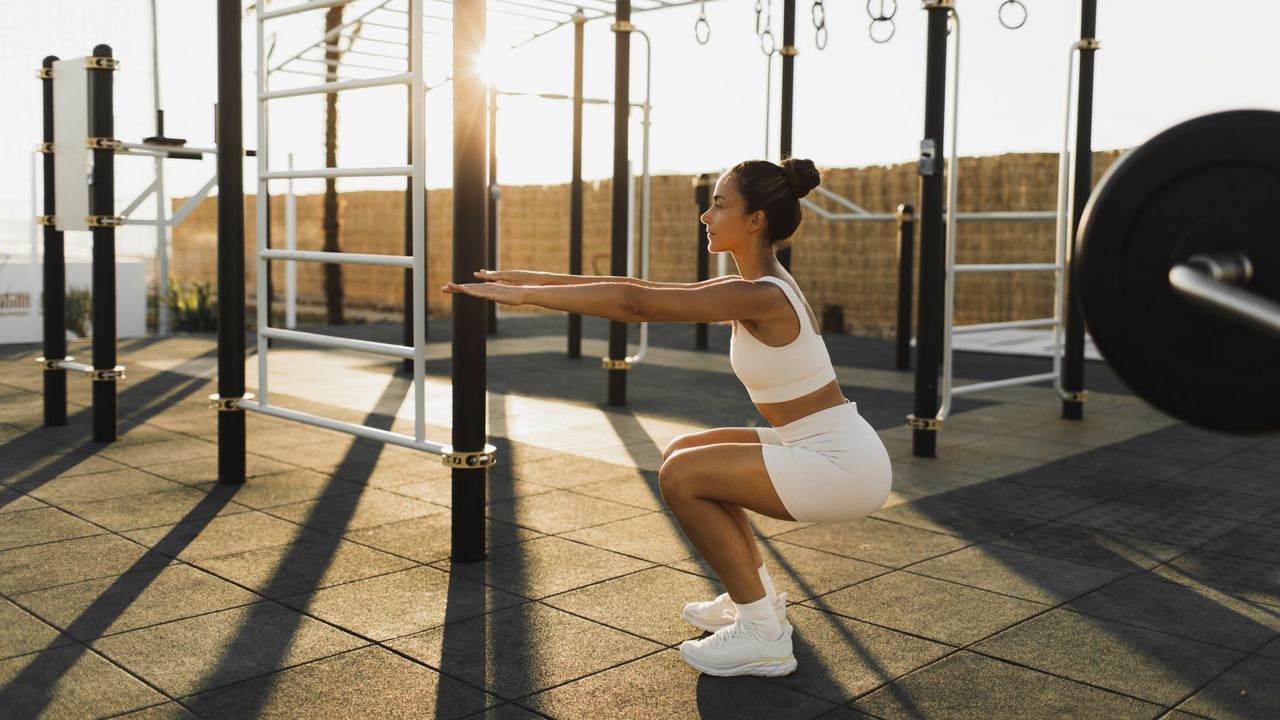
Woman outdoors in outside gym performing a bodyweight squat with arms outstretched.

You can build stronger quads and knees by switching up your squat style, and you only need one of the best resistance bands (or two) to do it. The Spanish squat is an absolute game-changer if you want to squat pain-free, and you'll develop leg and glute strength as a result.

While it is a certified leg-torcher, it's also great for mobility, too, making it one of my favorite moves for clients to try this year for greater quad strength and pain-free knees. Read on to find out how to do the exercise, plus some of the benefits.

What is a Spanish squat?

I strongly recommend reviewing our guide on how to perform Spanish squats before trying them, and you can also see the demo above from the guys at E3 Rehab.

First and foremost, the Spanish squat is an isometric exercise, meaning the muscles are held under tension without moving through a range of motion, like you would during regular squats. This will help you build strength and protect your knees if you struggle with knee pain when you squat. In other words, it's low impact.

To do it, you'll wrap bands around an anchor point and step through them just below the knees. From here, you can step back to create tension, then lower your butt and sit into the squat position while keeping your torso upright. The goal is to resist movement and hold the fixed position under the load of the bands.

Using two bands means both legs work equally, which prevents your more dominant side from taking over. By practicing these squat variations regularly, you can improve quad strength and patella tendon strength at the same time; this is particularly useful for runners who need the muscle activation and stability without putting more unnecessary load on the knees.

(Image credit: Getty images)

But it's not just useful for runners; anyone from athletes to weightlifters and Hyrox lovers can benefit. I have even started adding this exercise in with clients practicing squats to help reinforce proper knee positioning during leg days, helping people to understand why their knees shouldn't turn inward or too far outward.

As you perform Spanish squats, ensure your feet are no more than hip-width apart and lock your shins in place. You'll feel a lot of the demand shifting into your quads as you sit deep, exactly where we want you to feel it, without overstraining the knees.

You can perform them for several rounds, holding for a range of times depending on your ability. I recommend trying this before or after a run or before a strength workout if you plan to do any heavy weightlifting.

And you don't have to sit with your thighs parallel to the floor to begin with; even sitting into a half or quarter squat is enough to get you started, as long as your back is straight and your chest proud. Lightly brace your core to create stability in your upper body.

As you get stronger, opt for thicker bands that challenge your muscles more or hold a weight close to your chest with both hands. Give it a try and let us know how you get on in the comments.


More from Tom's Guide

Sign up to read this article
Read news from 100’s of titles, curated specifically for you.
Already a member? Sign in here
Related Stories
Top stories on inkl right now
One subscription that gives you access to news from hundreds of sites
Already a member? Sign in here
Our Picks
Fourteen days free
Download the app
One app. One membership.
100+ trusted global sources.