
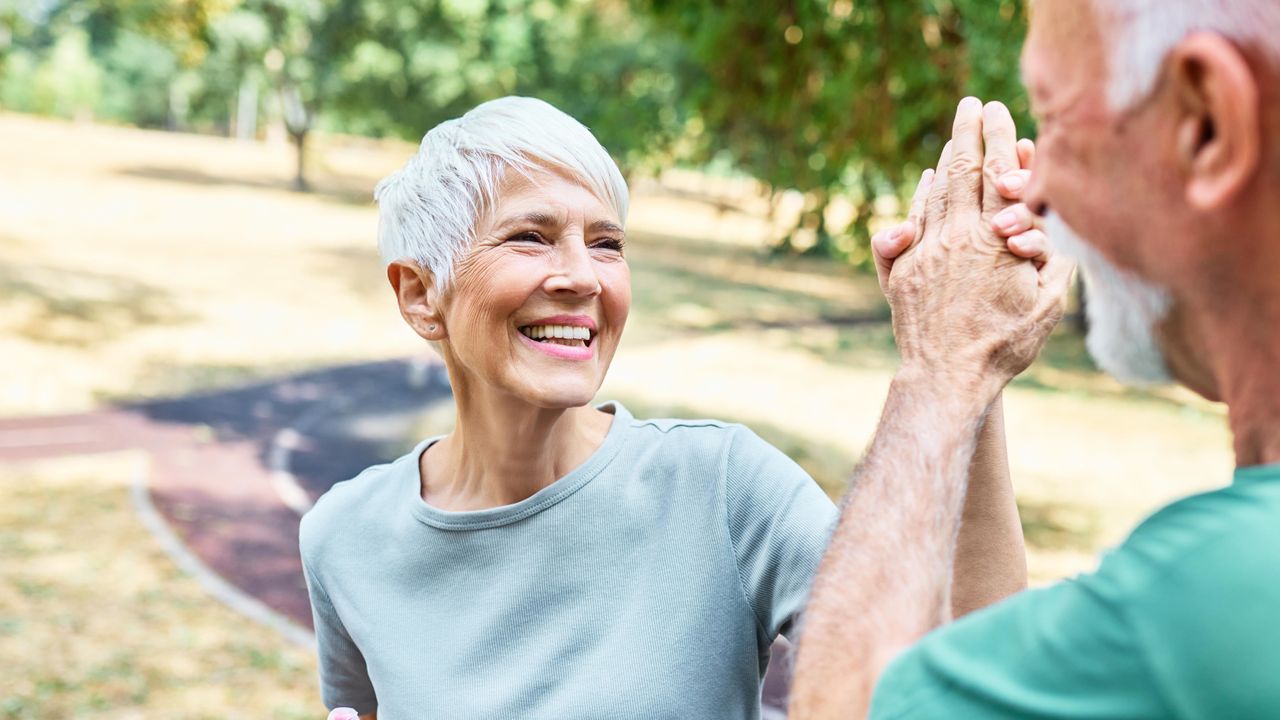
Walking workouts are a great way to help combat the physical signs of aging. They are low-impact and accessible, allowing you to improve your mobility, prevent conditions like osteoporosis and care for your heart. Just 30 minutes of walking per day can lower your risk of stroke by 20-40%, as well as manage your blood pressure, cholesterol and blood sugar.
Yet if you’re a beginner, or you’re returning to walking workouts following an extended break, it can be tricky to know where to start. Below, we’ve shared the go-to walking workout of Arlette Godges, a Senior Planet Sponsored Athlete, who coaches seniors to live their healthiest lives. Arlette shares the walking workout she recommends to clients looking to boost their fitness.

As a reminder, if you’re returning to exercise or you’re dealing with a specific injury, it’s always best to seek personalized advice from a qualified professional. Walking workouts should be safe for most people, but if at any point you feel in pain, stop.
What is the workout?
Rather than just heading out for a walk, Arlette recommends her clients mix in some bodyweight exercises to add some strength and conditioning to the workout.
Here’s the workout:
- Do step-ups at random spots: 5 sets of 10 reps
- Swing arms high: 30 seconds on/off x 5 minutes
- March with high knees: 30 seconds on/off x 5 minutes
- Walk fast for 30 seconds, alternate with a normal pace for 10 minutes
- Take 10 big steps, alternate with 20 normal steps, repeat 5 times
- Total walk: 45 minutes or more.
If a 45-minute walk feels too ambitious at first, break this workout down by reducing the amount of time spent on each exercise, doing them for one or two minutes instead of five. For all of the exercises, remember to really think about engaging your core, bracing your midsection as if you were about to be punched.

What are the benefits?
Walking is a fantastic exercise when it comes to looking after your bone density and health, which becomes especially important as we get older. With the impact of walking, you’re stimulating the bone-building cells in the body, lowering your risk of fractures from accidental falls.
Exercises like step-ups and marches are unilateral movements, working one side of the body at a time. This can help address imbalances in the body, as we tend to have one stronger side. By addressing these imbalances, you’ll improve your overall balance and reduce your risk of falls.

What’s more, you’re likely to burn more calories doing this workout compared to a standard walk at a steady pace. As a reminder, if you’re walking for weight loss, the best way to do so is to pair your workouts with a calorie-deficient diet — in other words, you need to burn more calories than you consume. One of the best ways to keep track of this is to wear one of the best fitness trackers.

More from Tom's Guide
- I’m a personal trainer who works with seniors — these are the 4 balance exercises I wish everyone would do before they turn 60, to build strength and stability
- I’m a personal trainer who works with seniors — these 3 ‘dynamic balance’ exercises are crucial for preventing falls
- If you can do this many bicep curls after 60, your upper body strength is considered 'elite'