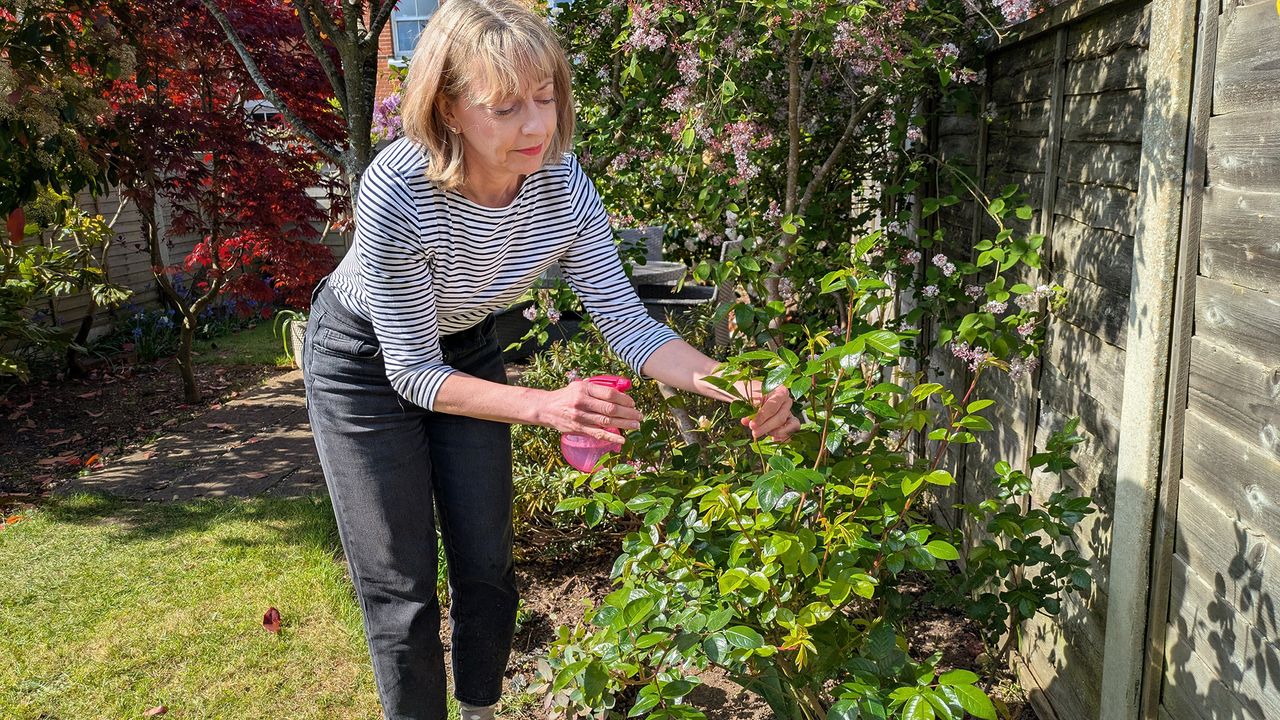
Who doesn’t love a rose? They are a stunning flower that can take many forms in a garden. From climbing roses that cascade along a trellis to traditional shrub roses that fill borders, and miniatures that look perfect in a pot, there’s plenty of choice.
What’s more, these delightful bloomers come in a whole host of colors to either soften a garden or add bright, vibrant drama. And, of course, you can’t deny the delightful fragrance that roses are well known for.

But just like many other plants in our yards, they can succumb to pests, particularly aphids. However, there is a quick and easy hack to remove aphids from your roses; what’s more, no chemicals are required. But first, you need to know how to spot them.
How to spot aphids on your roses

If aphids have taken an outing to your roses, you may notice wrinkled rose buds and puckered, curling new leaves, according to Garden Tech. If you look closer, you may notice tiny, green or pinkish soft-budding insects having a picnic on the plant’s succulent new growth.
“Aphids damage roses by piercing the plant tissue and then sucking out vital plant juices,” says Garden Tech. “They typically target soft stems, tender buds, and new leaves.”
You may find your roses look fine one day, and the next, they look stressed.
And aphids breed without mating, which means this population can multiply at the blink of an eye, with live young maturing in as little as one week. You'll also notice that they leave behind a sticky substance, known as honeydew, which attracts other pests, like ants, to your plants. What’s more, where the honeydew settles, a black sooty mold will grow.
Two-ingredient solution to rid your roses of aphids

Although you can use a strong jet on your hose to banish the aphids from your roses, I’d be concerned about using too much force and damaging my plants. Instead, I recommend a gentle alternative that requires just one additional ingredient.
The simple recipe is to mix one quart of water (that’s four cups) with 1 tablespoon of mild dish soap. Add this to a spray bottle, then target the areas of your roses where aphids hide, concentrating on new buds and the underside of leaves. It’s also best to spray your roses in the early morning or evening to avoid leaf burn.

I use a small spray bottle when treating my roses, so I downsize the quantities, using 1 cup of water and ¼ tablespoon of mild dish soap.
What I like about this method is that it doesn’t use harsh chemicals that can harm bees and ladybirds, which are beneficial in the garden.
Alternative methods to protect your roses from aphids

If you’d prefer to let nature take its course, David Austin Roses explains that aphids are part of a balanced ecosystem, saying that insects that prey on them help maintain harmony in your garden, ensuring that no one species gets too dominant.
The one insect that helps keep aphids under control is ladybugs, and it suggests adding ladybug larvae to your garden to help keep the aphid population in check.
You could also attract ladybugs to your garden by planting dill, cilantro, fennel, parsley, and caraway. They also love the flat-topped flowers, such as marigolds, cosmos, sunflowers, sweet alyssum, yarrow, and coreopsis.