
Get all your news in one place.
100’s of premium titles.
One app.
Start reading
Livingetc
Livingetc
Maya Glantz

"I Just Removed the Pebbledash From My House — This is Everything I Wish I’d Known Before Spending Thousands on It"

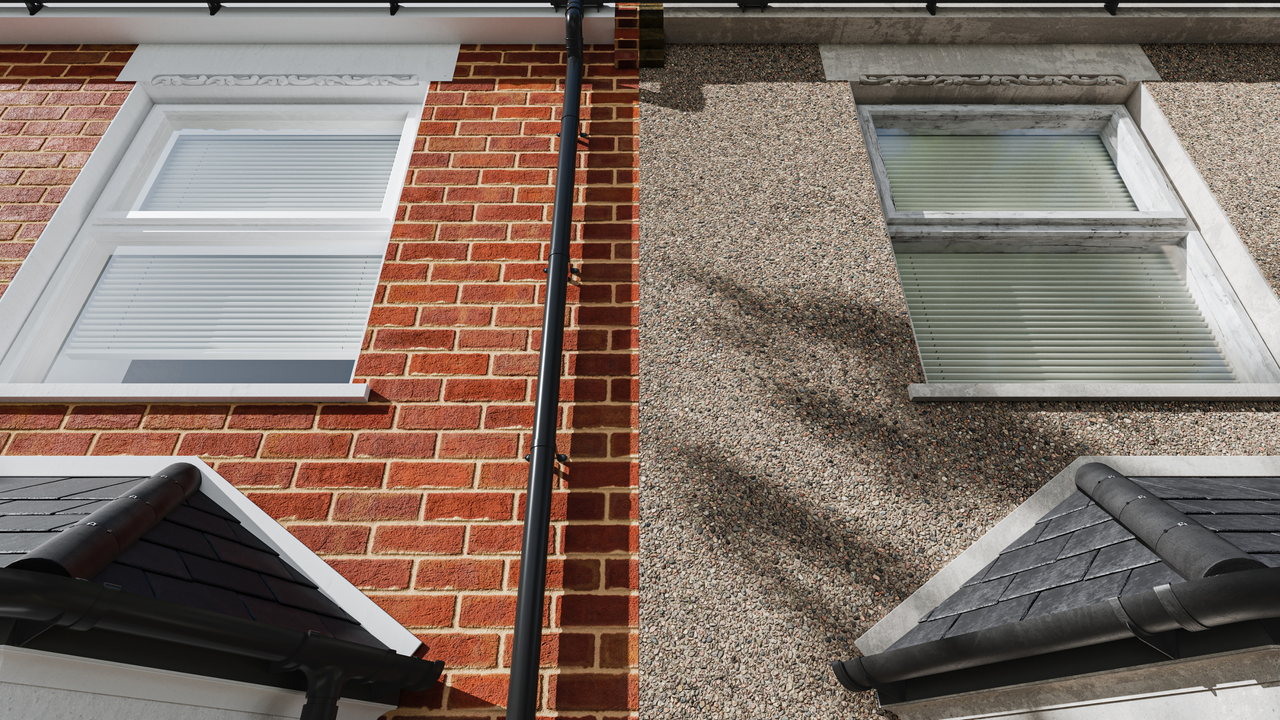
Before and after of pebbledash removal on a red brick facade.

Many of us may dream of owning a beautiful, period property. While there is, of course, a certain appeal in a modern, contemporary home, there is an undeniable charm to an older building that can be hard to replicate — the sense of history and character that only comes with age. The one thing that can immediately destroy that illusion, though? The dreaded pebbledash facade.

Up and down the country, beautiful original brickwork has been hidden from view, smothered in the lumpy, crumbly pebbledash coating, destroying your home's curb appeal. You see, as much as we now appreciate the characteristic features of period homes, throughout history, they haven't always been viewed in quite such a flattering light. And, as a result, many beautiful older homes have since been marred by modern interventions, with pebbledash amongst the most offensive of these contemporary additions.

However, a pebbledash finish does not mean you have to wave goodbye to your dream of a beautiful, original facade. It's not an easy or quick process, but one that can completely transform the look of your home. I spoke to some experts to find out everything you need to know before getting started.

What Is the Process of Removing Pebbledash?

"One of the first jobs we did as part of our house renovation was to have the pebbledash removed, bricks sand blasted and fully repointed. I wanted our house to feel neat and tidy, and by bringing out that beautiful brickwork, it did just that," says interior designer Claire Moran. (Image credit: Claire Moran)

As tempted as you may be to dive straight in, revealing your home's original facade pebble by pebble, it's best to take some preliminary steps first.

For interior designer Claire Moran, who took on this project to bring character back to her Edwardian home, this looked like a hefty amount of time spent scouring the web. "We researched companies in the local area who had completed this type of work before," she says.

"I felt that removing the pebbledash would be exposing a piece of history, and choosing the right person and company to do this was high on the agenda — someone who has experience with it, and someone who knew what they were doing, because who knows what they were going to find underneath, which is often why houses are pebbledashed; to cover something up."

As Claire suggests, pebbledash was often added to help conceal signs of wear and corrosion in the brickwork beneath. This exterior trend gained particular popularity in the post-war years and was considered an effective and affordable way to add more durability to weathered homes.

Its popularity came from the material's robust nature — it's practically indestructible. Which, while a considerable pro back then, can create some complications in removal. And no one is more well acquainted with all these potential issues than Aaron Barker, a period restoration expert at Barkers Heritage.

"Removing pebbledash or rendered coatings from brickwork is not a one-size-fits-all process and depends heavily on variables such as the hardness, thickness, age, and condition of the material, as well as how well it has bonded to the wall beneath," Aaron explains.

In older homes, such as Georgian houses, where the brickwork is softer and more delicate, the pebbledash can be removed manually, with a chisel and hammer. "In other cases, particularly where the coating is very hard or thick, a mechanical approach using low-impact drill-mounted chisels [like this from Amazon] may be required," explains Aaron.

However, the removal is just the first step in the process. It's only once the exterior coating is removed that you can properly assess what it was covering up in the first place. "Once the pebbledash is removed, it is common to find residual render still adhered to the brick face, along with failed pointing beneath caused by the non-breathable nature of the original coating.

"As a result, the process often extends into brick cleaning, local brick repairs, and full repointing using a mortar appropriate to the age and construction of the property. It’s also important to note that not all brickwork beneath pebbledash was originally intended to be exposed, meaning additional repair or treatment may be required to achieve a suitable finished appearance," says Aaron. You can find brick cleaning solutions on Amazon.

This was certainly the case for Claire, for whom removal was just the beginning of her facade restoration. "First of all, the old pebbledash was hacked off, exposing the brick; this is when we could see why it was applied in the first place — there were cracks below the bay window, a few of the red bricks missing above the front door, and another big crack running from the top of the front door to the roof."

Then, working with a brick restoration company, the original facade was repaired and patched up using reclaimed bricks. These additional steps explain that although the pebbledash removal may only take a matter of days, the overall process can often stretch to weeks or even months.

Knowing this in advance and preparing for it is one of the most important things you can do — this is not a task that can be rushed through. In fact, Aaron says, "Be cautious of contractors offering very short timescales without first inspecting the property, as this often indicates the full scope of work has not been properly assessed."

Professional vs DIY

To protect your original brickwork, it's best to work with a professional renovator for this project. (Image credit: Andrew Beasley)

So, can this be a DIY project? For the most part, this is one of those home renovation projects you should never do yourself. "Although pebbledash removal can technically be undertaken as a DIY task, it is rarely recommended," Aaron advises.

The primary issue with doing this task without professional help is that, while you may successfully remove the pebbledash, it's likely that you will damage the brickwork beneath in the process. Which, as a result, can lead to uneven surfaces and structural issues.

"These issues can significantly increase repair costs and compromise the final appearance of the property. Professional contractors also understand how to manage vibration, impact, and sequencing to minimize damage to the underlying structure," says Aaron.

"If you're confident in what you're doing, you may be able to do this yourself. However, I would say it comes down to what is under the pebbledash; what's it hiding, and are you going to be confident repairing that if required? If in doubt, I would consider working with a brick restoration expert to complete the work for you," advises Claire.

For guaranteed results, seek out a professional contractor with experience restoring period homes.

What You'll Need to Know Before

After the removal, Claire was left with a beautiful brick facade, seriously improving the curb value of her home. (Image credit: Claire Moran)

Before getting started, take the time to assess the potential issues you may run into. One easy and helpful way to do this is by examining the homes and architecture trends in your area. "If all the houses are pebbledashed, there will be a reason for that, and you may have brickwork underneath that can't be exposed," explains Claire, "But if it's only your house that's pebbledashed in a street full of brick houses, chances are there's brick underneath that's waiting to be restored."

Once you've decided to proceed with the removal, talk to various contractors and compare their quotes and lead times.

Be prepared for the potential for issues to arise — removing pebbledash is essentially an exercise in guesswork, and you'll never truly know what you might find beneath until it's done.

"Because the brickwork is concealed, it is common to uncover unforeseen issues once the pebbledash is removed," says Aaron. "These can include deteriorated or frost-damaged bricks, failed or missing pointing, historic movement, or poor-quality previous repairs that have been hidden beneath the coating for many years."

Plus, in some areas, you may need planning permission for this kind of work, so take the time to contact your local authorities first. This can also depend on the age of your home, and whether it's Edwardian, Victorian, or Georgian, as listed properties will have different rules.

Even once the process is complete and your original brickwork is revealed, you may find the finished product somewhat surprising, or unlike you expected. For Claire, the one thing she wished she knew in advance was just how different her home would look from the rest of the street.

"Although they are still the original bricks, they are a huge difference in color from our neighbor's bricks that have weathered and darkened over the 110 years since the houses were built," she says, "I've also been asked a few times if our house has been rebuilt as to the eye it could look like a new home, so just be prepared for that."

Then comes the post-removal care. Much like the removal itself, this will change depending on the age of your property. "For newer cavity wall properties, repointing followed by a breathable sealant [such as this from Amazon] may be appropriate. For older or period properties with solid wall construction, sealing is generally not recommended, as it can trap moisture and cause long-term damp issues.

"In all cases, proper brick repairs and suitable repointing are essential to keeping the facade weather-tight, with ongoing maintenance limited to periodic visual inspections and timely mortar repairs," says Aaron.

Modern interventions don't end with your home's facade, and the logical next step in your renovation process should be your kitchen. Follow our tips for how to un-update an ugly modern kitchen in a period home.

Sign up to read this article
Read news from 100’s of titles, curated specifically for you.
Already a member? Sign in here
Related Stories
Top stories on inkl right now
One subscription that gives you access to news from hundreds of sites
Already a member? Sign in here
Our Picks
Fourteen days free
Download the app
One app. One membership.
100+ trusted global sources.