Get all your news in one place.
100's of premium titles.
One app.
Start reading
The Independent UK
The Independent UK
Harriette Boucher and Albert Toth

‘I have two autistic children - the health benefit cuts have me fearing for the future’

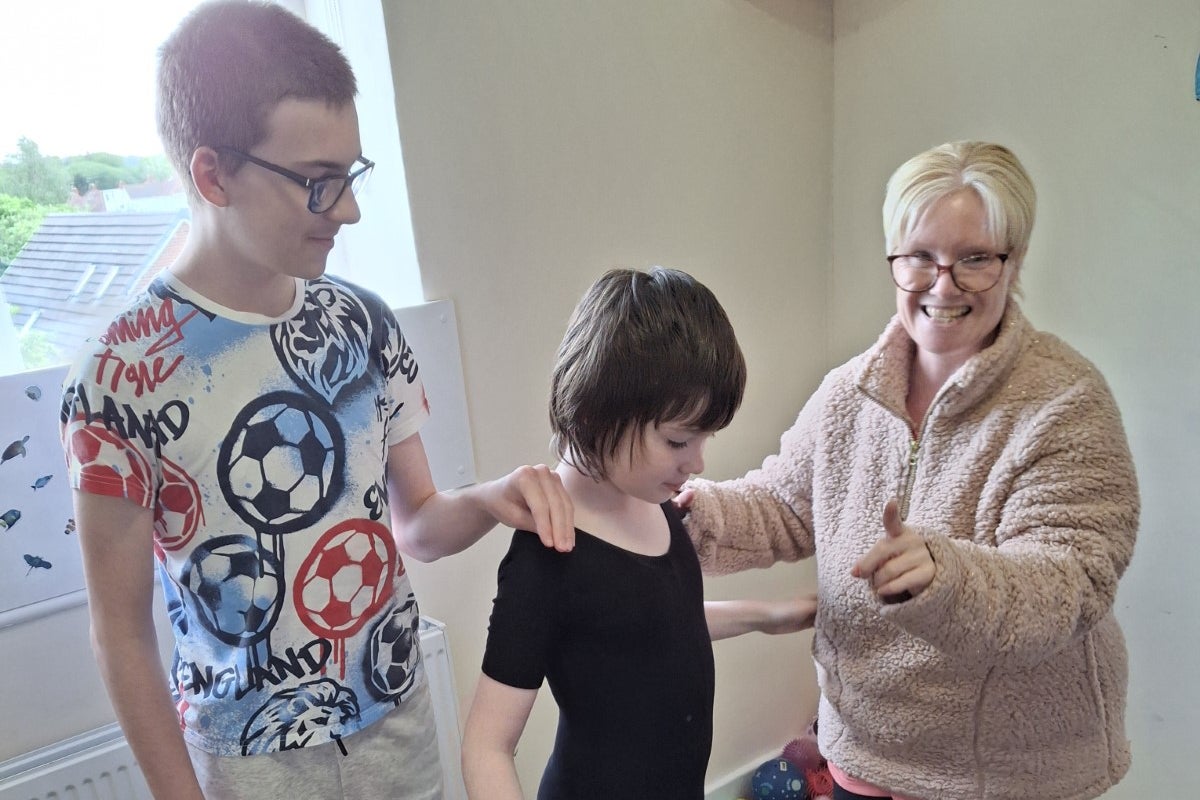
Lorraine Griffin, a single mother from Dudley Wood, in the West Midlands, has two autistic teenage sons - (Lorraine Griffin)

A mother caring for two severely autistic sons is now fearing for their future as some young people living with health conditions could face losing vital support under new welfare reforms.

On Monday, the government cut the health element of universal credit by nearly half for new claimants. The move is expected to save taxpayers £1 billion, but experts warn it will push already indebted disabled people deeper into poverty.
This means teenagers with health conditions or disabilities that prevent them from working will see their payments drop to £217.26 a month when they turn 18, down from the current rate of £429.80 that existing claimants will continue to receive.

​Lorraine Griffin, a single mother from Dudley Wood, in the West Midlands, has two autistic teenage sons, including her nonverbal 13 year old Ben, who she said is unlikely to ever be able to get a job.​

“He's still in nappies. He is aggressive and can't really communicate. He hurts people around the vicinity, throws things at people,” she told The Independent. “Ben won't be able to work.”

Lorraine cares full time for her son Sam, 14, and Ben, 13 (Lorraine Griffin)

​Under the changes, only those deemed to have the most severe, lifelong conditions will continue to receive the higher rate.

Lorraine fears that a broad lack of understanding about what it is like to live with autism means Ben, will miss out on the higher rate. In that case, she would be forced to go back to work, and he would largely have to be cared for by someone else.

Her 14 year old Sam has moderate autism and obsessive compulsive disorder (OCD). “On paper, he will go to university and get a job,” she said.​

“I don't want him to be thrown in the deep end, because they see the word moderate on a piece of paper and completely ignore it.​ In reality, depending on how he feels that day, those moderate needs can turn quite severe in a matter of seconds.”

​The health element of universal credit supports anyone with a health condition or disability that limits how much work they can do. 

The reforms aim to put a stop to what the government said were “perverse incentives” that encourage people to stay on benefits.

But research from Citizens Advice has said the changes will still have a “devastating impact” on disabled people and create a “two-tiered system”, where new claimants of the UC health will receive a lower rate of support than existing claimants.

Lorraine’s family ​currently receives a total of around £215 a week from the Disability Living Allowance (DLA).​ She cannot work because she needs to take care of her children, so she also gets £750 through the housing element of universal credit and £86.45 a week through the carer’s allowance.

According to the latest data, there are 863,983 children receiving the DLA in the UK.

“When they reach 16 or 18 or 21, they will still be autistic. Ben will still be in nappies and nonverbal,” Lorraine said.​ “We still need the care that we've got now, because their disability doesn't just magically disappear.”​

Money is already tight for their family as there are many additional expenses that come with raising autistic children. Lorraine said: “You wouldn't believe the amount of hand wash and cleaning supplies I have to buy just for Sam to feel safe in the home.​

“These kinds of things are necessities for me, so of course, I go without myself.

​“Daily living is very expensive, and Ben damages things, he vandalises my house.​

“I just need the support to live how I need to live. I'm not moaning about doing it, I will gladly do it. I just need the resources to look after the children I've got.”

More than 860,000 children currently receive DLA (Alamy/PA)

Evan John, a policy advisor at national disability charity Sense, said: “It is not disabled people's fault if they're not able to work. What needs to change is that the labour market becomes more accessible to them, and there needs to be more support from the government to help them find work.

“We found that over half of disabled job seekers with complex needs didn't have the support equipment they needed to look for work.

“And so this approach of cutting benefits to try and incentivise people to go into work, we think is the wrong approach. It will make people poorer and it won't help anyone into work.”

Mr John said that for many people, the current health benefit payment will only cover essentials. Around 43 per cent of disabled people with complex needs on benefits say they're in debt already because they can't afford the basics, Sense research has found.

A Department for Work and Pensions spokesperson said: "Protecting and supporting people is at the heart of our reforms – including those with severe, lifelong conditions, people nearing the end of life, and existing UC health claimants who will all continue to receive the higher rate of the UC health element.

"But too many people have been written off, left behind, and denied the opportunities to build better lives for themselves and their families.

“That’s why we’ve brought forward these reforms, ensuring sick or disabled people can access genuine support, while bearing down on the cost of living by boosting the standard rate of Universal Credit.”

Sign up to read this article
Read news from 100's of titles, curated specifically for you.
Already a member? Sign in here
Related Stories
Top stories on inkl right now
One subscription that gives you access to news from hundreds of sites
Already a member? Sign in here
Our Picks
Fourteen days free
Download the app
One app. One membership.
100+ trusted global sources.