As an ex-barista, I take my espresso seriously. If espresso isn't made with artisan, freshly roasted beans, I don't want it. Yeah, I would say I'm a coffee snob, but that's alright. I've made my peace with it.
I've been visiting my parents for Christmas, and I've found myself at a bit of a loss when trying to teach them how to use their Breville espresso machine. Other baristas and coffee snobs, shield your eyes: my parents spoon pre-ground coffee into the portafilter, press the shot button. And drink.
Measurements? None whatsoever, unless you count the very accurate "eyeball method" as measuring. I can't make coffee on my Breville Bambino Plus (one of the best espresso machines, hands-down) without my Wacaco Exagram Pro — the best coffee scale money can buy. And neither should you.
What does a coffee scale do?

In short, a coffee scale ensures you always make coffee accurately. Coffee is as much an art as a science: loads of variables go into each shot of espresso or pour-over. We're talking grind size, pressure, water temperature, humidity, distribution, and, of course, measurements.
Ideally, an espresso shot is supposed to be 1:2 coffee:water. So if you're drinking your espresso and wondering why it tastes weird, I want you to ask yourself, "How many grams of coffee did I dose? How many grams of espresso did I get out, and in how many seconds?"
If the answer to those questions is "I don't know," then that's the root of the problem.
You wouldn't eyeball baking a cake, would you? Would you pour flour into a mixing bowl until your heart told you to stop?
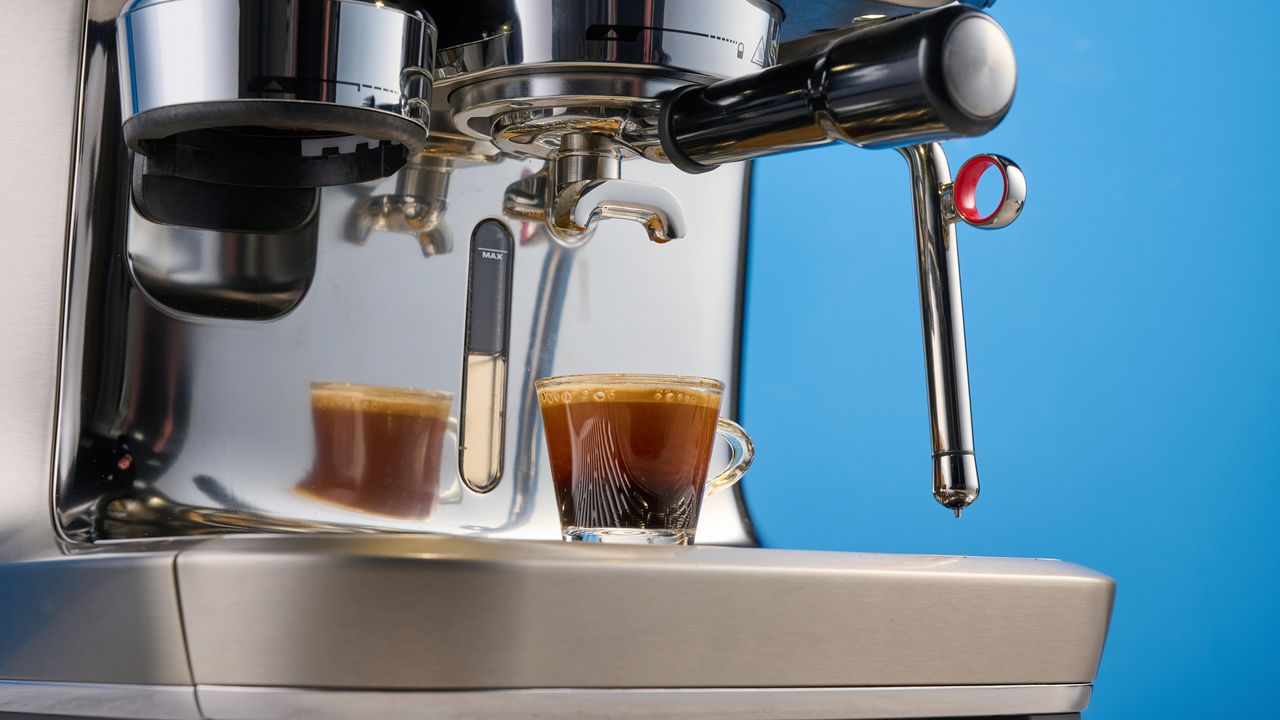
Espresso is exactly the same. Here's a photo of some "technically" perfect espresso.

The eagle-eyed among you will have spotted the Wacaco Exagram Pro underneath the shot glass. I use this coffee scale to measure how much coffee I put into the portafilter, and then measure how much espresso comes out.
When I use my coffee scale, I know the exact amount of coffee in the portafilter (the "dose") and exactly how much espresso this makes. Precision is the only way to get consistent barista-quality espresso.
For example, if I dose two teaspoons of coffee but pull a standard espresso machine double shot, the ratio is probably closer to 1:5 — less than half the strength of a standard espresso. Most home espresso machines are programmed by shot volume rather than customized for each shot based on desired strength, grind sizes, so on and so forth.
Breville and De'Longhi machines automatically dose around 60ml for a double shot. Casabrews is reported to dose around 80ml for a double shot. This is way, way off, and isn't going to make yummy espresso.

If you use a coffee scale, you eradicate the need for guesswork. You know precisely how much coffee is going in, so you can work out exactly how much espresso you need to get out (remember, 1:2).
Using a coffee scale is the barista's secret recipe to perfect espresso every single time. Ssh — don't tell them I told you. You might never go to a cafe again. I don't anymore. I've probably saved around $500 by now, and it's all thanks to my Breville Bambino Plus and Wacaco Exagram Pro.
Alright, which coffee scale should I buy?
As Tom's Guide's resident coffee scale expert, I've reviewed pretty much every scale on offer. I've tested $300 Acaia scales (yes, really...) and $20 Amazon special scales. These are my go-to recommendations for value, functionality, and ease of use.

Follow Tom's Guide on Google News and add us as a preferred source to get our up-to-date news, analysis, and reviews in your feeds.