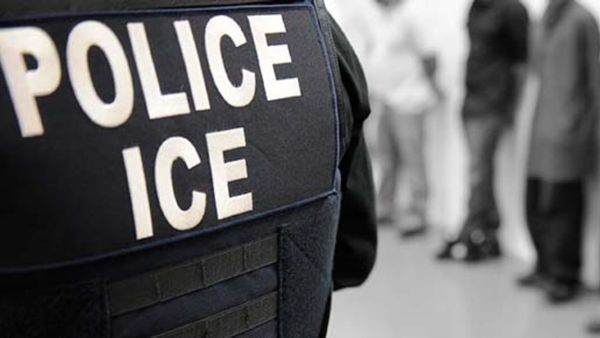
Federal agents are supposed to be trained to use the least amount of force possible when making arrests. However, the recent killing of Renee Good by agent Jonathan Ross in Minneapolis, Minnesota, contributed to people in the United States feeling unsafe.
Recent evidence from the Houston Chronicle and ProPublica proves that ICE agents have acted in dangerous and lethal ways. Immigration officers placed Arnoldo Bazan, a young high school student living in the Houston area, in a chokehold. This was while making an arrest of his father.

ProPublica posted a full video from Bazan’s arrest. It has since been seen by over 53,000 viewers on platforms like X.
The minor was barely able to say, “I was choking… We’re from the United States” as ICE agents held him to the ground. Agents had damaged his father’s car before the incident, hitting it “three times.”
Immigration arrests Bazan’s father, Arnulfo Bazan Carrillo, and places him in detention. Bazan’s injuries were so severe that he was hospitalized after detainment. They also took Bazan’s phone and allegedly sold it for cash after the encounter.
Bazan, like many currently being stopped, questioned, and possibly detained by ICE, is a United States citizen. But, regardless of citizenship status, he was held in a brutal and antagonistic way by immigration officers.
According to PropPublica, there have been more than 40 cases of immigration officers placing those living in the United States under chokeholds. Despite this, many claim that these chokeholds are “good” or blame the conditions of Bazan’s arrest on him or his father.
ProPublica’s findings about ICE arrests
The Department of Homeland Security specifically restricts chokeholds unless deadly force is authorized. ProPublica had a panel of eight different law enforcement officials and former police officers review footage of Bazan’s arrest alongside other clips. Ultimately, the panel found the videos to be “appalling” and a poor representation of policing in the United States.
Many U.S. cities specifically have bans against police officers using chokeholds during arrests. This is in the wake of George Floyd’s death, such as Minneapolis, Denver, Dallas, and the District of Columbia.
Chokeholds are considered lethal force, and their legality depends on the context of the chokehold’s enforcement. They’re severely restricted across the United States due to how severely a chokehold can limit blood flow.
Why aren’t more publications showing footage?
Some viewers of ProPublica’s post wondered why other publications were not covering ICE arrests with clearer examples. However, news outlets have been covering ICE arrests across the United States with continued scrutiny. Certain publications may choose to place more or less focus on the logistics and brutality of ICE’s current actions in the United States. But many have published ongoing reports alongside video evidence of agents acting with extreme force.
Groups such as the American Civil Liberties Union (ACLU) have made recommendations for those being stopped, detained, or arrested to film all incidents involving ICE. That way, victims can pursue legal options after the fact. It can be helpful to quietly document the encounter. Keeping track of those arrested by ICE can also help preserve accountability for those detained in the United States.
Viewers react to the ICE video
Viewers had mixed reactions to ProPublica’s post on X, with some going so far as to post “memes” discussing the video. Others simply stated that ICE agents placing both citizens and non-citizens in dangerous and unprecedented chokeholds was “fantastic.”
One commenter on ProPublica’s X post rhetorically stated, “Yes, and I’m sure they did this completely unprompted and were model citizens while passively complying.”
Some viewers replied with unsourced, unverified information claiming that only “0.5-percent of arrests” made by ICE were of U.S. citizens. They stated that “once discovered, [U.S.] citizens are released.” However, there is little evidence to conclude that “0.5 percent” is an actual or accurate figure.
Ultimately, it appears that despite verified evidence of extreme force being used on a U.S. citizen, some viewers viewed the situation as justified. A statement by Tricia McLaughlin implied that Bazan “assaulted” officers on the scene by thrusting his elbow into one of their eyes. Police officers who were called to make a report chose not to arrest Bazan for this incident. DHS also claimed that Bazan’s father rammed his car into a law enforcement vehicle. The damage to Bazan Carillo’s car and the surrounding evidence appear to point toward an opposing conclusion.
The circular logic of DHS officials, alongside longtime supporters of ICE operations in the United States, remains a troubling part of the United States’ current landscape. These detainments and arrests, which have been analyzed and scrutinized by publications like ProPublica, continue to create dangerous and unsafe situations for citizens and non-citizens alike.
We’ve reached out to ProPublica’s reporters via email for more information and to ICE. Bazan was unavailable for comment.
Have a tip we should know? [email protected]