Get all your news in one place.
100's of premium titles.
One app.
Start reading
Marie Claire
Marie Claire
Lifestyle
Mischa Anouk Smith

“I Felt Like A Failure For Gaining Weight After Birth”

Alex Light postpartum body .

Six days after giving birth to her son, Alex Light went to a routine postnatal check-up. Instead of asking how she was coping, the midwife immediately commented on her body.

Privately struggling with debilitating postpartum anxiety, the moment crystallised for Light just how intensely — and immediately — the pressure to “bounce back” begins. Here, as part of Marie Claire UK’s new What It Feels Like series, the activist and author of The Price of Pretty, talks about postnatal pressure, shame, the silence around gaining weight after pregnancy, and why she no longer wants to “erase” what her body has been through.
What It Feels Like To Battle The Pressure To ‘Bounce Back’ Postpartum

I remember the six-day check-up so clearly.

I had a huge amount of swelling when I was pregnant, especially towards the end, and after giving birth, it just dropped off me. My body went back really quickly to how it was before, which I know is not the normal experience – and it didn’t end up staying like that – but in that initial period after giving birth, I dropped a huge amount of weight. I remember the midwife saying to me, “I can’t believe you’ve just had a baby. You don’t look like you’ve had a baby. Where’s your stomach?” And I remember thinking, I don’t care. I don’t care. I don’t care. Why are you talking to me about my body? I have this six-day-old baby, and I am terrified, and I’m so anxious, and I have to keep this lovely little thing alive. This is the craziest thing I’ve ever done in my entire life.

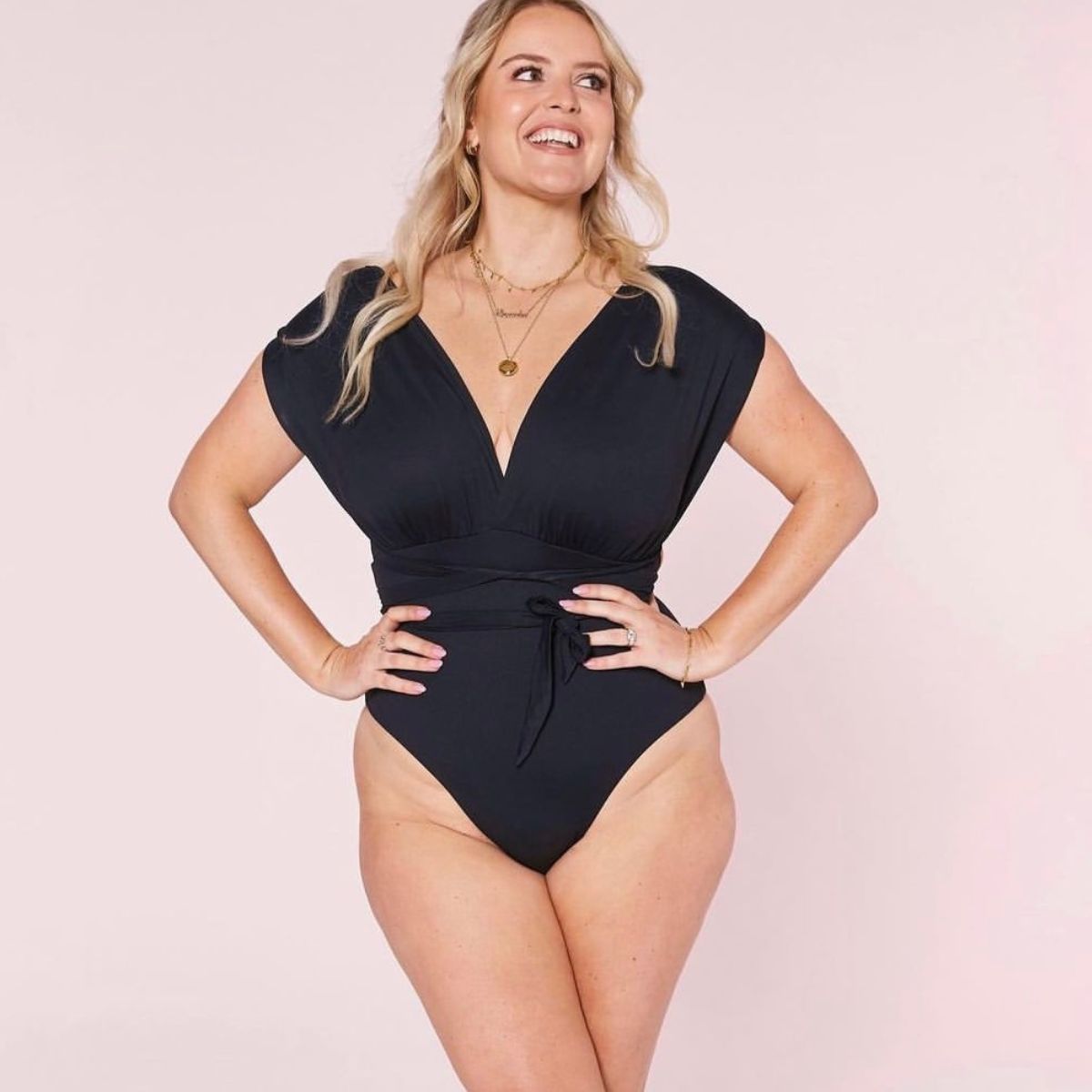
Alex Light has spoken openly about body image, disordered eating, and motherhood online. But one experience in particular caught her off guard: gaining weight after giving birth. (Image credit: Alex Light )

I was just looking at her, completely dumbstruck, while she was talking about my body. A lot of people opened with that, actually. A lot of people commented on how slim I looked. And I was like, I cannot believe this is what you’re focused on. I have grown and delivered a whole human. I have been through the most intense mental, emotional and physical upheaval I’ve ever experienced, and people are still talking about the size of my body.

It made me really sad because it felt like proof that no matter what women do, the most interesting thing about us, according to society, will always be how we look. I wanted people to stop talking about my body. I thought, I need help, I need advice, I need someone to tell me whether my baby is feeding OK, whether he has tongue-tie, whether I need to wake him up to feed him. I don't need you to tell me how slim I look.

I remember thinking, I’m supposed to be losing weight after birth, not gaining it.

I’ve always had anxiety, so it wasn’t a surprise that I was going to have anxiety as a mother. Suddenly, you have this precious, tiny, fragile person who is entirely dependent on you and your decisions, and I found that absolutely terrifying. I didn't sleep for more than 10 minutes at a time for four weeks because I was checking that he was breathing every 10 minutes. The constant state of anxiety was paralysing.

I had intrusive thoughts as well, which I only realised afterwards are really common postpartum. These horrible, intrusive thoughts would plague me and haunt me. I was scared to take him outside in case something happened to him. I was scared to put him in the car. I was just terrified all the time.

Food has always been one of my emotional coping mechanisms, and during postpartum anxiety, I turned to it because it brought relief. That meant I ended up putting on weight afterwards, which is actually quite common, but something that’s not talked about because the focus is so often on bouncing back and losing the baby weight.

I felt intensely targeted on social media by postpartum diet content when I was pregnant and after I gave birth.

Around six weeks postpartum, I remember thinking, right, I want to stop living in leggings and oversized jumpers. I want to put make-up on. I want to wear one of my old outfits and feel more like myself again.

So I tried on one of my old outfits, and it went nowhere near me. I was really shocked. I realised in that moment that I had put on a significant amount of weight. I felt completely blindsided by it because nobody talks about gaining weight postpartum. The focus is always on losing weight, shrinking yourself, getting back to your pre-baby body. I didn’t realise that this was a common experience, and so I felt like a failure. I remember thinking, I’m supposed to be losing weight after birth, not gaining it.

But looking back now, it makes complete sense. I was going through an unprecedented, extraordinary time. I can't stress enough that I was so, so tired. I needed sugar. I needed that boost of energy.

It makes total sense now, but because we’re culturally so fixated on weight loss, it didn’t feel acceptable.

I have never craved sugar like that in my life. I’m usually a savoury person, but postpartum, all I wanted was cake, biscuits, pastries — anything sugary. I became obsessed with Gail’s almond croissants to the point that now I can’t even look at them because they remind me of that time. I couldn’t get sugar into my body fast enough.

At the time, I felt a lot of shame about that, too. I thought I should be fuelling my body in the “right” way. I thought I should be eating perfectly nutritious meals and nourishing myself properly.

Our bodies are not rubber balls. They’re not supposed to bounce.

And I think a lot of that pressure comes from the messaging women absorb around postpartum bodies. Everything is about shrinking. You’re surrounded by messaging about getting your body back, losing the baby weight, snapping back. I felt intensely targeted on social media by postpartum diet content when I was pregnant and after I gave birth.

I feel really strongly about the words “bounce back”; it’s a phrase that’s used so casually as part of the normal timeline of motherhood. But our bodies are not rubber balls. They’re not supposed to bounce; they’re supposed to grow and expand and adapt and evolve. Pregnancy is such a physical, mental, emotional and hormonal transformation. It literally rearranges your organs and shifts your bones and stretches your skin. Why are women expected to erase all traces of that afterwards? Why are we expected to look exactly the same?

“Women are expected to erase every sign of motherhood from their bodies.” (Image credit: Alex Light )

It feels vastly unfair, and it happens during one of the most vulnerable periods of your life. Your priority at that stage should be surviving, healing, bonding with your baby and keeping this tiny human alive. But at the same time, there’s this pressure to “snap back” into your jeans and erase all evidence of what your body has gone through.

I think it prioritises aesthetics over women’s wellbeing. Even now, there’s such a huge double standard around parenthood and bodies. People joke about “dad bods” and how they show that a man is too committed to his kids and fatherhood to go to the gym — like, isn’t that commendable? But when it comes to mothers, the expectation is completely different. Women are expected to erase every sign of motherhood from their bodies. The double standard is wild.

Growing and delivering my son changed me physically forever, and honestly, I want it to show.

A few days after giving birth, I looked in the mirror and realised my body looked completely different. I had what they call a “C-section shelf” — loose skin and stretch marks where the scar is tight, so the tummy sort of hangs over the scar. My boobs were bigger than they’d been before. And I realised this wasn’t going away. But I also realised I didn’t necessarily want it to.

Growing and delivering my son changed me physically forever, and honestly, I want it to show. I want to bear the scars of that. It’s the best thing that's ever happened to me, and I’m proud of what my body did.

People say all the time that women should appreciate their bodies for what they do rather than what they look like, and honestly, pregnancy made me understand that on an entirely different level. Creating and delivering another human being is unbelievable. It’s magical. I refuse to let society tell me that the physical evidence of that is something shameful.

What surprised me most was how much pregnancy changed my relationship with my body overall. I struggled with disordered eating and eating disorders for most of my life. By the time I was an adult, I was completely disconnected from my body. I stopped listening to hunger cues years earlier. Pregnancy actually bridged that gap for me. For the first time in my life, I felt genuine awe and gratitude towards my body. I felt connected to it rather than at war with it. And that felt incredibly emotional because I’d spent so many years fighting against it.

When I eventually spoke about gaining weight postpartum on Instagram, the response was overwhelming. So many women messaged me saying they’d experienced the same thing and had never heard anyone talk about it before. It was a huge relief. It took away that feeling that I had somehow failed right after giving birth.

I’m pregnant again now, and this experience has been different. I’ve gained weight much earlier this time because of hormones and IVF treatment, and there have still been moments where I’ve struggled with the loss of control that can come with your body changing. But I also have so much more grace for myself now. I trust my body in a way I didn’t before. I trust that it’s doing what it needs to do.

And I think that’s what I wish someone had told me the first time around: that your body changing after birth is not failure. And that there is nothing shameful about a body that shows evidence of motherhood.

As told to Mischa Smith

Sign up to read this article
Read news from 100's of titles, curated specifically for you.
Already a member? Sign in here
Related Stories
Top stories on inkl right now
One subscription that gives you access to news from hundreds of sites
Already a member? Sign in here
Our Picks
Fourteen days free
Download the app
One app. One membership.
100+ trusted global sources.