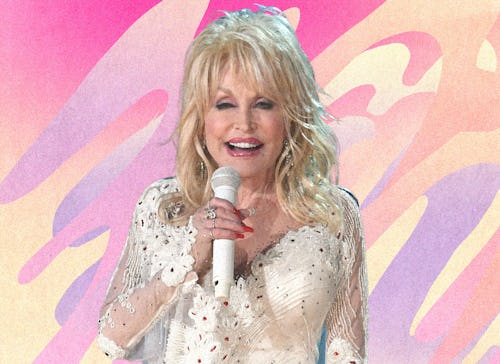
Dolly Parton does not want to be anyone’s messiah. “I don't want to be worshiped, because there's a scripture in my Bible that talks about idol worship,” she said earlier this month after being named one of People magazine’s people of the year. It’s an awkward line to toe for an icon whose artistic impact has spanned decades and a philanthropist who has done some staggering work for humanity — like raising $700,000 for flood victims this past summer in Tennessee through her Dollywood Foundation, donating over 170 million books to children through her Imagination Library, and giving $1,000,000 to Vanderbilt University in 2020, money which helped fund the development of the Moderna vaccine.
But perhaps the most fascinating thing about Dolly is her universality. Dolly is beloved by fans across generations and demographics; she is a connecting thread of goodness even between people whose ideologies are diametrically opposed. It is a quality that very few in her position possess, much less know how to court and maintain. Over her decades of fame, she has endeared herself to social liberals by being an unexpected proponent of LGBTQ rights and with her own brand of cheeky feminism, while also very carefully avoiding ruffling the feathers of her evangelical or conservative fanbases. It feels fair to posit that in this divisive, increasingly volatile world, Dolly is one of the few things we can all agree on.