
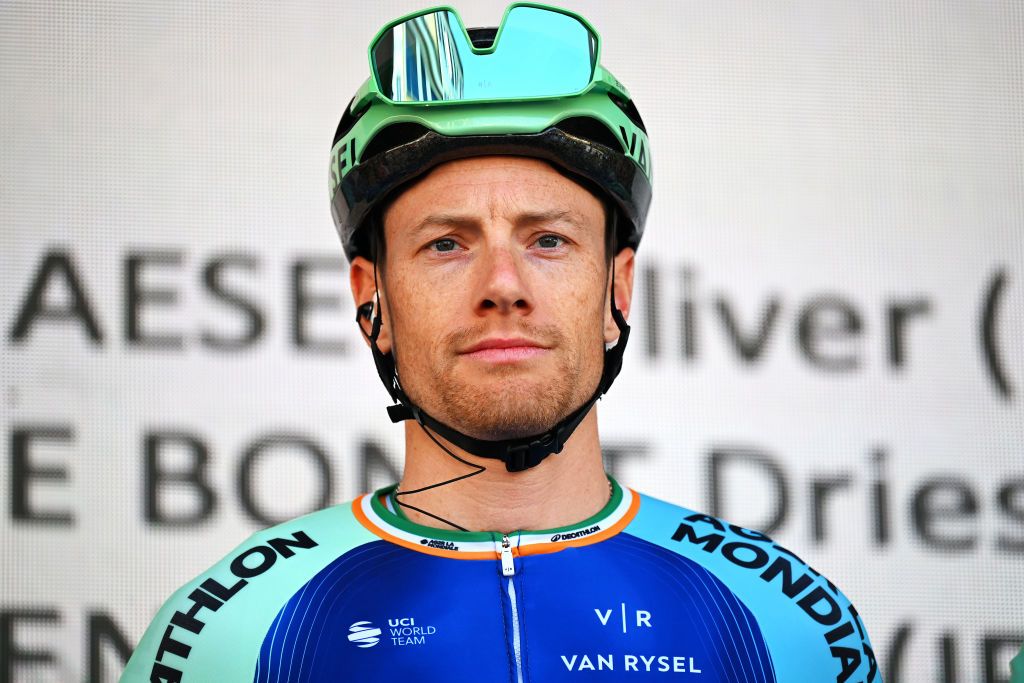
Irish sprinter Sam Bennett is starting a new phase of his career in 2026 following a switch to Pinarello-Q36.5, but his off-season hasn't all gone according to plan.
The 35-year-old made the transfer from Decathlon AG2R La Mondiale over the winter, but a health scare has interrupted his off-season, though he's now on the road to recovery.
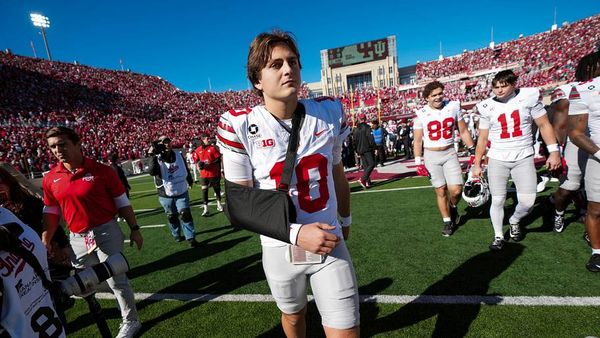
Speaking to Irish broadcaster RTE, Bennett described how he underwent surgery to correct a heart problem in November after suffering from palpitations and flutters in training.
"It was kind of strange because at the end of the season, I wasn't feeling well. I couldn't get out the performances and couldn't understand it. I had the off-season, came back and then I was having these flutters, palpitations in training," Bennett said.
"I was away with my previous team in London, and in the nights, I had flutters and palpitations; I didn't know what was going on."
Bennett said that he discovered the issue via his Whoop smart watch. The device let him check his electrocardiogram, which subsequently showed that he had atrial fibrillation (AFib).
He believes that the condition was "underlying for quite some time", but with the help of his team, he consulted with three specialists before undergoing surgery in Frankfurt, Germany.
"Four days or five days later, I had the ablation [surgery], which was a success. The thing was, we wanted to go slow. They said I could start building after one or two weeks, two weeks back to normal, but we wanted to be sure that everything was right," he said.
Bennett's road to recovery would last three months, though a setback – a bout of flu – in the New Year saw him off the bike and "at zero" for his new team's training camp.
He said that he's keen for his story to help others spot similar conditions early. He recommended that people get a smartwatch or device with an electrocardiogram so they can monitor their heart health.
"I think you have the fear of the unknown. In the moment, you kind of have these sensations, and you're not quite sure of what's happening. But I think this is kind of the main reason why I want to share the stories because I hear that this is quite common, you know," Bennett said.
"A lot of people are having AFib and ablations, and for younger cyclists or people in general public... there's a fear of the unknown when it happens, but I wanted to share it just so that they can understand it.
"They might understand what's happening with their body, and they don't have to be afraid. Once you go after it and treat it, you can recover fully and get back to like, as an athlete, to a top level again. And for a normal person, you can have a long, normal life."
As for Bennett, there's hope that resolving his heart problem can help his performance with his new team. He'll be a lead sprinter for Q36.5-Pinarello and wondered if his heart wasn't working properly during his sprints previously.
"It's not a given, but it's possible that I was having many episodes going into sprints because I always felt something in the sprints and I couldn't push," he told RTE.
"I would go into a sprint, and then I'd be fine, and I'd go to get off the saddle, and I wouldn't be full of lactate, but I'd have to sit back down. It was just super strange.
"I don't know if it's the same for everybody or if it's different [heart] chambers, but my top two chambers were beating twice as fast as the lower two chambers. They said it is possible that in the sprints, the top two start going into AFib, then you lose 30% of the pump, the pumping power. So then you do lose that performance.
"But I don't want to put everything on this idea. It is a possibility, but it might not be the case."