
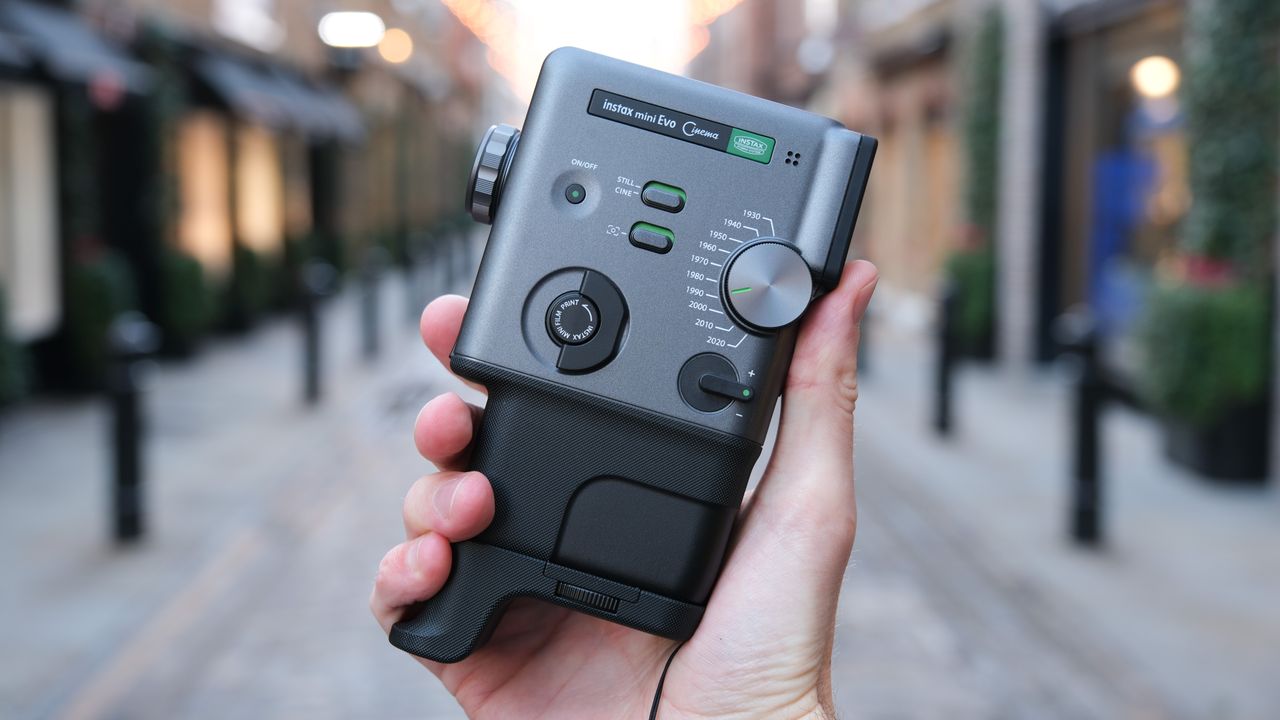
Having written about photography for the best part of 25 years, it’s exciting when a product arrives that appears to be the result of some blue sky thinking on the part of its developer. Even if said product has me thinking: ‘what?!’
That was my initial reaction to the Fujifilm Instax Mini Evo Cinema, the manufacturer’s mash-up of 1960s Super 8 film camera – or to be specific the Fujica Single-8 – and present-day Instax instant printer. It’s charmingly deliberately clunky.
But really, I shouldn’t be surprised the range is expanding in hitherto unexpected directions. Fuji’s Instax series has been a lifesaver for the brand, so more variations on a winning formula makes sense. However, this variation? It’s either absolute genius… or bonkers.
A patchwork of disparate parts brought to life by a lightning bolt of inspiration, I got to spend time with Franken…Fujifilm’s creation at its London unveiling and a subsequent period of assessment.
While Fuji told me its core audience is broadly aged 20 to 35, the camera’s inclusion of digital filters to ape decade-defining film effects – allowing us to go on our own ‘eras tour’, from the 1930s to the present day – is a stroke of marketing genius. Everyone with money in their pocket, from Gen Z to their grandparents, can feel a nostalgic pang, or feel like they’re time-travelling.
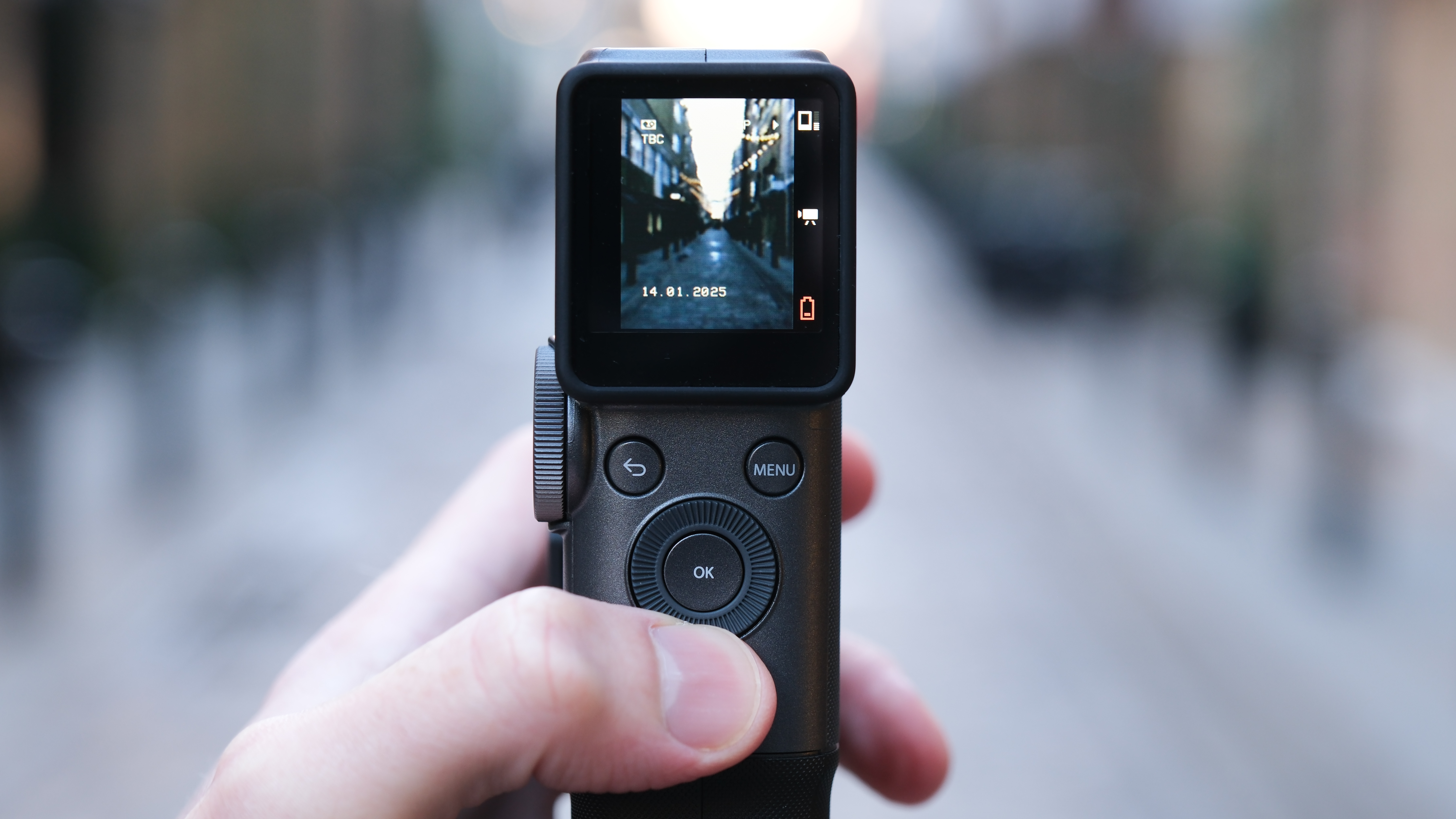
And its low tech meets high concept nature is entirely deliberate. Instax has been popular precisely because it gives us an experience our smartphones don’t – the thrill of tactile image creation and an instant print to show for it.
So what if results are poorly defined and washed out? Seemingly against all rhyme and reason, the Instax Mini Evo Cinema even allows us to degrade the image further and control the degree of said degradation. It’s not about quality; it’s about the experience.
What especially appeals to me about the three-in-one stills, video and print device is the plethora of levers and dials that are not only appealing tactile but also make operation feel reassuringly mechanical. That’s an experience I’ve almost lost in an age of touch sensitive screens. The clockwork-like functionality extends to the audible whirr and sense of internal cogs turning as a print emerges from the camera top. The theatricality of it all is the real hook.
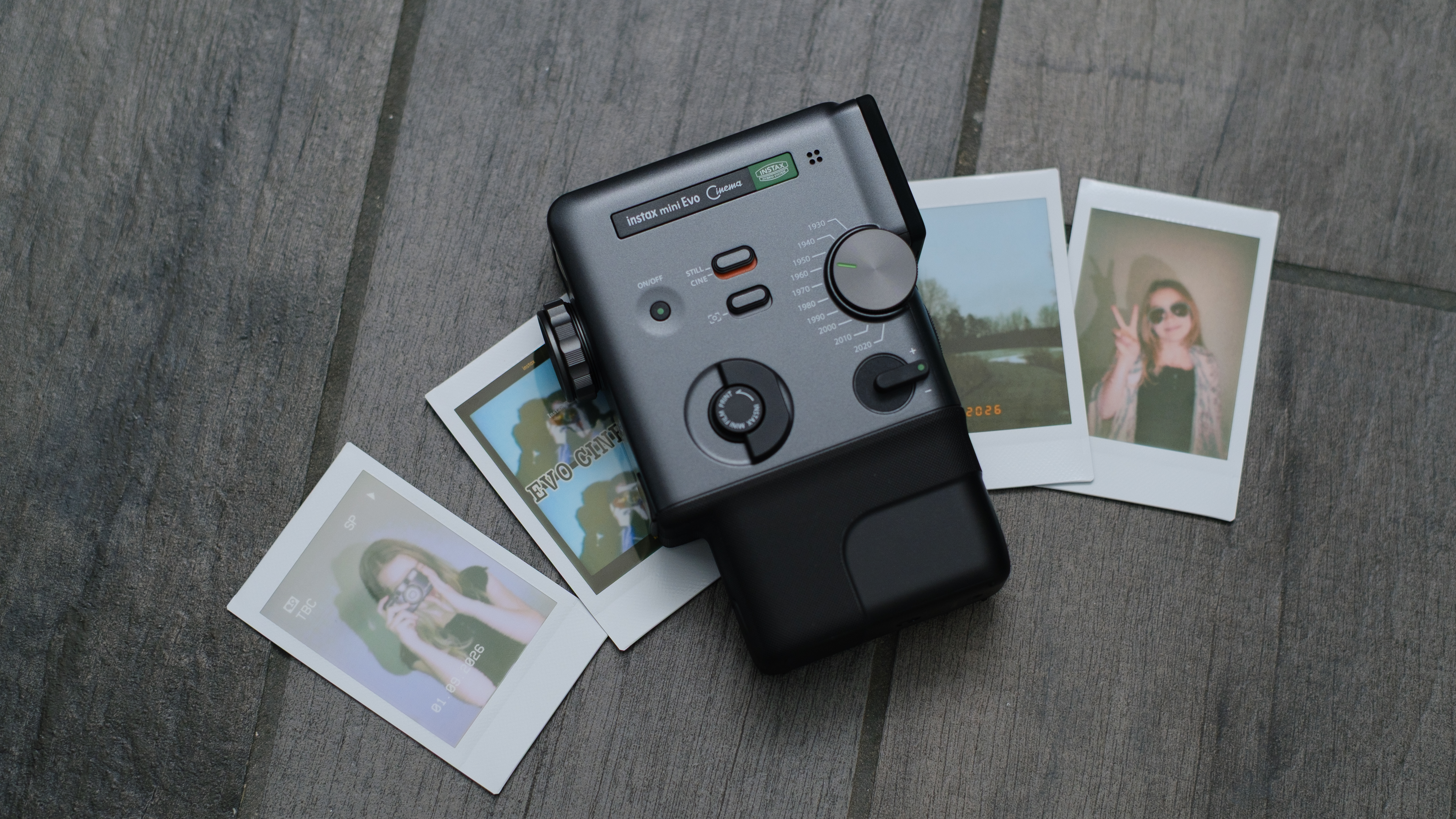
We all have our own mental image of the past. As it slips further into our rear-view mirror, it’s typically clouded, scratchy, and low-resolution, while the present is bright, clearly defined, and very real.
Instax lets us climb back into that safe, warm, nostalgic bubble – delivering something reassuringly knowable in times of great uncertainty. But yes, it is all rather bonkers.
Time to embrace the madness!