London needs to reverse a brain drain that is seeing talent flee the capital because of the cost of living, the Tories’ expected candidate for mayor Sir James Cleverly has warned.
Speaking to The Independent ahead of this week’s Conservative Party conference, Sir James made an extraordinary claim that he would be able to cut prices of new houses in the capital by £100,000 if he is elected mayor.
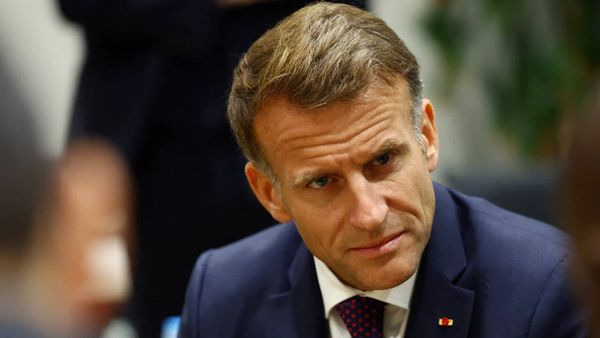
Addressing what he sees as a crisis, the 57-year-old former foreign secretary and home secretary told The Independent: “We are losing talent. We're losing young people from London. That is unsustainable.”
He added: “It's not just multi-millionaire rock stars and influencers running off to Dubai. People on quite modest salaries are looking at opportunities elsewhere. Some to places like Dubai.
“But I see this in Braintree, where I'm currently the MP – there are people being priced out of London who are moving to towns like Braintree or Maidstone or Milton Keynes or Hemel Hempstead or whatever.
“They're moving out of London because they just cannot envisage making the maths work for them in the city – that is a real problem.”
According to the Office for National Statistics (ONS), about 420,500 people moved out of London to other parts of the UK in the year to mid-2025, while about 183,000 people left the capital to live abroad – a total of around 600,000 people leaving in a 12-month period.
This was offset by around 288,500 people moving into London from the rest of the UK and roughly 235,000 international arrivals, totalling just more than 500,000.
Sir James claimed the so-called brain drain was driving this and said one solution would be to use mayoral powers to bring down the cost of house prices by reducing the amount of additional costs when you buy. He also hinted at looking again at measures like Ulez to bring down the cost of living. Polling suggests the cost of house prices in London is one of the top three issues. According to a YouGov poll in August 2026, it was the third highest concern on 39 per cent, behind cost of living (72 per cent) and crime (44 per cent).
“The mayor accounts for about half of what people pay in their council tax, so if the mayor can reduce his part of the council tax budget, we can reduce some of that financial drag,” Sir James said.
“The cost of public transport – that's very much in the mayor's gift. The cost of driving a car, particularly in outer London boroughs, is very much in the mayor's gift.”
But he identified house prices as the real issue, adding that if someone wants to live in Westminster they even need to be super rich or have their housing paid for by the council.
“I want to make it cheaper for people to get on the housing ladder,” he said.
“The accumulated cost of bureaucracy, taxes, and various other things adds about £100,000 per property onto new build properties in London. That's £100,000 that doesn't go into the bricks or mortar. It doesn't go into the windows and doors. It just gets soaked up by tax and bureaucracy.
“Then we wonder why young people are looking at flats – the cheapest of which are £350,000 or £400,000. And £100,000 of that is tax and bureaucracy.
“If you can find a way of stripping that cost out, then suddenly young people in London are looking at flats at £250,000 and £300,000. That's the kind of thing that maybe gives people an incentive to stay in London.”
The powers of the mayor mostly affect building new homes through the London Plan including housing targets, density and design policy, affordable-housing expectations and rules on tall buildings, green belt and metropolitan open land.
Under the Mayor of London Order 2008, boroughs must refer applications of potential strategic importance to City Hall. Triggers include more than 150 homes, buildings over 30 metres outside the City, large commercial floorspace and some green-belt or metropolitan open land schemes.
Since 11 May 2026, the mayor can also intervene on schemes of 50 or more homes where a borough is minded to refuse, and on larger green-belt proposals (1,000 square metres or more).
Sir James announced in August that he was quitting the shadow cabinet to run for London mayor.
He said he is “all in on being mayor” and will not try to run for his Braintree seat in Essex again. He also insisted the role would not be a stepping stone for a comeback like Boris Johnson or Andy Burnham, who both became prime minister after their mayoral jobs.
He told The Independent: “This is my last big job in politics… I’ve stepped down from the shadow cabinet, I’ve burnt my bridges.”
Sir James also insisted he would work with prime minister Andy Burnham to end rough sleeping but warned it is a more complex issue than simply providing accommodation.
“Rough sleeping is a very complicated issue. It's often about drug and alcohol. Alcohol dependency. It's often about people who have been victims of abuse. It's not just a housing issue,” he said.
“I applaud Andy Burnham's passion for this. I'm not going to criticise him for his passion. His track record in Manchester was not great, but you know what? I'm not going to be cynical about this. I know he feels strongly about this because I've discussed it with him directly whilst he was up in Manchester.
“I think we've got to be realistic that this cannot be resolved just through throwing more public money at the problem or just feeling very passionate about the problem – it's quite a technical issue.”
Sir James admitted the Tories “still have a big hill to climb” in terms of swaying voters but added that “other parties are coming off the boil”.
He believes “optimism” is the key for his party to take on Nigel Farage and Reform UK, who have seen a dip in the polls over the past few months.
“Reform don't have answers to London's challenges. They don't have answers to national challenges,” he said.
Standing for Reform UK is Laila Cunningham, who has vowed an “all-out war on crime” if she is elected. She also said she wanted to return London to “the glory days”.
Sir James said: “All I ever hear from Reform is criticism about London. We've got a candidate that keeps saying that London is terrible, that it's dangerous. She won't let her children out in London.
“I mean, you can't hate London and then hope to be the mayor of London.”