Get all your news in one place.
100’s of premium titles.
One app.
Start reading
Tom’s Guide
Tom’s Guide
Technology
Nick Pino

I broke up with Verizon Fios and I discovered a hidden policy I absolutely hate

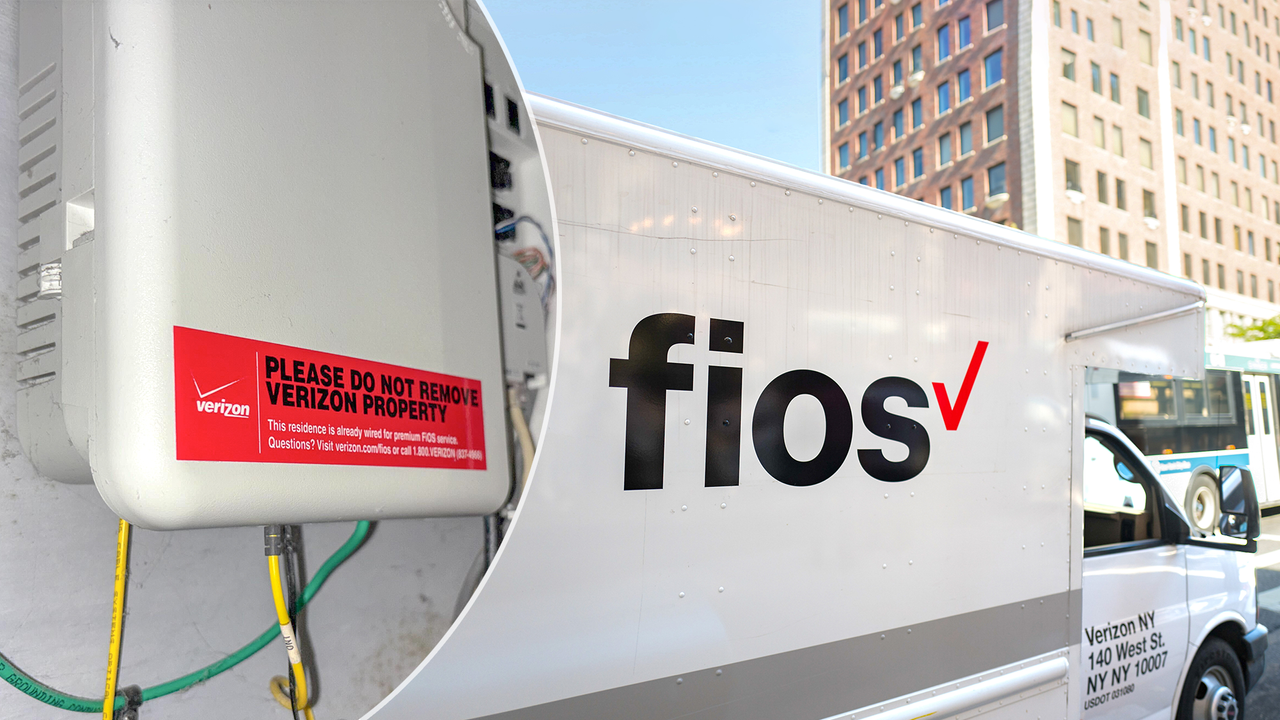
A composite image showing a Verizon Fios ONT box and a Fios Truck side by side.

Getting out of a three-year relationship is never easy, but Verizon is making it particularly difficult for me. They’ve done everything a bitter ex would do — they scoffed when I said I was leaving; they told me my new service won’t be as good; and now, they’re refusing to come and take their equipment unless I pay them to do so.

I didn’t want it to come to this — I’m not exactly stoked about downgrading to Spectrum’s “fiber-powered” internet — but worsening connectivity issues, unresponsive self-help portals and poor customer service have left me no choice but to move on.

Here’s the story of the rise and fall of my relationship with Verizon.

The honeymoon phase

Like a lot of relationships, the first year of my relationship with Fios was so great. After buying a home, I wasn’t looking to spend extra money on one of the best Wi-Fi routers — Verizon threw one in for free right out of the gate and tacked on a MoCA adapter for free for my office.

That first year, the service was cheap, fast and, importantly, incredibly stable. I was happy as could be with the 1GB Fios plan. It was $99 per month which is pricey but, at the time, I felt it was more than fair for the service that was being provided.

Then we got into our first fight.

(Image credit: Shutterstock)

It happened after a major storm rolled through Buffalo. I lost power one night and, when the lights finally came back on, my internet connection was spotty at best. No amount of power cycling helped. It turned out that the storm had damaged the delicate fiber optic cable running to the house.

Getting someone to the house to replace it took a week. When they were finished, the line was left unprotected on the lawn — a perfect disaster waiting to happen. They told me they’d need to come back later with tools to bury it underground.

Eventually that got done, but in that time something easily could’ve happened to that cable.

I’m not sure it’s ever been the same since that cable was replaced. I’ve routinely been told by the self-help portal that fixes should be as simple as resetting the Optical Network Terminal (ONT) or unplugging all the ethernet-connected devices from the router.

The beginning of the end

(Image credit: Will Newton/Getty)

Fast forward to earlier this winter when the Northeastern United States was hit by yet another big storm. Once again we lost electricity. And once again the Fios connection took a huge hit to its overall speed and stability.

Instead of getting on the phone immediately with customer support, I tried to use Verizon’s self-help portal to fix it myself. Each time I performed the test, the router would reset the connection — and within seconds it would go back to losing data packets left and right.

I finally caved and called for help. The representative at the time told me it was something they could fix on their end (it wasn’t) and that issues could persist momentarily but not for more than another day (they did).

Cue another few rounds through the self-help portal.

The breakup and how I discovered Verizon’s wild equipment policy

I didn’t want to do it, but Verizon forced my hand. I called Spectrum and placed an order for their new 1GB Invincible Wi-Fi service that comes packaged with a Wi-Fi 7 router with an integrated 5G cellular backup and an 8-hour battery.

Eventually, a Spectrum sales representative told me, 2GB service will be available in my area — and it could be as soon as the end of the year. That was enough to sell me.

As I explain this all to a Verizon representative, I’m met with contempt: “I’ve never heard of someone leaving Verizon Fios for Spectrum. Are you sure you want to do that? You know you don’t have to.”

It’s too late I say, the boxes with the new modem and router have arrived.

“Send them back.”

(Image credit: Tom's Guide)

I explain that I can’t set up the new equipment because all of the coaxial cables in the house run through the Optical Network Terminal in the basement. She tells me that shouldn’t be a problem. (It is.)

See, it turns out that the old coaxial cable that ran into the house was cut when the ONT was installed. With no way to reach the outside lines except through the Optical Network Terminal, I was effectively cut off from being able to switch out of Verizon.

I’m frustrated at how difficult this is — so I ask, “Can you just come and pick up the Optical Network Terminal?” The answer is that they can… if I’m willing to pay for it.

Routers come and go, but (Verizon's) ONTs are forever

(Image credit: Tom's Guide)

Imagine breaking up with someone and they tell you that they’re going to leave some stuff at your place “just in case you ever decide to reconnect.” That’s definitionally crazy.

It’s not crazy, the representative tells me. It’s their policy, I was told, but not part of the actual contract you sign when agreeing to in-home Fios.

On some level, I understand the policy. To send a technician over to uninstall the Optical Network Terminal would cost them money — money that they’d be spending on a person who is no longer a subscriber. Financially, it makes more sense to just leave the equipment.

I’m not nearly as skilled or as knowledgeable as a technician, but I checked Verizon’s online documentation to see if I can remove it myself. Apparently, doing so can cause damage to the fiber optic line or the equipment itself. Doing damage to the equipment incurs a cost, but so does having a technician come to remove it, apparently.

Over my half-hour conversation with the representative, I’m told, repeatedly, to look after the equipment until there comes a time in the future that I might be interested in Verizon’s services again. So in the basement it stays, I guess.

Don’t cry ‘cause it’s over, smile because it happened

(Image credit: Verizon Fios)

I’m not bitter about the breakup. I’m shocked at the policy I had no idea I signed up for — and disappointed that I now have to pay out of pocket to have Verizon’s equipment returned to them — but I don’t put ISPs on a pedestal. They’re all a mixed bag when it comes to performance and customer service quality.

It turns out that I’m not the only person who’s encountered this issue with the ONT, though. On Reddit’s r/Fios, users have been asking how to get theirs removed. Most folks are saying that it’s not worth the hassle, while others are saying that you can provide written notice to Verizon that they have 30 days to come and remove it from your property or it’s forfeit.

Another user says that technicians can remove it for non-customers at no-cost, something that flies in the face of what the representative told me earlier that day.

I’ll look into having it removed once I’ve returned the router and MoCA adapter, but I’m not sure I’ll go as far as writing them a request for removal — at least, not now.

We had a good run, Verizon. I’m going to miss that first year we had together. I hope that by talking about our issues with the world, you change.

I’ll keep your stuff here, if I must, but I’m definitely going to hide it behind one of the best TVs, like the LG C5 OLED. Whenever Netflix stutters or HBO Max fails to load, I’ll think of you.


Follow Tom's Guide on Google News and add us as a preferred source to get our up-to-date news, analysis, and reviews in your feeds.


More from Tom's Guide

Sign up to read this article
Read news from 100’s of titles, curated specifically for you.
Already a member? Sign in here
Related Stories
Top stories on inkl right now
One subscription that gives you access to news from hundreds of sites
Already a member? Sign in here
Our Picks
Fourteen days free
Download the app
One app. One membership.
100+ trusted global sources.