
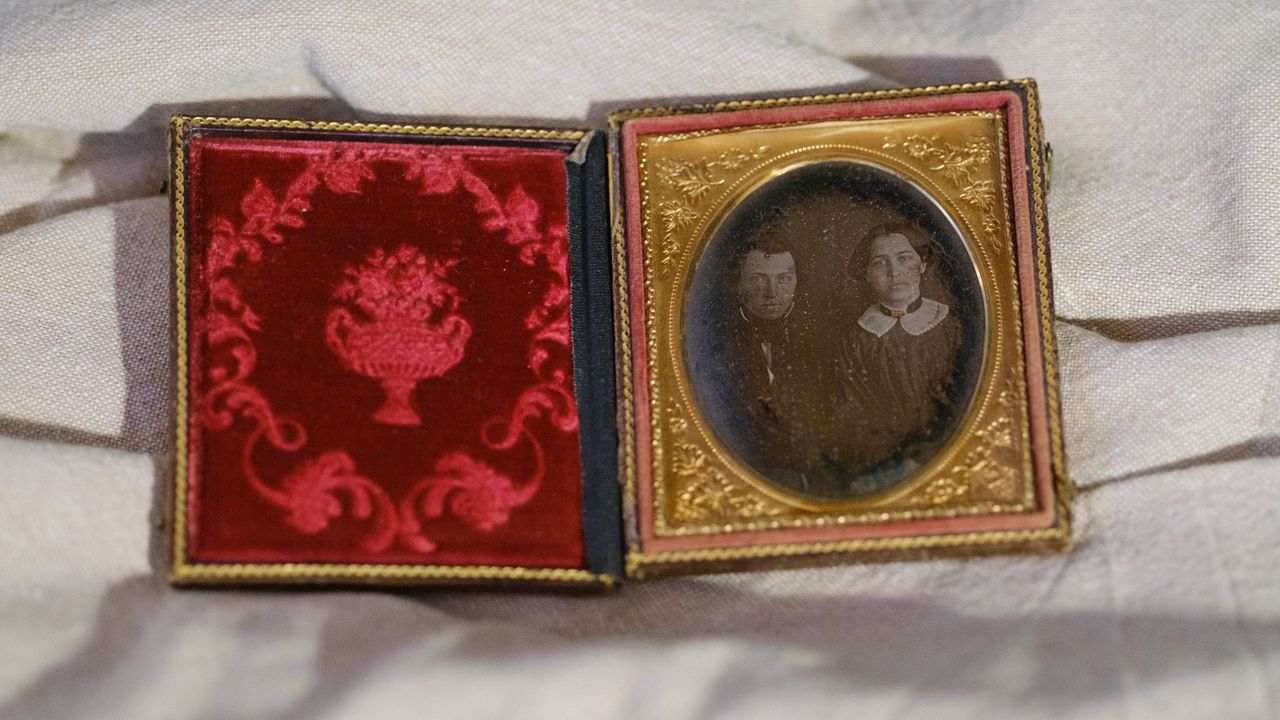
I’ve had a longtime obsession with old cameras – but among my collection of analog photo gear is a much smaller treasure: a daguerreotype. Encased in a leather-wrapped hinged case, the mirrored finish reminds me of what a true “retro” photograph looks like, a definition that surprisingly doesn’t include grain or soft focus.
The daguerreotype was not the first photograph in existence, but the format, first released to the general public in 1838, is considered the earliest photographic process that was widely available. The daguerreotype is a copper plate coated with silver, which became a photograph after an iodine solution, exposure to light, and development with mercury vapors.
The resulting image, thanks to that polished silver, has a mirrorlike finish. If you look at the image straight on, you can’t really see much – and may even see yourself reflected back. Angle the photo just right, though, and I can see a photograph. In this way, it reminds me of the lenticular prints, the little plastic images that become a different image when you tilt them.
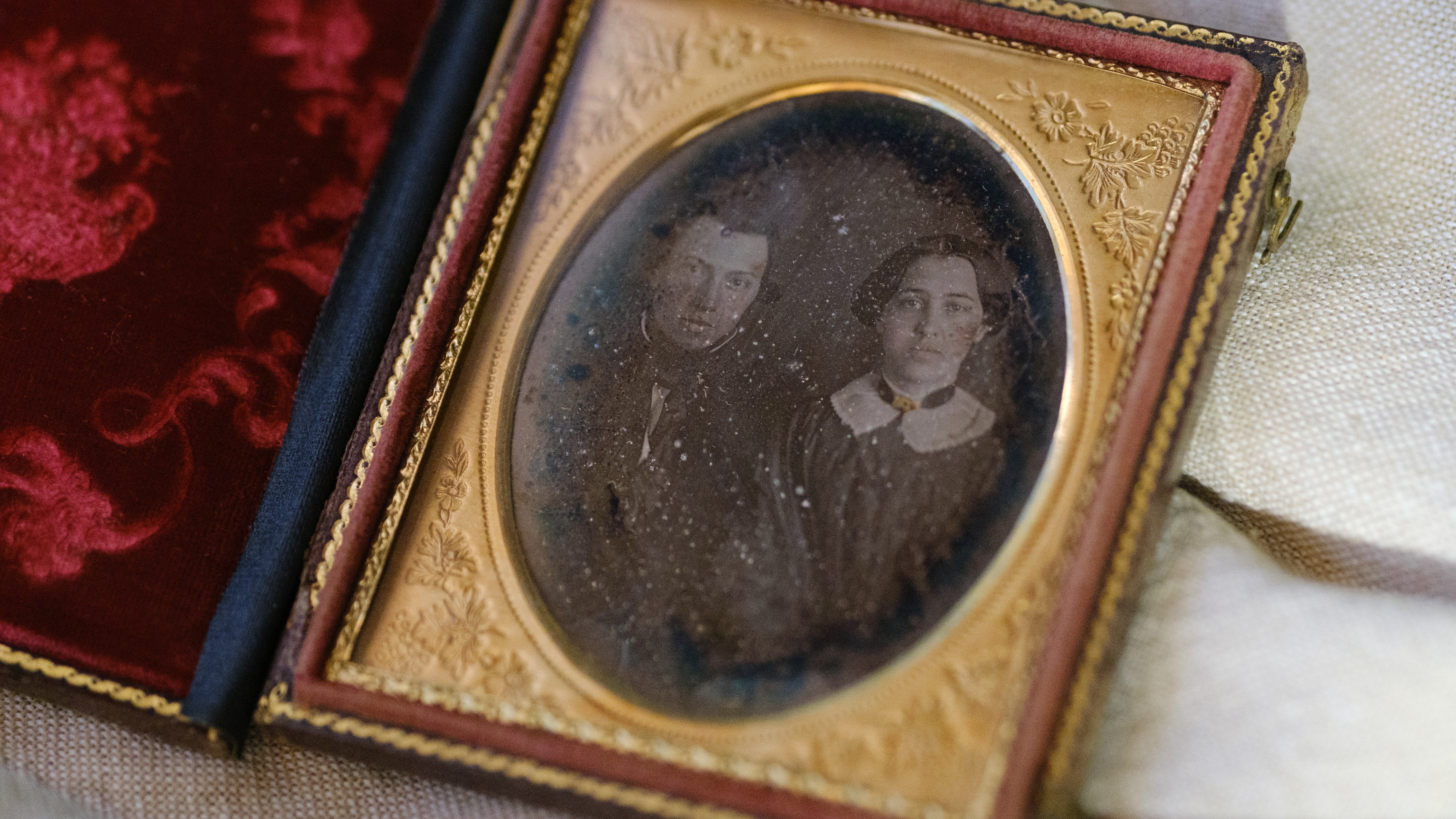
Every time I open that hinged case (even though the hinge has now, sadly, deteriorated so that it is in two pieces), I’m struck by how impressively sharp the image is. I tend to think of vintage images as soft and grainy, but the daguerreotype is not. The silver-coated photograph is remarkably clear, without much grain at all, and feels a bit magical.
To me, the daguerreotype that I bought feels old with the black and white and tarnished edges, yet the sharpness and detail feel far more modern than I expected. Yes, it’s in black and white, and the edges have tarnished with time, but it doesn’t have the grain and softness that I tend to associate with old photographs.
The sharpness and detail feel particularly surprising considering the format typically needed an exposure time between five and 30 minutes. But the format was made directly on that silver coating and did not need to be transferred from a negative to photo paper.
The polished silver finish doesn’t give it grain like the film photographs that would arrive much later. And, while I have to tilt the image to see the full contrast, it’s so sharp and full of contrast that it nearly looks three-dimensional.
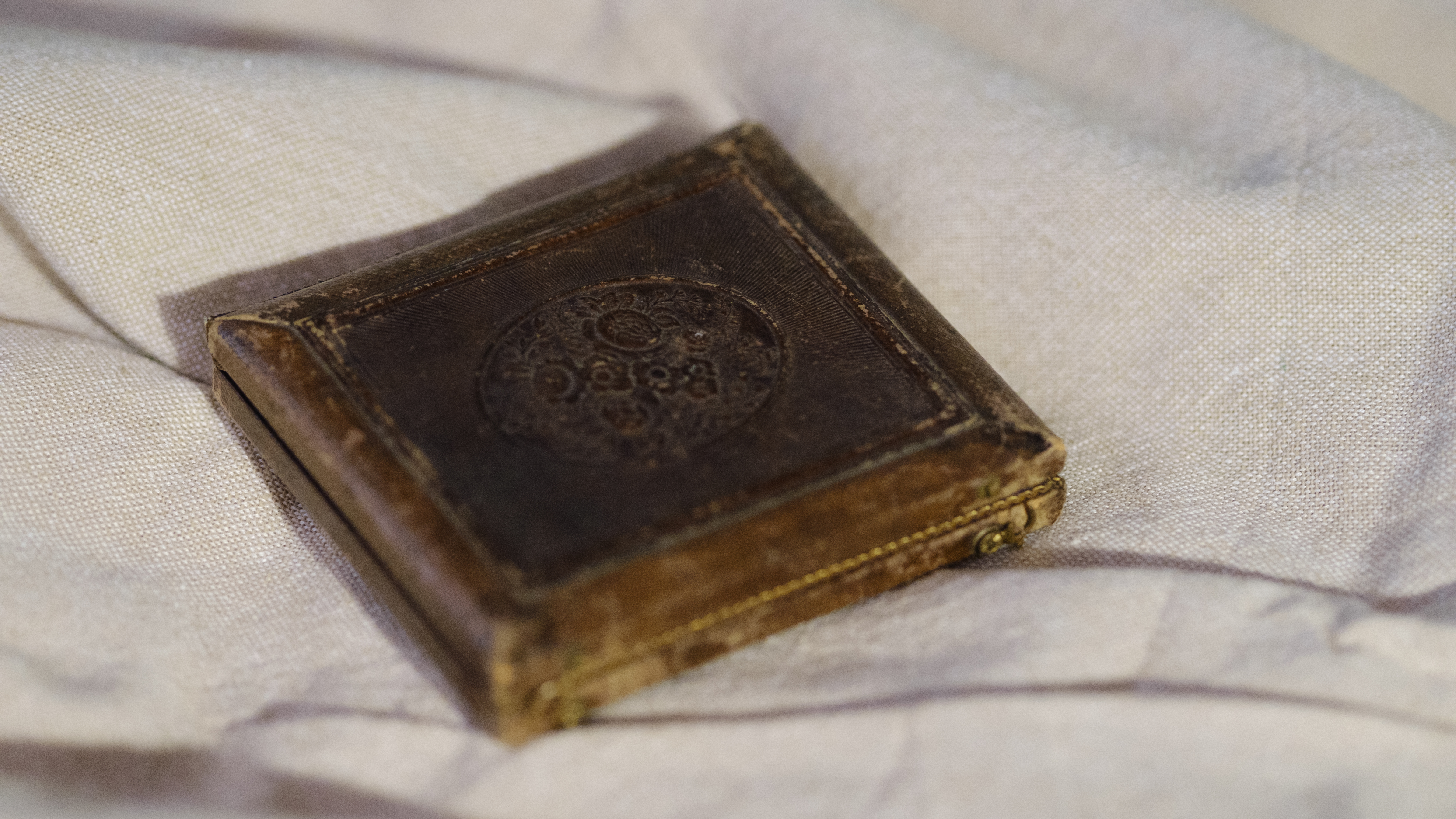
I bought my daguerreotype from a flea market, where I also bought a handful of tintypes. When I bought it, I was struck by the thought that the leather-wrapped case with an embossed floral design, dainty clasps, and a gold-toned mat felt like art alongside the actual photograph. (And thankfully, it helps protect the photo as well as my hands from any chemical residue.)
I can’t help but wonder about the couple in the photograph, who they were, and what year the photograph was even taken.
I keep the daguerreotype stored on a glass-encased bookshelf – and I pull it out every time I need a reminder that vintage photography doesn’t always mean grainy, soft images.
You may also like
Browse the best retro (digital) cameras or take a look at the best film cameras.