
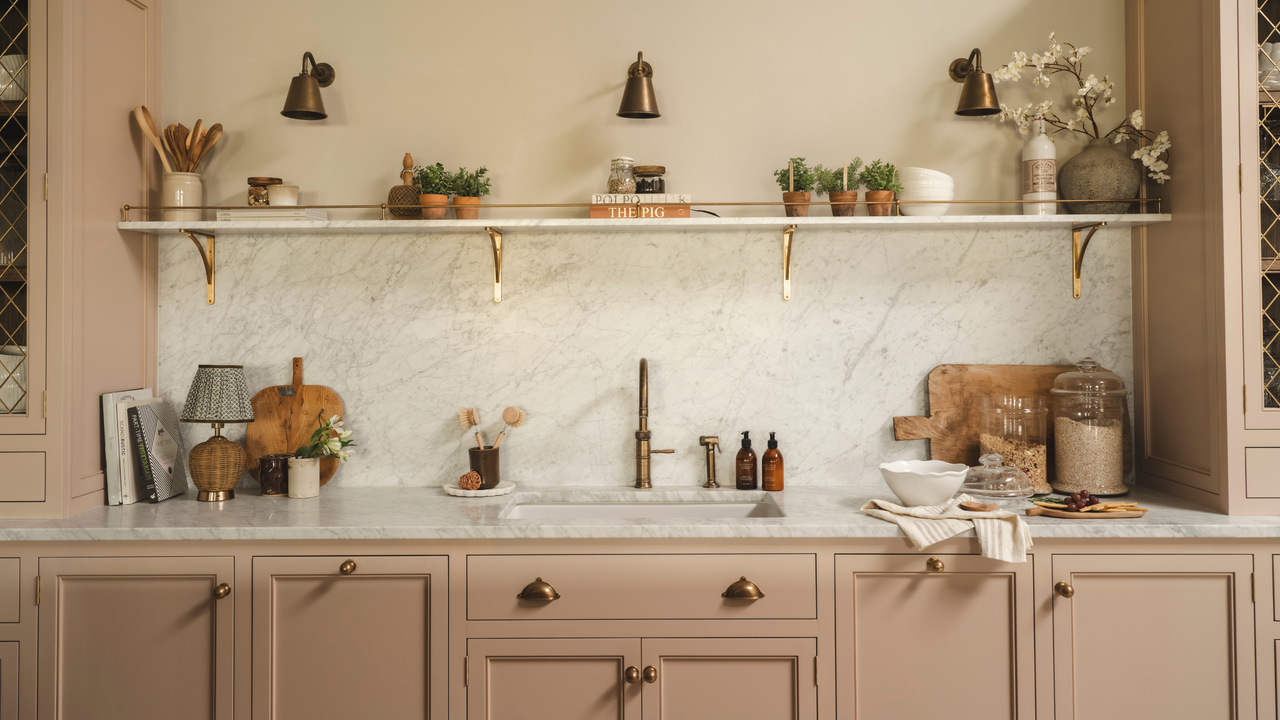
When choosing the color for your kitchen cabinets, it's understandable that the way it looks will be top of mind. But, you'd be remiss to forget how your cabinet color can impact the practicality of your kitchen.
Now, I love a beautifully designed kitchen as much as the next person, but when it really comes down to it, your kitchen needs to be practical. And while you'll likely consider the durability of your counters or the quality of your appliances, selecting an option that will see your kitchen through the years, it seems that many abandon this thought process when choosing their cabinet colors.

It's a common mistake, but one that many come to regret. Renovating a kitchen is by no means cheap, nor is it one you'll be eager to repeat shortly after, so picking the right color the first time round is even more important than you may realize. And don't be beholden to the latest kitchen cabinet color trends; you have to pick a color that will work in your space and stand the test of time. Luckily, I asked the experts for the top three most impractical shades to avoid, as well as the alternatives they turn back to time and time again.
1. Flat Black

You may think of black as the ultimate neutral — a fail-safe option, a tried-and-tested go-to. And it's an understandable assumption; in so many cases, you'd be right, when has an all-black outfit ever steered you wrong? But, when it comes to your kitchen cabinets, it's not quite so clear-cut.
Black kitchens are thought of as the ultimate chic, sleek statement. Pure modern minimalism, and, you'd hope, intensely durable too. But, as Charlotte Butler, kitchen design manager at BK Eleven, explains, "flat black cabinets either reveal every touch mark and dust particle under normal household lighting or dominate the wider space to the point furniture and architectural features struggle to coexist."
When you choose a true black paint, with no obvious undertones, your kitchen can end up feeling quite one-dimensional and flat, and this will only become more obvious under the harsh glare of artificial kitchen lighting.
In rooms where functionality plays a key role, like the kitchen, it's very easy for the design to become dominated by cool, hard surfaces, which can make your kitchen feel unwelcoming, which is exactly why softer, warmer colors have become one of the most popular kitchen color trends. A softer shade helps to counteract this potential sterility, while a flat black paint will only draw attention to it.
On a similar note, HOLTE co-founder, Fiona Ginett, says, "I’d generally be cautious with cool grays, which can feel flat or cold in a kitchen." Much like a pure black, cool grays "can quickly tip into feeling clinical rather than lived-in."
2. Bold, Intense Shades

When it comes to making an impact in your home, decorating with color can feel like a good place to start. And while, in many cases, this is certainly true, your kitchen cabinets may not be the best place to test it out.
As brilliant as a bold, bright shade can look on a paint swatch, when applied to a wider area, these colors can take on a whole new look. "Colors that appear appealing in isolation often become impractical once extended across an entire run of cabinetry, and the most difficult tend to be highly saturated brights," explains Richard Davonport from Davonport.
Because these shades are so vibrant and intense, they can quickly become overwhelming, and even the slightest mark will become glaringly obvious. But even before any signs of wear can appear, these shades are prone to causing problems.
"They remove the sense of depth from joinery and emphasize every construction line, appliance edge, and shadow gap that naturally exists within a working kitchen," says Richard.
"In a bespoke setting, the cabinetry should register as part of the architecture of the room, yet these sharper colors reflect light so directly that the eye is drawn to segmentation rather than proportion, and over time they also struggle to sit comfortably alongside materials such as timber, stone, or aged metal that naturally mellow and shift in tone," he explains.
So, even though these bright shades will indeed make a statement, it may not be quite the statement you were hoping for.
3. Pure, Bright White

Is there any home design more disputed than the white kitchen? Love it or hate it, the all-white kitchen is a trend that has seemed to persist, largely favored for its crisp, minimalist finish. But, aesthetic qualities aside, if you're looking for a kitchen cabinet that will stand the test of time, the experts warn you to stay away from pure white.
"White cabinets may be the trendy default, but they’re also the most impractical choice in a working kitchen," warns interior designer Justine Lafond. "They show every fingerprint, scuff, and splash, and after a decade of dominance, they now feel more expected than elevated. And truth be told, they're normally boring."
Over the years, your kitchen will see plenty of spills and splashes, no matter how tidy a chef you are, and your white cabinets will wear those stains proudly, no matter how hard you try to scrub them away. Luckily, there are plenty of white kitchen alternatives you can consider instead.
Colors to Choose Instead
This iconic paint shade is a go-to for interior designers. The warm-toned gray is the perfect soft neutral that will never go out of style.
Just because it's popular, doesn't mean its just a trend. Sage Green is a beautiful shade for your kitchen cabinets, and this one feels subtly elegant.
Another favorite among designers, Templeton Pink is a warm, muted clay that pairs beautifully with dramatic marble counters.
And it's not just your kitchen cabinets you need to be careful of — there are colors you should never paint a kitchen, too, and designers explain how to solve these 'troublesome' shades. For more practical style advice, why not subscribe to our newsletter, so you never miss a thing?







