
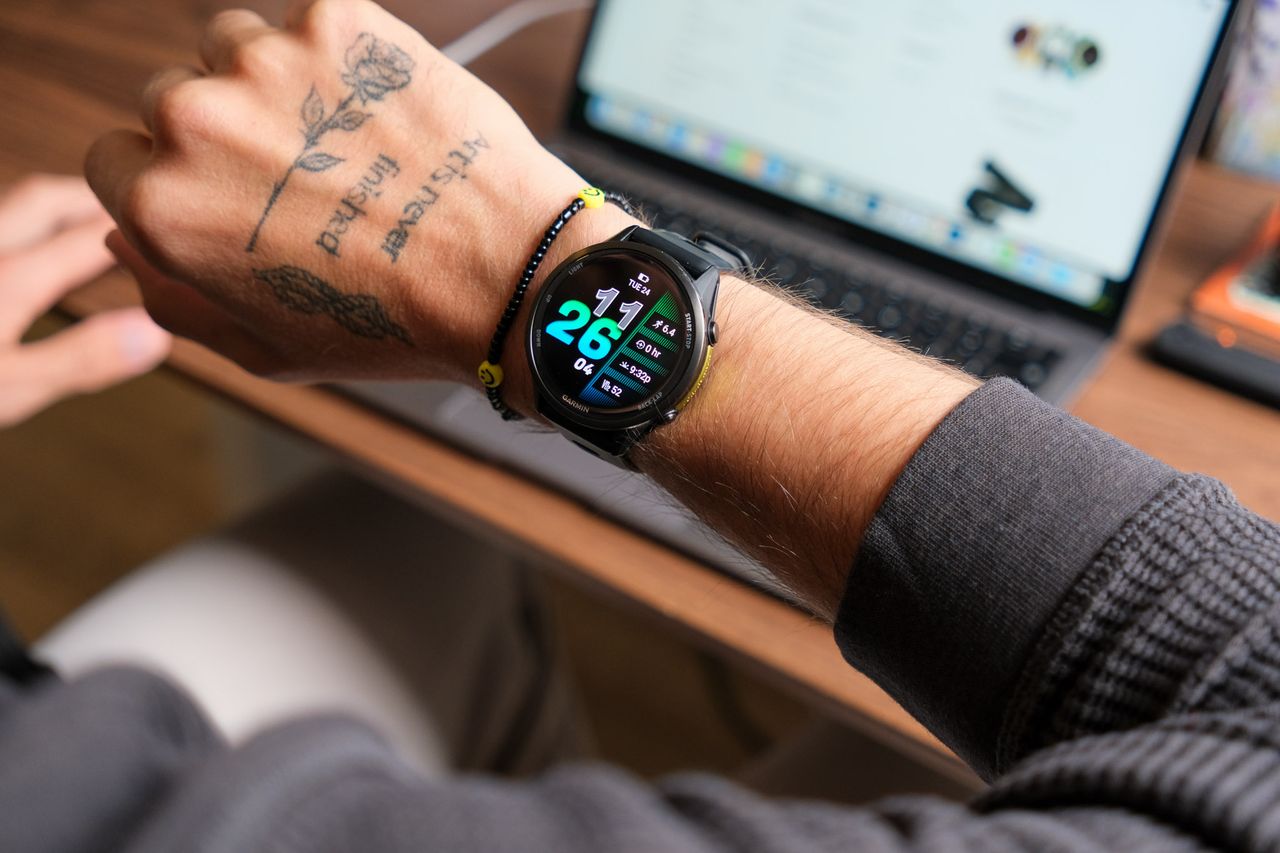
Every time I set up a new Garmin watch – which happens more often than you'd think – I go through the same routine: notifications, training screens, widgets, watch face, followed by switching off Pulse Ox.
It’s the one feature that consistently damages battery life while rarely adding anything meaningful to how I actually use my smartwatch.
Blood oxygen tracking sounds important, and in medical settings it absolutely is, but on a wrist-based consumer wearable it mostly exists as a passive wellness metric, collecting numbers that are difficult to interpret and even harder to act on.
Garmin (and other brands) uses it to display overnight oxygen trends, support altitude-acclimation features (how often do you need to use this?!), and add another layer to its health ecosystem.
Yet, in everyday use, graphs related to blood oxygen tracking rarely tell a story beyond confirming that you are, in fact, breathing.
On the other hand, Garmin itself warns that Pulse Ox is one of the most power-hungry features on its watches, and in real life, the difference between having it enabled and disabled can be quite significant.
Data without direction
Apart from draining the battery, my other issue with SpO₂ is that it rarely changes behaviour. If my oxygen saturation dips slightly overnight, I don’t train, recover, or, quite frankly, feel any differently.
Unlike heart rate variability, resting heart rate or training readiness, it doesn’t translate into decisions, which makes it feel less like an insight and more like background noise.
I'm not saying it's completely pointless to everyone, though. At altitude, during illness, or for users tracking breathing conditions, SpO₂ can add useful context.
However, for most healthy, in-training Garmin owners, it’s a curiosity that makes your watch's battery die days earlier than it should. Sleep-only tracking is a reasonable compromise, but even that tends to fade into irrelevance once the initial curiosity wears off.
This might all change once Garmin figures out how to use AI to comb through existing data and provide meaningful training advice based on more obscure metrics (e.g., SpO₂), but until that happens, I'll be turning Pulse Ox off on my Garmin.