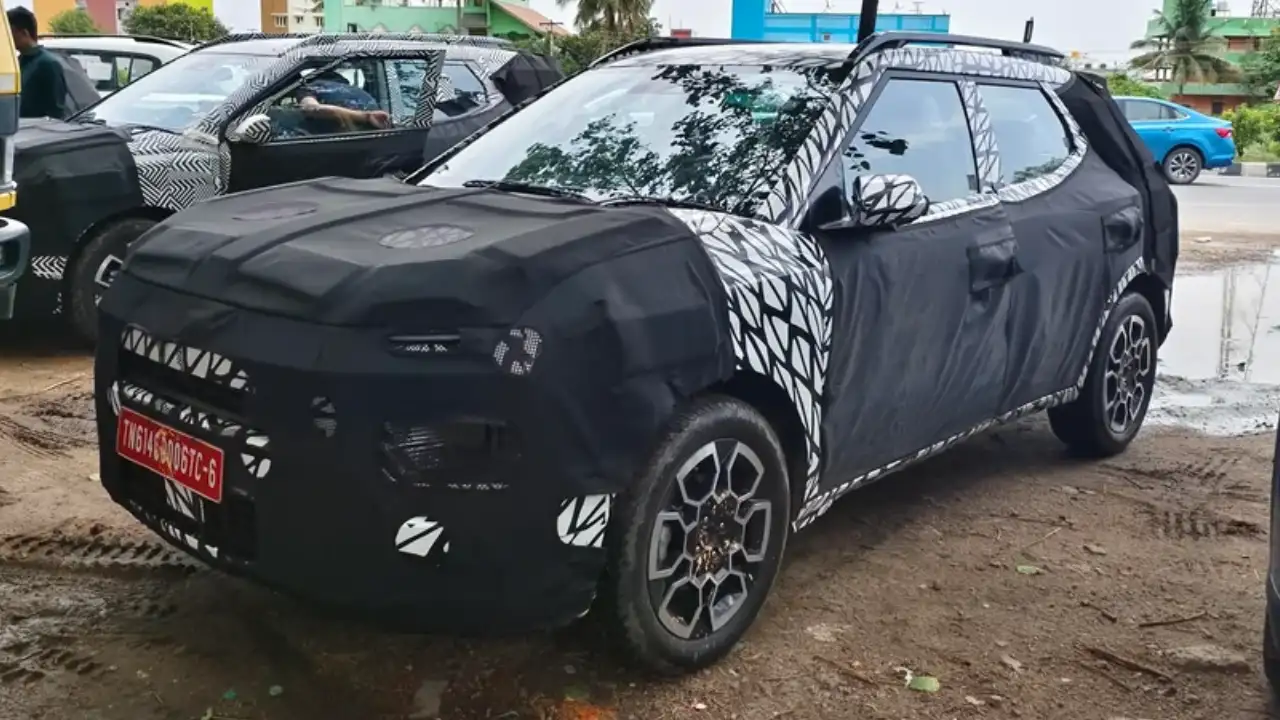
Hyundai Motor India has once again been spotted testing the upcoming Hyundai Bayon SUV on Indian roads. As per reports, the Bayon was spotted alongside the Maruti Suzuki Victus. The upcoming Hyundai Bayon is said to be a compact SUV could rival the likes of Maruti Suzuki Fronx, Toyota Taisor, and Nissan Magnite.
Also Read- Kunal Shah

However, according to reports, it can also be positioned between the Hyundai Venue and Hyundai Creta.
Hyundai Bayon Design: What Spy Shots Reveal
The latest test mule reveals several styling elements inspired by the international-spec Hyundai Bayon. At the front, the SUV is expected to feature Hyundai's signature split-headlamp setup, similar to the Venue. Slim LED daytime running lamps are positioned above the primary headlamp units, giving the SUV a modern appearance.
Previous overseas sightings have also shown front parking sensors, black bumper cladding and a radar module, indicating that Advanced Driver Assistance Systems (ADAS) could be offered on select variants.
Side Profile and Exterior Highlights
The side profile closely resembles the global Bayon, featuring a sloping roofline, distinctive window design and compact proportions. The test vehicle was seen riding on newly designed alloy wheels, although the exact wheel size remains unknown. International versions of the Bayon are available with alloy wheels up to 16 inches in size.
At the rear, the SUV is expected to retain a split-tail lamp design. The lower section could house the primary tail lamps, while indicators and reverse lamps may be positioned higher up. Spy images also reveal roof rails, rear parking sensors and a reverse camera.
Hyundai Bayon Interior and Features
The cabin of the India-spec Bayon has not yet been photographed. However, images of the Bayon N Line sold overseas show an all-black interior with contrast accents and adjustable headrests.
The India-bound model is expected to offer a touchscreen infotainment system, digital instrument cluster, wireless smartphone charging, automatic climate control, connected car technology and multiple safety features. Higher trims may also receive ADAS functions, further strengthening Hyundai's feature-rich reputation.
Expected Engine Options
Hyundai has not disclosed powertrain details for the upcoming SUV. However, industry reports suggest that the Bayon could be offered with a 1.2-litre naturally aspirated petrol engine, potentially paired with a factory-fitted dual-cylinder CNG option.
A more powerful 1.0-litre turbo-petrol engine is also expected to be part of the lineup, catering to buyers seeking stronger performance.