Get all your news in one place.
100's of premium titles.
One app.
Start reading
The Economic Times
The Economic Times

Hydrogen Train Launch July 17: Route, top speed, interior & exterior pictures, FAQs, and all you need to know about India's first alternative-fuel train

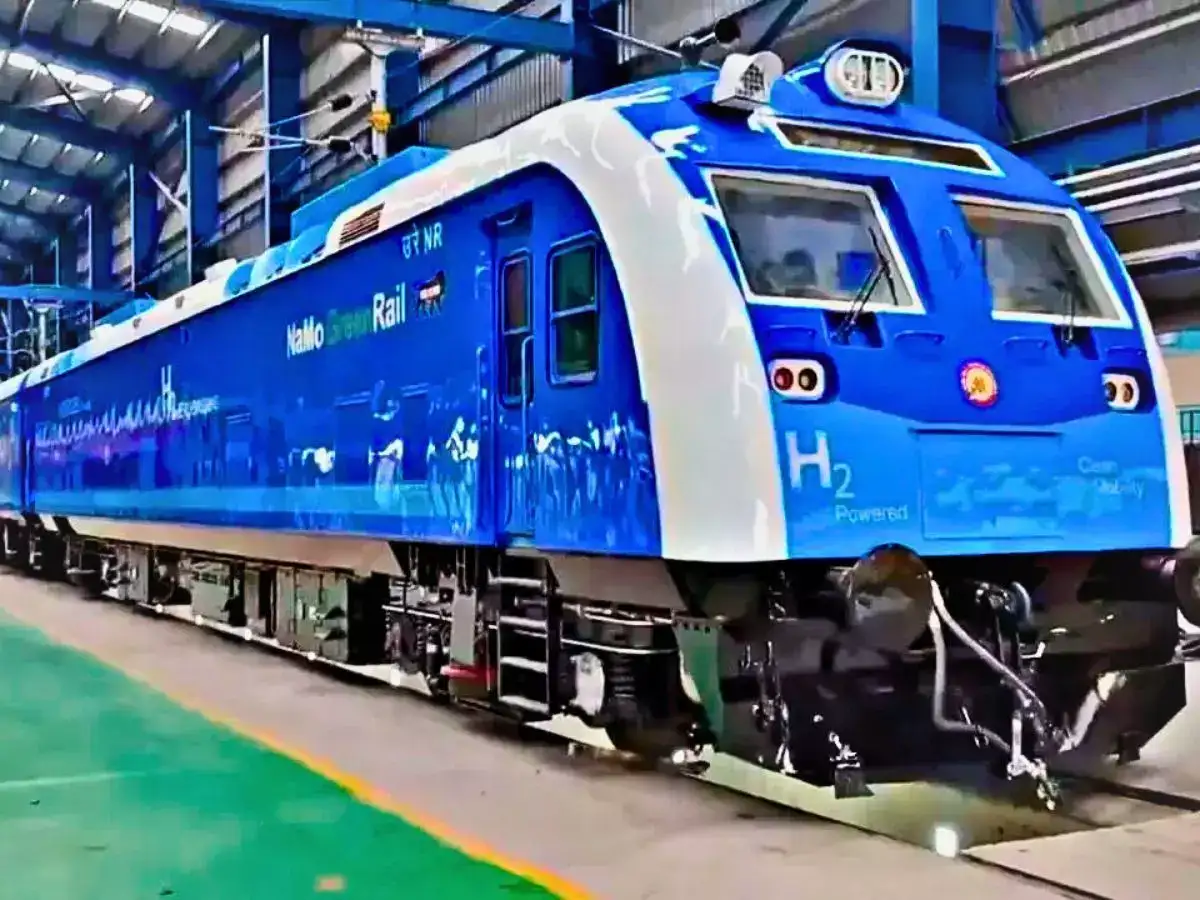
India is set to mark a major milestone in green transportation with the launch of its first Hydrogen Fuel Cell Train on 17 July. Prime Minister Narendra Modi is expected to flag off the train on the Jind–Sonipat section in Haryana, introducing a new generation of rail transport powered by hydrogen instead of diesel or overhead electric wires.

The launch follows India's rapid railway electrification drive, with more than 99 per cent of the country's broad-gauge rail network now electrified. The hydrogen train represents the next phase of this transition by generating electricity onboard through hydrogen fuel cells, producing only water vapour and heat as by-products.

The project also establishes India's first integrated hydrogen railway ecosystem, including hydrogen production, storage, refuelling infrastructure and train operations.

What is India's first Hydrogen Fuel Cell Train?

Unlike conventional electric trains that rely on overhead power lines or diesel locomotives, the Hydrogen Fuel Cell Train generates its own electricity onboard.

It uses Proton Exchange Membrane (PEM) fuel cell technology, where hydrogen stored in high-pressure cylinders reacts with oxygen from the atmosphere to produce electricity.

The electricity powers the train's traction motors, while the only by-products are water vapour and heat.

In simple terms: Hydrogen + Oxygen → Electricity + Water vapour

Because the process involves no combustion, the train produces virtually no direct carbon emissions during operation.

India's first hydrogen train route

The hydrogen-powered train will initially operate on the 89-kilometre Jind–Sonipat section of Northern Railway in Haryana.

The route connects:

  • Jind Junction
  • Gohana Junction
  • Sonipat

It will also serve several intermediate stations and halts, including Jind City, Pandu Pindara Junction, Bhambhewa, Butana Halt, Khandrai Halt, Rabrah Halt, Lath Halt, Mohana, Barwasni Halt and Sonipat New.

Indian Railways says the route has been selected to evaluate the operational performance, safety and reliability of hydrogen-powered passenger services under regular operating conditions.

Sign up to read this article
Read news from 100's of titles, curated specifically for you.
Already a member? Sign in here
Related Stories
Top stories on inkl right now
One subscription that gives you access to news from hundreds of sites
Already a member? Sign in here
Our Picks
Fourteen days free
Download the app
One app. One membership.
100+ trusted global sources.