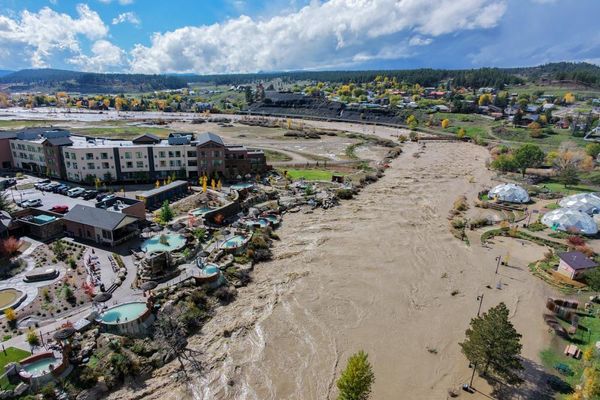
MIAMI — From the air, the fingerprints of Hurricane Ian’s journey through the Everglades are easy to see: swaths of beach washed away on Cape Sable, a plume of coffee-colored water leaking into the teal of Florida Bay and a stray sailboat shoved violently ashore, taking down 10 feet of mangroves on the way.
Ian’s Category 4 winds and record-breaking storm surge caused much misery in Southwest Florida, along with a death toll that passed 100 and continues to climb, but an initial visual survey of the southern Everglades, Florida Bay and Cape Sable revealed an ecosystem left largely intact.
That’s good news for an area still recovering from Hurricane Irma’s wrath in 2017. That storm destroyed 40% of Everglades mangroves, NASA scientists found, and those still-decaying trees could be the source of a persistent algae bloom that is still troubling Florida Bay.