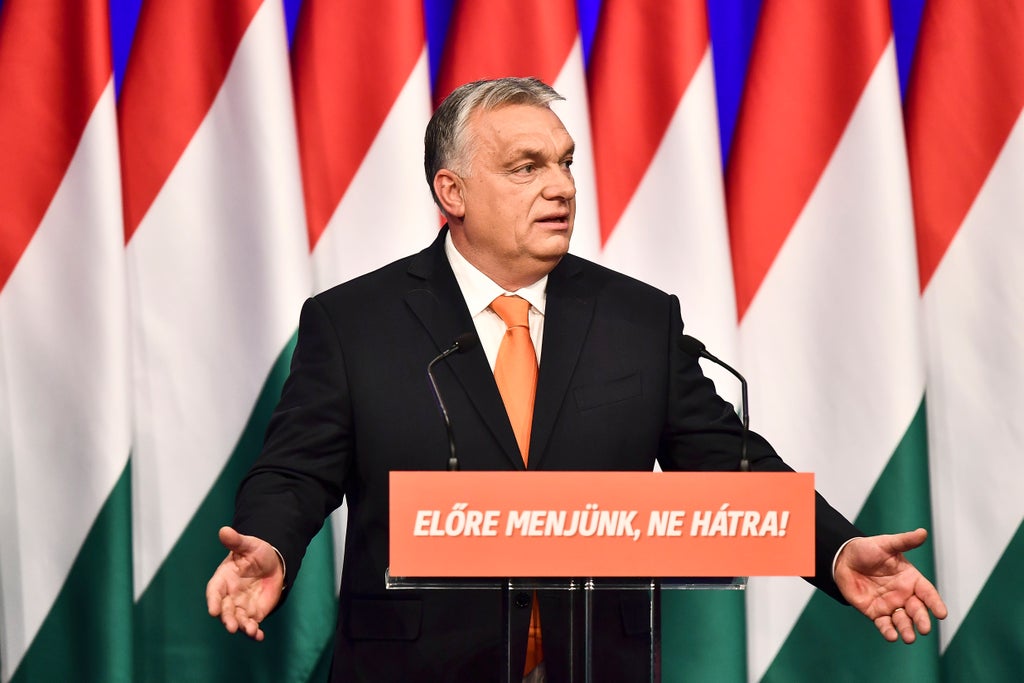
Only weeks ago, Hungary's nationalist prime minister was proclaiming that Sunday's parliamentary election would determine whether his small Central European country could be defended from the "gender madness" overtaking the West.
But, as war rages in neighboring Ukraine, Viktor Orban's strategy for winning a fourth consecutive term has shifted away from enflaming passions around divisive cultural issues like LGBTQ content in media and anxiety over migration. It's now about what Orban — cautiously balancing his Western alliances against his close economic ties with Russia — describes as an existential choice: the peace and security embodied by him and his Fidesz party or the threat of war and chaos should his decidedly anti-Kremlin opponents carry the vote.