Get all your news in one place.
100's of premium titles.
One app.
Start reading
LiveScience
LiveScience
Abha Jain

Hundreds of mysterious 'rogue' planets discovered by James Webb telescope may finally have an explanation

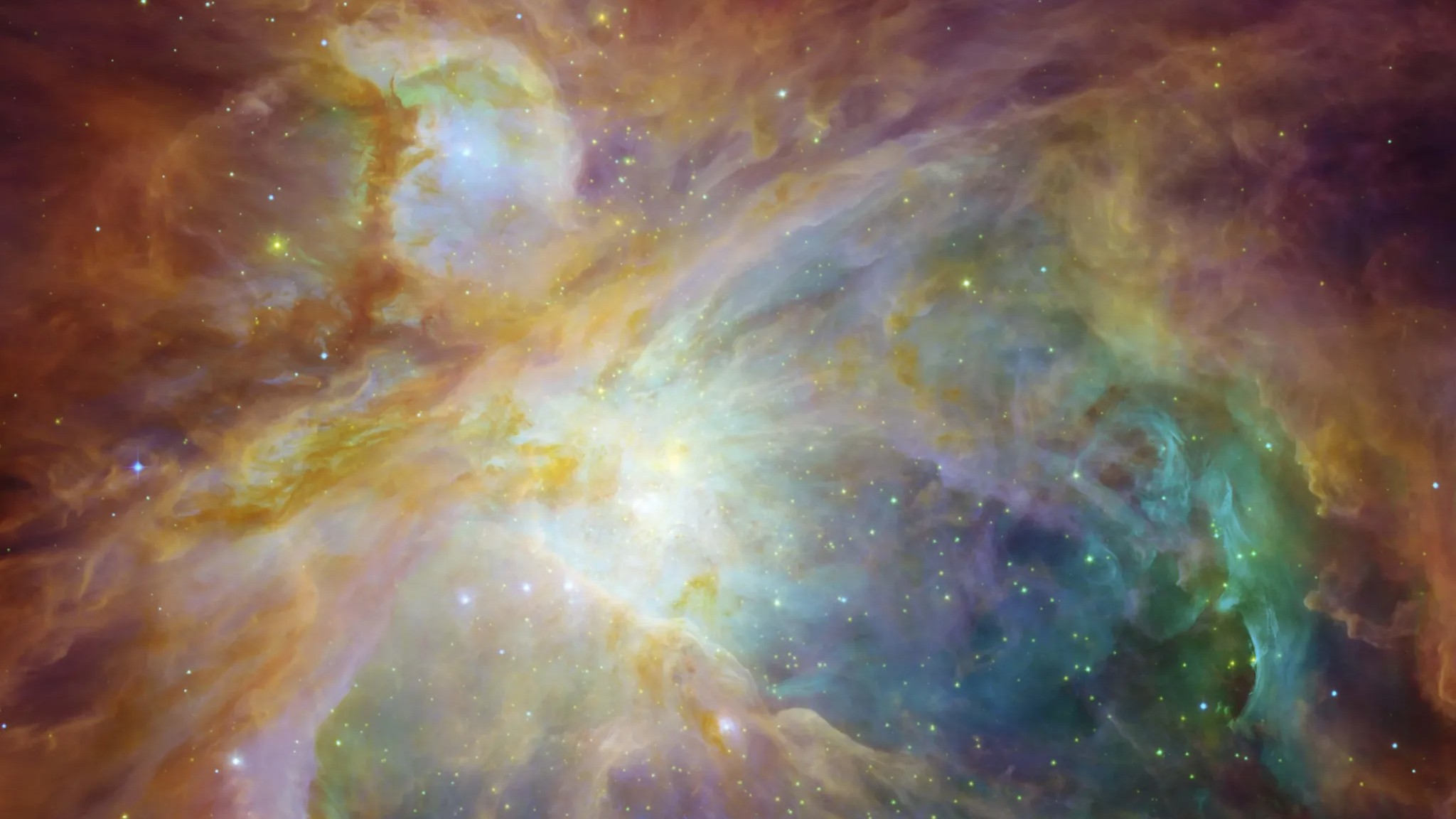
A Hubble Space Telescope image of the Orion Nebula shows swirling clouds of orange, blue, white and green dust in a field of twinkling stars.

The mystery behind hundreds of strange, free-floating planets detected by the James Webb Space Telescope (JWST) may be a step closer to being solved.

Many "rogue" planets, which lack a parent star, lurk in the cosmos. These free-floating planets (FFPs), including pairs of Jupiter-size worlds that orbit each other, are mysterious to scientists. But a new study likely rules out one way these so-called Jupiter-mass binary objects (JuMBOs) could have formed.
Sign up to read this article
Read news from 100's of titles, curated specifically for you.
Already a member? Sign in here
Related Stories
Top stories on inkl right now
One subscription that gives you access to news from hundreds of sites
Already a member? Sign in here
Our Picks
Fourteen days free
Download the app
One app. One membership.
100+ trusted global sources.