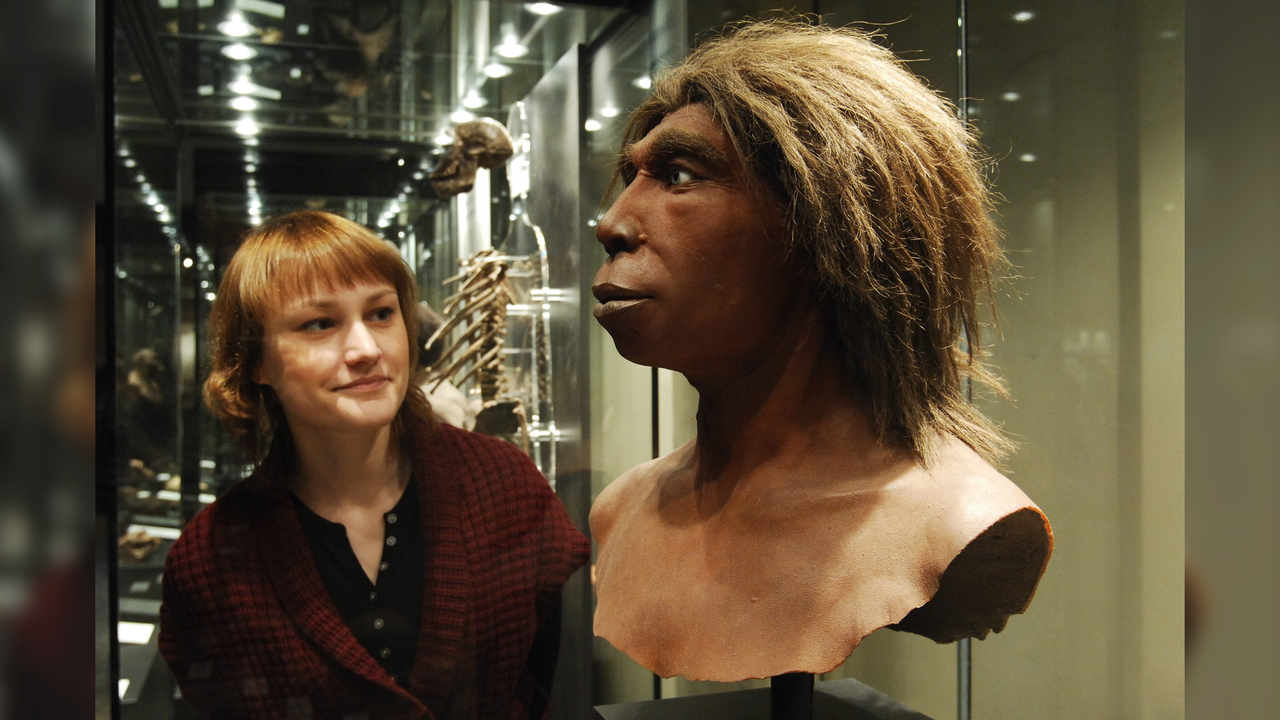
When Neanderthals and modern humans first got together, they preferred pairings between Neanderthal men and human women, a new study of ancient and modern genomes suggests. The finding helps to explain why modern humans (Homo sapiens) have a relatively low level of Neanderthal genes and why those genes are found in some populations today and not in others.
Ever since the first modern-human and Neanderthal genomes were sequenced over 20 years ago, scientists have puzzled over "Neanderthal deserts," or places in the modern-human genome where Neanderthal genes are rare. The two groups interbred during a few periods after their ancestors split around 600,000 years ago. The result is that most non-African people on the planet today carry an average of 2% Neanderthal DNA, while some African groups have up to 1.5%, which was inherited from H. sapiens who mixed with Neanderthals in Eurasia and then moved to Africa.