Get all your news in one place.
100’s of premium titles.
One app.
Start reading
AAP
AAP
Lloyd Jones

How WWII diggers kept the Ashes alive in POW camps

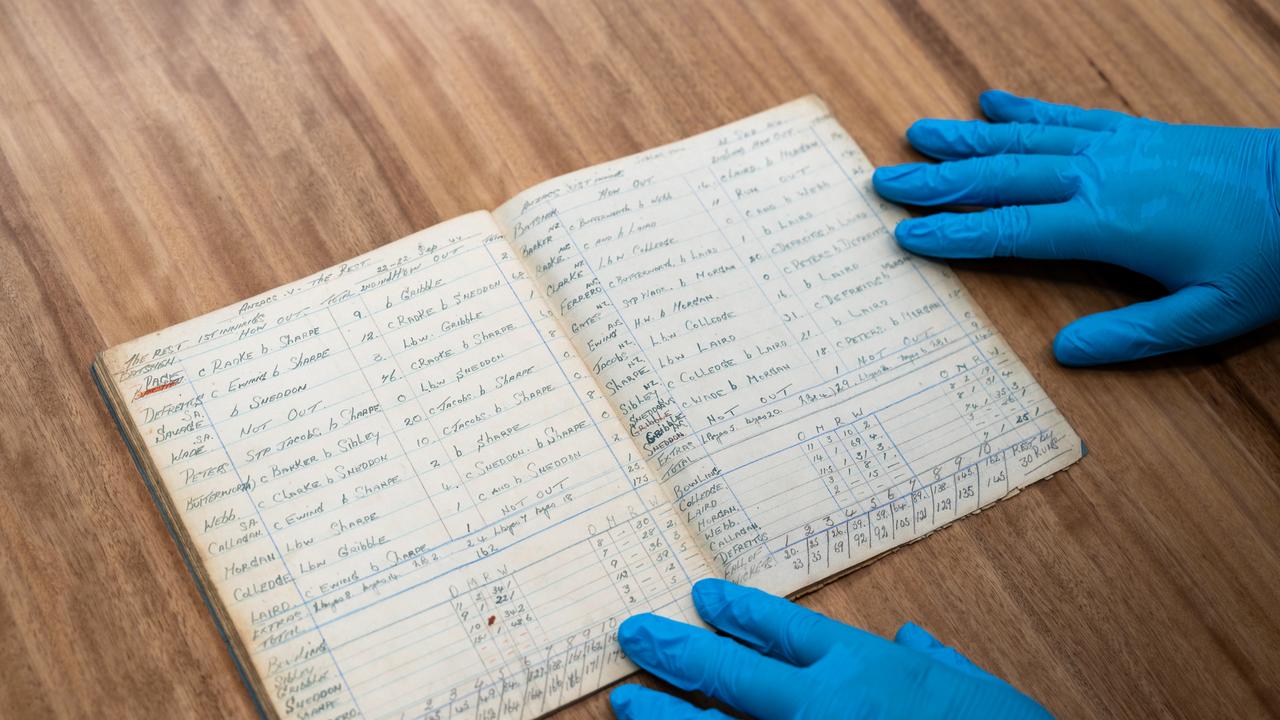
Australian prisoners of war kept meticulous records of their cricket matches in German camps. (PR IMAGE PHOTO)

The current Ashes series has prompted historians to drill down into prisoner-of-war archives to uncover meticulous records of cricket games that boosted digger morale in German stalags.

Scorebooks, diaries and cartoons found at the Australian War Memorial attest to the importance of sport for those captured in the early years of World War II.

Historian David Sutton, a self-confessed "cricket tragic", said the current Ashes series inspired him to dig deeper into the role of cricket in German POW camps where Australians were held after being captured.

Recently found in the archives were the meticulous scorebooks and diaries, illustrated with cartoons, of then-private Maurice Joseph Kelk, a keen cricketer from Parkes, NSW, who was taken prisoner in Crete in 1941.

Mr Kelk was held at Stalag 344 in what is now part of Poland and recorded a series of games between teams representing Australia, England, New Zealand and South Africa in 1944.

Around 2500 detainees and guards watched the games so they were serious events, Dr Sutton said.

Stalag 383 where the
Stalag 383 where the "Ersatz Ashes" was held in 1943 between Australian, British and NZ detainees. (PR IMAGE PHOTO)

The idea was to boost morale and fitness, create a friendly rivalry within the camp and provide a welcome distraction from the hard, tedious and sometimes terrifying rigours of camp life, he told AAP.

"This wasn't just a bunch of blokes getting together and having a hit," Dr Sutton said.

"It was highly organised, they had selection committees, they kept meticulous records as a way to enjoy the day, but perhaps to reminisce over the coming weeks as well.

"It was a rare good day in an otherwise pretty terrible time."

POWs drew cartoons to go with their records of cricket matches.
Prisoners of war drew cartoons to go with their records of cricket matches played in the camps. (PR IMAGE PHOTO)

Mr Kelk clearly had pride in keeping the record and wanted to make sure it was kept for posterity, Dr Sutton said.

"We're really lucky they eventually found their way to the war memorial."

The Stalag 344 games were played on woven mats laid on hard ground in a long narrow courtyard so the rules were adjusted so a boundary to the side scored only two runs not four.

Stalag 383 where Australians played cricket.
Stalag 383 where games of cricket behind barbed wire helped boost the morale of captured diggers. (PR IMAGE PHOTO)

The Red Cross and the YMCA supplied bats and balls following requests by the POWs along with equipment for other sports such as rugby, soccer and volleyball.

Another prison camp cricket record brought back to Australia was the "Ersatz Ashes" detailing a cricket series between Australian, English and New Zealand troops in the POW camp Stalag 383 in 1943.

Ersatz is a German word for substitute or replacement.

Cartoons for the "Ersatz Ashes" series.
Cartoons of a kangaroo, a lion and a kiwi featured in the records of an "Ersatz Ashes" series. (PR IMAGE PHOTO)

Also in the war memorial's collection, the Ersatz Ashes is another meticulous record of a prison camp cricket series, illustrated by New Zealand soldier Jim Welch with cartoons of a kangaroo, a lion and a kiwi.

Memorial historian Michael Kelly said the cricket records gave a first-hand look into daily life inside POW camps, where, even in wartime captivity, the game went on.

"With the current Ashes being played in Australia, it gives us an opportunity to share some of these stories from our National Collection and reflect on the long but often friendly rivalry between Australia and England on the cricket field," he said.

Australian prisoners of war kept meticulous records of cricket games.
Australian prisoners of war kept meticulous records of their cricket matches in the camps. (PR IMAGE PHOTO)

Matt Anderson, director of the Australian War Memorial, said it was important to retain first-hand accounts from the prisoners of war.

"We remember these men as individuals and honour them all for their service to Australia," he said.

Sign up to read this article
Read news from 100’s of titles, curated specifically for you.
Already a member? Sign in here
Related Stories
Top stories on inkl right now
One subscription that gives you access to news from hundreds of sites
Already a member? Sign in here
Our Picks
Fourteen days free
Download the app
One app. One membership.
100+ trusted global sources.