The discourse around climate change can lead to anxiety, detachment or resignation because it often stretches language in ways that make the world feel distant.
Global averages and abstract temperature thresholds make it harder for people to relate to climate change in their own specific location. And while the language of sustainable development appeals to rationality, it fails to engage people creatively and collectively.

But we have discovered that writing about local places that people are already connected to changes this dynamic and gives people a way to examine their own assumptions within a recognisable framework.
Across our research in the UK and Sweden, grounding dialogue in the environments people know consistently improved understanding of climate issues and shifted the tone of discussion.
When participants begin with places they care about, they move away from remote fears and towards more constructive reflection. They draw on memory, observation and the granular details of daily life. Climate thinking becomes easier when it is tied to real places because it helps people connect abstract ideas to what they see and experience. This pattern appears across community projects, university teaching and collaborative studies.
The city of Lund in southern Sweden provides a distinctive perspective on this issue because it is shaped by mobility. Many students arrive, stay briefly, then move on. At the same time, the area’s gardens, parks, bike paths and nature reserves offer spaces for lingering and reflection.
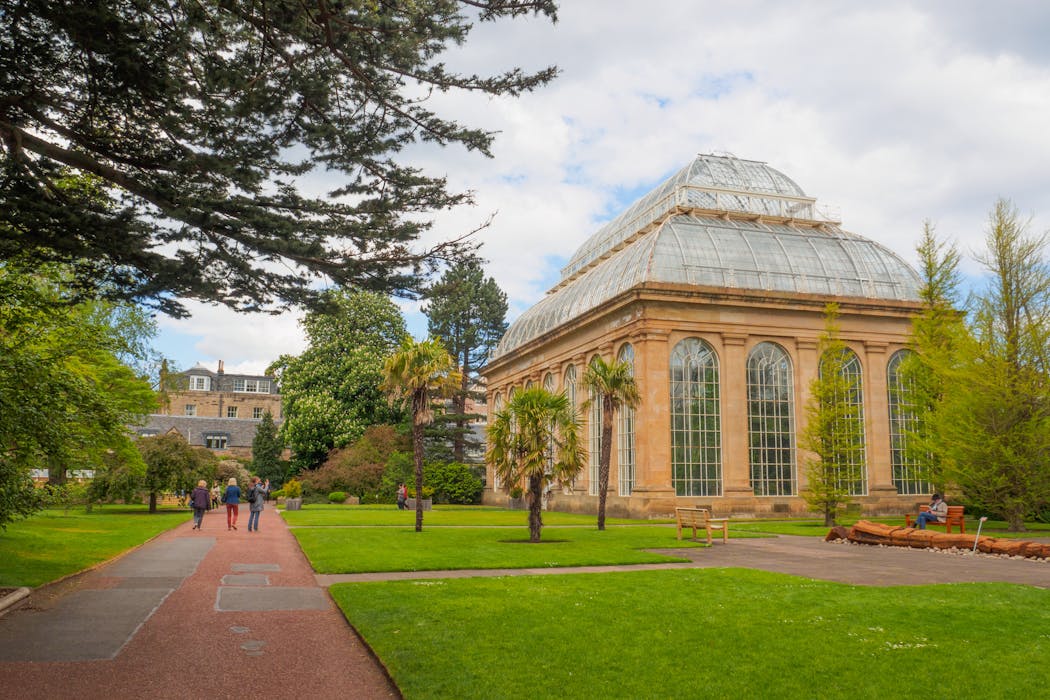
Similarly, the city of Edinburgh in Scotland holds a transient student population alongside a deep sense of local community. This again creates a tension between movement and belonging.
Our work and other research shows that short exercises rooted in wetlands, coasts, gardens, museums or neighbourhoods can help people situate themselves in unfamiliar settings. Participants in our research are invited to write brief descriptions of what they notice, what appears to be changing and how this affects their own thinking. This creates space to test ideas without the defensiveness or polarisation that often accompanies climate debate.
A poem about a tidal line or a short essay about a street after heavy rain asks the writer to pay close attention. That attention becomes inquiry. It sharpens their observation, exposes assumptions and prompts questions about meaning and significance. This is analytical rather than sentimental.
The climate crisis has a communications problem. How do we tell stories that move people – not just to fear the future, but to imagine and build a better one? This article is part of Climate Storytelling, a series exploring how arts and science can join forces to spark understanding, hope and action.
Facts alone aren’t enough
Our shared work suggests that this approach localises the climate crisis without turning it into individual anecdote. Creative writing does not replace scientific explanation. It creates a structure through which readers relate evidence to the world they live in.
When someone writes about a familiar hill or a particular stretch of coastline, they are not claiming universal insight. They are sharing a real-life example. They are showing how climate data connects to a concrete place, which makes the discussion more accessible and helps others respond with observations from their own contexts.
This matters because climate communication sometimes assumes that information alone will drive change. Evidence shows that it rarely does. People need ways to integrate new knowledge with their own experience. Place-based writing provides that structure. It anchors reflection, keeps ideas from drifting into abstraction, and introduces creative constraints that demand clarity. Choosing which details carry meaning or which elements to omit reveals how people prioritise environmental concerns and interpret change.
Our teaching with undergraduates demonstrates this clearly. Students write short texts about specific places and discuss them in small groups. The task does not assess style. It assesses attention. People explain why they chose their place and what climate-related issues they observed or inferred. Listening to others exposes how local climate knowledge is produced, circulated and sometimes misread.
It highlights the tension between perception and evidence and requires each writer to discern which ecological questions feel most urgent in their own backyard.
Don’t have time to read about climate change as much as you’d like?
Get a weekly roundup in your inbox instead. Every Wednesday, The Conversation’s environment editor writes Imagine, a short email that goes a little deeper into just one climate issue. Join the 47,000+ readers who’ve subscribed so far.
The authors do not work for, consult, own shares in or receive funding from any company or organisation that would benefit from this article, and have disclosed no relevant affiliations beyond their academic appointment.
This article was originally published on The Conversation. Read the original article.