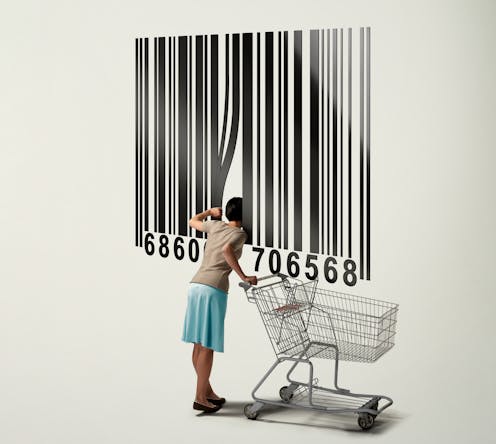
Few objects in the world are more immediately recognizable than the bar code. After all, bar codes are all around us. They’re on the books we buy and the packages that land on our doorsteps. More than 6 billion bar codes are scanned every single day. They’ve become such an accepted part of our daily lives that it’s hard to imagine how they could look any different.
I’ve researched various technologies throughout my career as a media studies professor, but it wasn’t until I began writing my book about the cultural history of the bar code that I realized how even the most mundane objects in our lives look the way they do because of decisions that are mostly lost to history. When I began combing through the archive of bar code history at Stony Brook University, I realized just how close we came to a world where we scan bull’s-eye or Sun symbols to buy our groceries.