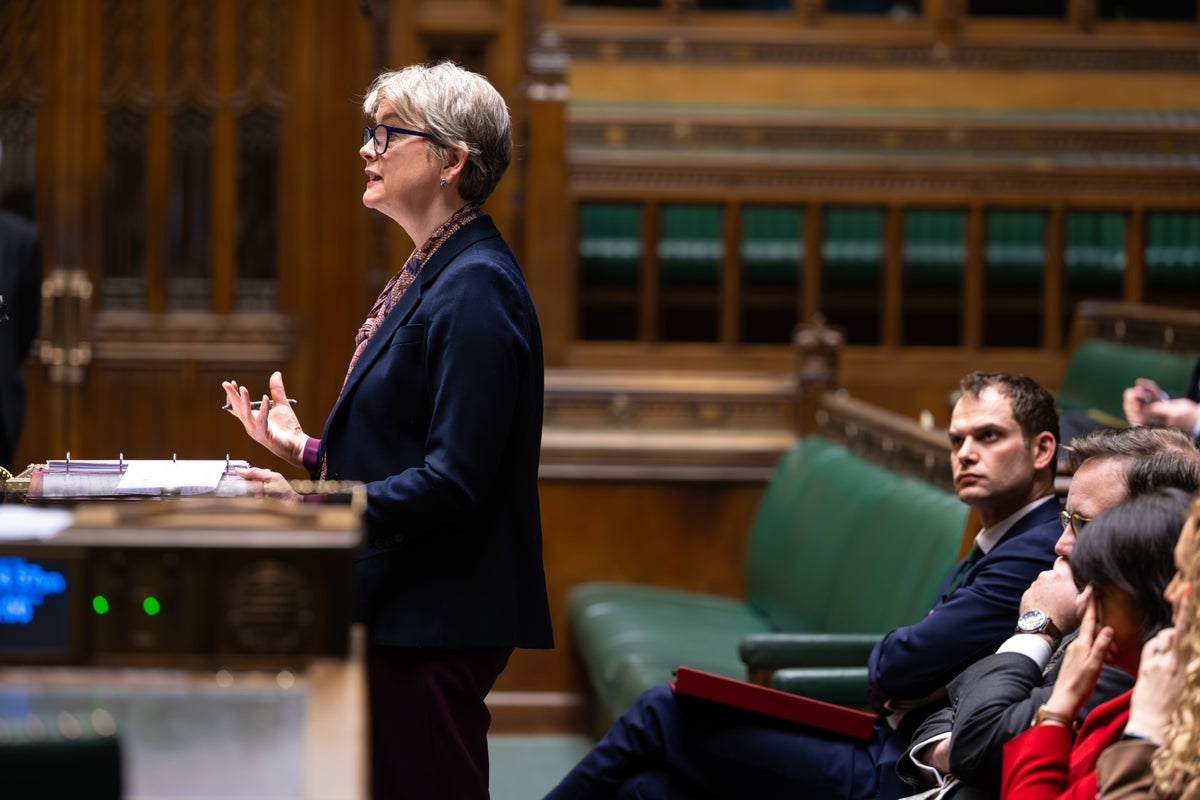
There has been widespread dismay among MPs, charities and humanitarian organisations over the severity of the UK’s 40 per cent cut to its aid budget – the extent of which has been laid out the foreign secretary, Yvette Cooper.
Addressing parliament, Cooper said that women and girls, as well as conflict-affected and fragile states, would be prioritised, leading to significant cuts elsewhere. One MP labelled it a “moral catastrophe”.
Much of the disappointment has been around the fact that countries in Africa are set to receive a dramatic cut, with bilateral aid between the UK and countries on the continent set to fall 56 per cent in 2028/9 compared to 2024/5.
Long-standing bilateral aid programmes to developing countries that are not classified as fragile and conflict-affected – but still struggle to attract other forms of investment – are set to be severely cut, if not completely eliminated.
Countries impacted in this way include Kenya (which received £80 million in aid in 2024/5), South Africa (£11m), Uganda (£44m), Sierra Leone (£30m), and Malawi (£50m).
Development Minister Jenny Chapman has said that these figures do not include money for Africa from multilateral institutions, including £2 billion in UK funding for the World Bank’s International Development Association - which funds projects in the world’s 75 poorest countries - as well as £650 million for the Africa Development Bank’s Africa Development Fund.
However, the Foreign, Commonwealth & Development Office (FCDO) has not shared details of the value of cuts to certain country programmes, while Equalities Impact Assessment published in conjunction with Cooper’s statement was lambasted as being “scandalously lacking in detail” by the chair of parliament’s International Development Select Committee, Labour MP Sarah Champion.
The impact assessment did include the detail that it is likely that the UK will stop all overseas aid programmes towards global health in Sierra Leone and Malawi.
In Malawi alone, this is set to result in approximately 250,000 adolescents losing access to modern methods of family planning, 20,000 children potentially dropping out of school because of an end to school feeding programmes.
The FCDO has also changed its regional country groupings, as well as its overall aid categories, which makes it hard to compare the latest aid allocations with previous reports on UK aid.
The Equalities Impact Assessment, however, reveals that the UK aid cuts are set to be so severe that even areas the UK says it is prioritising – like multilateral development agencies such as those within the UN – are set to see huge cuts, with multilateral humanitarian agencies and health agencies seeing their aid cut by 25 per cent and 23 per cent respectively.
Meanwhile, UK aid classified as “climate finance” – which the UK has an obligation to contribute towards under the landmark Paris Agreement – is set to fall from £11.6bn across the five years to 2026 to £6bn over the next three years, a drop of almost 15 per cent.
Catherine Pettengell, executive director of Climate Action Network UK, told The Independent that these cuts were “really bad”, given that UK climate finance had previously been doubling every five years – which would have resulted in £23.2bn over five years as the next package.
The climate aid cuts come despite the UN warning at the end of last year that the money required for developing countries to adapt to the climate crisis is 12 to 14 times greater than is available.
“Adaptation is not a cost – it is a lifeline,” said UN chief Antonio Guterres at the time. “Closing the adaptation gap is how we protect lives, deliver climate justice, and build a safer, more sustainable world. Let us not waste another moment.”
This article was produced as part of The Independent’s Rethinking Global Aid project
UK prioritising poverty reduction over self-interest during aid cuts, minister claims
UK aid cuts are a setback in the fight against HIV and AIDS. They should be reversed
Labour ‘have to make our case’ to voters ahead of May contests, Steve Reed says
Who is Matt Brittin, the man tipped to be the next director-general of the BBC?
‘I don’t want Nigel Farage to come to my house’: Unpacking Reform’s energy bills draw
UK warns Iran against targeting British bases after Tehran’s ‘aggression’ claim